Table of Contents >> Show >> Hide
- Introduction: Critical Essays Are Not Just “Being Critical”
- What Is a Critical Essay?
- Step 1: Understand the Assignment Before You Start Writing
- Step 2: Read Critically and Take Useful Notes
- Step 3: Choose a Focused Topic
- Step 4: Write a Strong Critical Essay Thesis
- Step 5: Create an Outline That Actually Helps
- Step 6: Write an Introduction That Opens the Door
- Step 7: Build Body Paragraphs With Evidence and Analysis
- Step 8: Evaluate, Do Not Just Agree or Disagree
- Step 9: Address Counterarguments
- Step 10: Write a Conclusion That Explains Why It Matters
- Step 11: Revise for Logic, Clarity, and Flow
- Common Mistakes to Avoid in a Critical Essay
- Helpful Critical Essay Example
- of Practical Experience: What Writing Critical Essays Teaches You
- Conclusion: Write Like a Thoughtful Investigator
Note: This article is written in original American English and synthesizes widely accepted academic writing guidance from reputable U.S. university writing centers and educational resources.
Introduction: Critical Essays Are Not Just “Being Critical”
Learning how to write a critical essay can feel a little like being handed a magnifying glass, a detective hat, and a stern professor’s eyebrow all at once. But do not panic. A critical essay is not an invitation to complain dramatically about a book, film, article, speech, painting, or theory. It is a structured piece of academic writing that evaluates a subject using evidence, reasoning, and clear analysis.
In other words, a critical essay asks you to do more than say, “I liked it” or “This was boring enough to make my coffee yawn.” Your job is to examine how something works, why it matters, what it accomplishes, where it succeeds, and where it may fall short. A strong critical essay combines summary, interpretation, evaluation, and argument. The best ones feel less like a book report and more like a smart conversation with receipts.
This guide explains how to write a critical essay step by step, from understanding the assignment to revising the final draft. Whether you are analyzing literature, an academic article, a movie, a historical event, or a social issue, the same core skills apply: read carefully, ask better questions, develop a clear thesis, support your claims with evidence, and explain your thinking so readers can follow the trail without needing a flashlight.
What Is a Critical Essay?
A critical essay is an academic essay that analyzes and evaluates a text, idea, event, or work of art. The word “critical” does not mean rude, negative, or aggressively picky. It means thoughtful, analytical, and evidence-based. A critical essay studies the parts of a subject and explains how those parts contribute to the whole.
For example, if you are writing a critical essay about a novel, you might examine how the author uses symbolism, character development, setting, or narrative structure to communicate a larger theme. If you are writing about a research article, you might evaluate the author’s methods, evidence, assumptions, limitations, and conclusions. If you are writing about a film, you might analyze the director’s use of lighting, dialogue, pacing, or point of view.
Critical Essay vs. Summary
A summary tells readers what the source says. A critical essay explains what the source does, how it does it, and whether it does it effectively. Summary is allowed, but it should be brief and purposeful. Think of summary as the appetizer, not the whole buffet.
Weak approach: “The article discusses social media and teenagers.”
Stronger critical approach: “The article argues that social media increases teen anxiety, but its reliance on self-reported surveys limits the strength of its conclusion because the study cannot fully separate social media use from other factors such as sleep, school stress, and family environment.”
Step 1: Understand the Assignment Before You Start Writing
Before writing a critical essay, read the prompt carefully. Many students lose points not because they cannot write, but because they answer the question they wish they had been asked. Academic prompts often contain command words such as analyze, evaluate, interpret, compare, critique, assess, or argue. These words are not decorative confetti. They tell you exactly what kind of thinking your instructor expects.
If the prompt asks you to analyze, focus on breaking the subject into meaningful parts. If it asks you to evaluate, judge the strengths and weaknesses using clear criteria. If it asks you to compare, examine meaningful similarities and differences. If it asks you to interpret, explain possible meanings and support your reading with evidence.
Questions to Ask About the Prompt
Before drafting, ask yourself: What subject am I analyzing? What question must I answer? What kind of evidence is required? Do I need outside sources? Which citation style should I use? How long should the essay be? What does my instructor value most: originality, close reading, research, structure, or all of the above?
This early step saves time later. It is much easier to steer the essay at the beginning than to rescue it at midnight while whispering, “Why did I do this to myself?”
Step 2: Read Critically and Take Useful Notes
Critical reading is the foundation of a strong critical essay. You cannot analyze what you have only skimmed while half-watching a video and negotiating with your snack cabinet. Read the source more than once if possible. The first reading gives you the general meaning. The second reading helps you notice patterns, tensions, contradictions, and techniques.
As you read, annotate actively. Mark passages that seem important, confusing, surprising, repeated, or emotionally powerful. Write short notes in the margin: “Why this word?” “Evidence?” “Contradiction?” “Strong claim, weak support.” These tiny comments can later grow into full paragraphs.
What to Look For While Reading
Pay attention to the author’s thesis, purpose, audience, tone, evidence, structure, assumptions, and methods. Notice what the author emphasizes and what the author leaves out. In literature, look for imagery, symbolism, conflict, characterization, and point of view. In nonfiction, examine logic, credibility, examples, data, and organization.
A good critical reader asks “how” and “why” questions. How does the writer build the argument? Why does this example matter? How does the structure shape the message? Why might a reasonable reader disagree? These questions push your essay beyond surface-level response.
Step 3: Choose a Focused Topic
A critical essay works best when it has a narrow focus. “Technology is bad” is too broad. “The article’s warning about smartphone addiction is persuasive because it connects behavioral research with everyday habits, but it weakens its argument by ignoring educational uses of mobile technology” is much better.
A focused topic gives your essay direction. It also prevents your paper from becoming a wandering backpack full of random observations. Instead of trying to discuss everything, choose one meaningful angle and explore it deeply.
Examples of Focused Critical Essay Topics
Instead of writing about “theme in The Great Gatsby,” you might write about how wealth shapes moral blindness in the novel. Instead of writing about “climate change articles,” you might analyze how one article uses emotional appeals and scientific evidence to persuade skeptical readers. Instead of writing about “a movie’s message,” you might evaluate how camera angles and silence create tension in a key scene.
Step 4: Write a Strong Critical Essay Thesis
Your thesis statement is the central claim of your critical essay. It should be specific, arguable, and analytical. A thesis is not just the topic. It is your position on the topic. It tells readers what you will argue and why that argument matters.
Weak thesis: “This essay will discuss the article’s argument.”
Better thesis: “Although the article presents convincing evidence that remote learning increases flexibility for college students, its argument is incomplete because it underestimates the effects of unequal internet access, limited peer interaction, and reduced instructor feedback.”
Notice the difference. The stronger thesis makes a claim, identifies a tension, and previews the main points. It gives the essay a road map without sounding like a robot reading street directions.
Formula for a Critical Essay Thesis
Try this simple structure: Although the subject does X effectively, it also reveals Y because of A, B, and C. You do not have to use those exact words, but the logic helps. A good thesis often balances praise and critique. It recognizes complexity. That is what makes it critical rather than one-sided.
Step 5: Create an Outline That Actually Helps
An outline is not a punishment invented by English teachers to delay your freedom. It is a planning tool that keeps your essay from turning into a maze. Your outline should show the order of your main points, the evidence you will use, and how each section supports your thesis.
Basic Critical Essay Structure
A typical critical essay includes an introduction, body paragraphs, and a conclusion. The introduction presents the topic, provides brief context, and ends with the thesis. The body paragraphs develop your argument with evidence and analysis. The conclusion brings the discussion together and explains the larger significance.
For longer essays, you may organize the body by theme, method, strength and weakness, or chronological order. The best structure depends on your subject. A literary analysis might move from imagery to character to theme. A critique of a research article might move from research question to method to evidence to limitations.
Sample Outline
Introduction: Introduce the article, explain its topic, and present your thesis.
Body Paragraph 1: Analyze the author’s main claim and explain why it is important.
Body Paragraph 2: Evaluate the evidence used to support the claim.
Body Paragraph 3: Discuss a limitation, assumption, or counterargument.
Conclusion: Restate the central insight and explain why your analysis matters.
Step 6: Write an Introduction That Opens the Door
Your introduction should prepare readers for your argument. Start with a relevant hook, not a random dramatic statement like “Since the beginning of time, humans have analyzed stuff.” Please do not do that to your reader. Instead, begin with a focused observation, a surprising tension, a brief context statement, or a question your essay will answer.
After the hook, introduce the subject. Include the title, author, and type of work if relevant. Provide enough background for readers to understand the discussion, but do not summarize the entire source. Then end with your thesis.
Example Introduction
In many essays about technology, convenience is treated as an obvious good. However, in Sherry Turkle’s discussion of digital communication, convenience becomes more complicated. Turkle suggests that constant connection may reduce the quality of face-to-face conversation. Although her argument effectively highlights the emotional cost of digital distraction, it is less persuasive when it treats technology as the main cause of social disconnection rather than one factor among many.
Step 7: Build Body Paragraphs With Evidence and Analysis
Each body paragraph should focus on one main idea. Start with a topic sentence that connects directly to your thesis. Then introduce evidence. Evidence may include quotations, paraphrases, examples, scenes, statistics, research findings, or specific details from the source. After presenting evidence, explain it. This explanation is the heart of critical essay writing.
Many students drop a quote into a paragraph and run away like the quote will explain itself. It will not. Evidence is not analysis. Evidence is the material. Analysis is your explanation of what the material shows and why it matters.
The Evidence Sandwich
A useful method is the evidence sandwich: introduce the evidence, present it, and then analyze it. First, tell readers where the evidence comes from and why it is relevant. Second, include the quotation or paraphrase. Third, explain how the evidence supports your claim.
Weak paragraph: “The author says students are distracted by phones. This proves technology is bad.”
Stronger paragraph: “The author’s example of students checking notifications during class supports her concern that phones interrupt attention. However, the example is anecdotal, so it works better as an illustration than as proof of a universal pattern. To make the claim more convincing, the author would need broader evidence showing how often phone use affects academic performance across different student groups.”
Step 8: Evaluate, Do Not Just Agree or Disagree
A critical essay is not a thumbs-up or thumbs-down review. Your evaluation should be based on criteria. Ask whether the subject is logical, clear, accurate, persuasive, original, ethical, relevant, or well-supported. The criteria will depend on what you are analyzing.
For a research article, you might evaluate the author’s methods, sample size, data, limitations, and conclusions. For a poem, you might evaluate imagery, rhythm, voice, ambiguity, and emotional effect. For a speech, you might analyze audience awareness, rhetorical appeals, structure, and delivery.
Use Balanced Judgment
Strong critical writing often recognizes both strengths and weaknesses. You might argue that an article is persuasive in its use of expert evidence but limited by a narrow definition of the problem. Or you might argue that a film’s slow pacing weakens entertainment value but strengthens emotional realism. Complexity makes your essay smarter. It also makes you sound like a human being rather than a debate robot wearing a backpack.
Step 9: Address Counterarguments
Counterarguments show that you understand the conversation around your topic. A counterargument is a reasonable objection to your claim. Including one can make your essay stronger because it proves you have considered more than one side.
For example, if your thesis argues that an author’s evidence is limited, a counterargument might admit that the author’s personal examples still have emotional power. Then you can respond by explaining that emotional power does not replace broader evidence. This move adds depth and fairness to your analysis.
Counterargument Template
Try a sentence like this: “Some readers may argue that the author’s personal examples are enough to support the claim; however, those examples are limited because they do not show whether the pattern applies beyond the author’s own experience.”
Step 10: Write a Conclusion That Explains Why It Matters
Your conclusion should do more than repeat the thesis with slightly different words and then collapse dramatically at the finish line. A strong conclusion reminds readers of your main insight, synthesizes the key points, and explains the larger significance of your analysis.
Avoid introducing brand-new evidence in the conclusion. Instead, zoom out. What does your analysis reveal about the text, topic, field, or audience? Why should readers care? What does your essay help us understand more clearly?
Example Conclusion Move
If your essay critiques an article about remote learning, your conclusion might explain that the debate is not simply about whether online education is good or bad. It is about how educational systems can expand access without sacrificing connection, feedback, and equity. That final insight gives your essay a purpose beyond the assignment itself.
Step 11: Revise for Logic, Clarity, and Flow
Revision is where a decent essay becomes a strong one. First drafts are allowed to be messy. They are the construction zone, not the grand opening. During revision, check whether your thesis matches the essay you actually wrote. Sometimes your best idea appears halfway through the draft, waving politely from paragraph four. If that happens, revise the thesis to reflect your strongest argument.
Next, examine paragraph order. Does each paragraph build logically from the previous one? Are transitions clear? Does every paragraph support the thesis? If a paragraph is interesting but unrelated, save it for another essay. Do not let one shiny sentence hijack the whole paper.
Revision Checklist
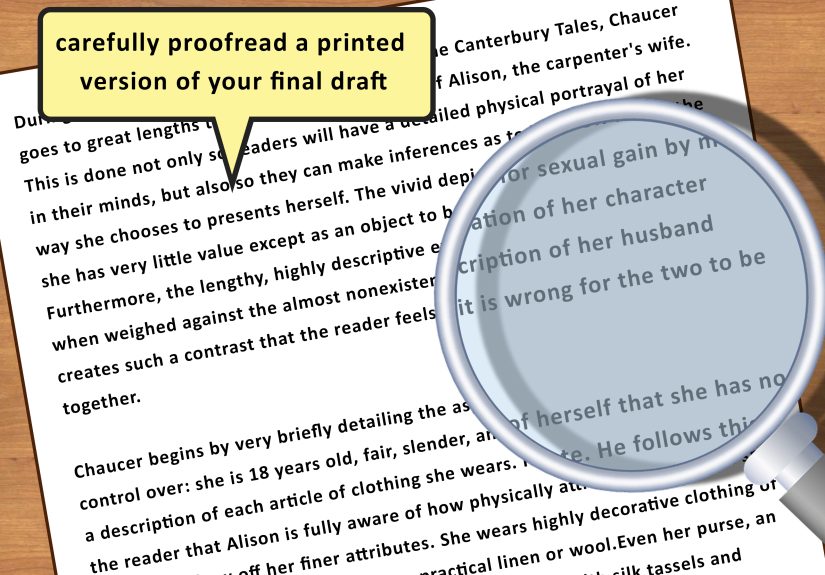
Ask these questions before submitting: Is my thesis arguable and specific? Do my body paragraphs each have one main point? Have I explained my evidence? Have I addressed possible objections? Is my conclusion meaningful? Are my sentences clear? Have I cited sources correctly? Did I proofread slowly enough to catch the sneaky little errors that survive spellcheck?
Common Mistakes to Avoid in a Critical Essay
Writing Too Much Summary
Summary is useful only when it supports analysis. If half your essay retells the plot or repeats the article, your critical voice disappears. Keep asking, “What am I proving with this information?”
Making the Thesis Too Obvious
A thesis should not state something everyone already knows. “The author uses evidence” is not enough. What kind of evidence? How effective is it? What does it reveal?
Using Quotes Without Explanation
Never assume a quote explains itself. After every quotation or paraphrase, analyze the language, logic, implication, or effect. Your instructor wants your thinking, not a scrapbook of borrowed sentences.
Being Too Harsh or Too Nice
Critical writing is not the same as attacking. It is also not fan mail. Aim for fair evaluation. Praise what works. Question what does not. Support both with evidence.
Ignoring the Assignment Requirements
Formatting, citation style, word count, and source requirements matter. They may not be glamorous, but they are part of academic communication. Think of them as the seatbelt of essay writing: not exciting, but very useful when things get bumpy.
Helpful Critical Essay Example
Imagine you are writing about an article that argues homework should be eliminated in high school. A weak essay might simply say, “The author makes good points because homework is stressful.” A stronger critical essay would examine the quality of the author’s evidence.
Your thesis might be: “Although the article makes a persuasive case that excessive homework can increase student stress, its argument would be stronger if it distinguished between repetitive busywork and meaningful practice, considered differences across subjects, and included more recent research on student learning.”
From there, your body paragraphs could analyze three points: the article’s emotional appeal, the limits of its evidence, and the missing distinction between types of homework. This creates a focused, balanced, and analytical essay. You are not just agreeing or disagreeing. You are evaluating how the argument works.
of Practical Experience: What Writing Critical Essays Teaches You
After writing several critical essays, most students discover that the hardest part is not grammar, formatting, or even finding evidence. The hardest part is learning to trust their own analysis. At first, many writers feel as if they are not “allowed” to question a published author, a famous novelist, a professor-approved article, or a classic film. The source can feel like a marble statue, and the student feels like someone holding a plastic spoon. But critical writing teaches an important lesson: respectful questioning is not disrespect. It is the whole point of academic thinking.
One practical experience that improves critical essay writing is rereading. The first reading often produces reactions: confusion, agreement, boredom, surprise, or the strong desire to take a nap. The second reading produces insight. Patterns become visible. A repeated image starts to look intentional. A claim that sounded convincing begins to show gaps. A paragraph that seemed minor becomes the key to the whole argument. Good analysis often appears after the first impression has calmed down and the brain has stopped shouting, “What is happening?”
Another useful experience is learning that a thesis does not need to be perfect at the beginning. Many writers waste hours trying to create a flawless thesis before drafting anything. In reality, a working thesis is allowed to evolve. Sometimes the essay teaches you what you actually think. You may begin with a simple claim, then discover a sharper argument after examining the evidence. That is not failure. That is writing doing its job.
Critical essays also teach the value of explaining obvious things. Writers often skip analysis because they assume the reader will understand why a quote matters. But readers are not mind readers, even the friendly ones. A strong essay slows down at the right moments and explains the connection between evidence and claim. This is where the writer’s voice becomes visible. The evidence says, “Here is the material.” The analysis says, “Here is what it means.”
Revision is another lesson learned through experience. Many first drafts have good ideas hiding inside awkward sentences, vague topic sentences, or paragraphs arranged in the wrong order. Revising a critical essay is not just fixing commas. It is rethinking the argument. Sometimes moving one paragraph earlier makes the whole essay clearer. Sometimes deleting a favorite sentence improves the paper because the sentence was clever but irrelevant. This hurts a little, like saying goodbye to a very stylish but impractical pair of shoes.
Finally, writing critical essays builds confidence beyond the classroom. It trains you to evaluate information instead of swallowing it whole. You become better at reading news articles, advertisements, opinion pieces, research claims, social media posts, and political speeches. You learn to ask: What is being claimed? What evidence supports it? What is missing? Who benefits from this message? Is the reasoning sound? That skill is useful everywhere. A critical essay may begin as a school assignment, but the thinking behind it belongs in real life.
Conclusion: Write Like a Thoughtful Investigator
Writing a critical essay is not about sounding harsh, complicated, or impossibly academic. It is about thinking clearly and showing your thinking on the page. Start by understanding the assignment, reading carefully, and asking analytical questions. Develop a focused thesis, organize your ideas, support your claims with evidence, and explain why that evidence matters. Then revise until the argument feels logical, balanced, and easy to follow.
A great critical essay does not merely tell readers what a source says. It shows how the source works, where it succeeds, where it falls short, and why the analysis matters. If you can do that, you are not just writing an essay. You are joining an academic conversation with confidence, curiosity, and maybe even a tiny detective hat.