Table of Contents >> Show >> Hide
- Why Purple Foliage Works (And Why It Sometimes Doesn’t)
- 1) Purpleleaf Plum (Prunus cerasifera ‘Thundercloud’)
- 2) ‘Forest Pansy’ Eastern Redbud (Cercis canadensis ‘Forest Pansy’)
- 3) ‘Bloodgood’ Japanese Maple (Acer palmatum ‘Bloodgood’)
- 4) ‘Royal Purple’ Smokebush / Smoketree (Cotinus coggygria ‘Royal Purple’)
- 5) ‘Diablo’ / Diabolo® Ninebark (Physocarpus opulifolius)
- 6) Black Lace® Elderberry (Sambucus nigra ‘Black Lace’ / ‘Eva’)
- 7) WINE & ROSES® Weigela (Weigela florida)
- 8) Purpleleaf Sand Cherry (Prunus × cistena)
- 9) Purple-leaf Loropetalum / Chinese Fringe Flower (Loropetalum chinense, especially var. rubrum types)
- How to Keep Purple Leaves Looking Purple
- Conclusion
- Extra: Real-World Notes Gardeners Share After Living With Purple Foliage
Purple leaves are the garden equivalent of wearing sunglasses indoors: bold, slightly dramatic, and somehow it works.
Whether you’re trying to make your hydrangeas look like they’re posing for a magazine cover or you just want your
front yard to stop blending into the neighbor’s “all-green everything” situation, purple-leaf plants deliver instant contrast.
This guide covers nine ornamental trees and shrubs with purple (or burgundy, wine, plum, near-black) foliageplus the
practical stuff people actually care about: what they look like through the seasons, where they behave best, and how to
keep the leaves looking richly colored instead of fading into “meh maroon.”
Why Purple Foliage Works (And Why It Sometimes Doesn’t)
Purple leaves get their color from pigments called anthocyanins. In plain English: the plant is doing a little chemistry
to protect itself from stress like intense light or temperature swings. That’s why many purple-leaf varieties color up best
in brighter lightthough too much heat and harsh afternoon sun can sometimes scorch tender leaves (especially on Japanese maples).
The other secret: purple foliage is basically a “design shortcut.” It gives you contrast even when nothing is blooming.
Flowers are seasonal; purple leaves are the long-term relationship.
Quick design wins with purple leaves
- Pair with chartreuse or gold foliage for maximum pop (think lime + burgundy = instant drama).
- Use purple plants as “anchors” at corners, entrances, or the back of a border for structure.
- Repeat the color 2–3 times across a landscape bed so it looks intentional, not accidental.
- Let purple foliage do the talking and keep surrounding flowers simplewhite, blush, pale blue.
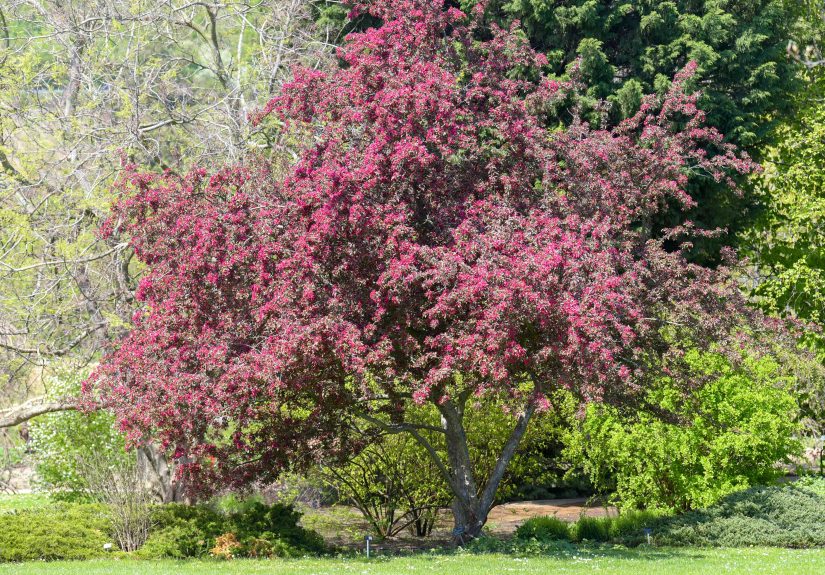
1) Purpleleaf Plum (Prunus cerasifera ‘Thundercloud’)
If you want a small ornamental tree that shows up like it has somewhere important to be, purpleleaf plum is a classic.
‘Thundercloud’ typically forms a dense, rounded to vase-shaped canopy and keeps reddish-purple foliage through the growing season.
In spring, it opens fragrant pale pink bloomsoften before the leaves fully unfurlthen follows with purple fruit.
Why people plant it: spring flowers + purple leaves + a “real tree” silhouette without needing a huge yard.
Best placement: as a single specimen near a patio or lawn where it can be admired (and where fallen fruit won’t land on your favorite outdoor rug).
Care notes: Full sun helps maintain the richest leaf color; shade can push foliage greener.
It prefers well-drained soil and is moderately drought tolerant once established.
Like many Prunus, it can be susceptible to pests and diseases, and some references note it may decline relatively young in stressful sitesso think of it as a “brilliant performer,” not necessarily a hundred-year legacy tree.
2) ‘Forest Pansy’ Eastern Redbud (Cercis canadensis ‘Forest Pansy’)
Redbuds already have one of the best spring flower shows in American landscapesclusters of rosy pink blooms lining stems and branches.
‘Forest Pansy’ adds the bonus track: shimmering purple-red new foliage that can soften toward purple-green or bronzier tones as summer heat ramps up.
The leaves are heart-shaped (because of course they areit’s a redbud), and the tree typically matures into a graceful, flat-topped, vase-like form.
Why people plant it: spring flowers + romantic foliage + understory-friendly size.
Best placement: where it gets morning sun and some afternoon shade in hotter regions, or more sun in cooler climates.
Care notes: ‘Forest Pansy’ can branch low and develop structural issues if ignored, so do a little early pruning to encourage strong branch angles.
It adapts to a range of soils, but like most ornamentals, it looks best when not forced to live in a compacted, baked parking-lot situation.
If you live where summers are intense, that partial shade can help leaves look less stressed.
3) ‘Bloodgood’ Japanese Maple (Acer palmatum ‘Bloodgood’)
‘Bloodgood’ is famous for being one of the more durable red/purple Japanese maplesa small accent tree that brings fine texture and
elegant structure to patios, entry beds, and “I want it to feel like a garden” corners of a yard. Expect a steady reddish-purple tone
through summer in many climates, followed by strong crimson-red fall color.
Why people plant it: refined shape, detailed leaves, and a color palette that makes green shrubs look instantly more interesting.
Best placement: bright light with protection from harsh afternoon sun in hotter areas; more sun is usually fine in cooler zones.
Care notes: Give it consistent moisture while establishing and avoid the hottest, driest reflected-heat locations
(like between a west-facing wall and a concrete driveway). It’s a slow, steady growermore “craft cocktail” than “energy drink.”
4) ‘Royal Purple’ Smokebush / Smoketree (Cotinus coggygria ‘Royal Purple’)
Smokebush is what happens when a shrub decides it wants to be a sculpture. ‘Royal Purple’ is prized for deep purple leaves and
those airy, cloud-like “smoke” plumes that appear after floweringsoft, hazy clusters that look like the plant is hosting a tiny
summer festival.
Why people plant it: bold foliage, unique texture, strong presence in a mixed border.
Best placement: full sun for best color and form, with enough space to spreadthis is not a “tuck it in the corner and hope” shrub.
Care notes: It’s fairly tolerant once established, including some drought tolerance.
You can prune to shape or size (often in late winter/early spring), but don’t shear it like a hedge if you want the most natural look.
5) ‘Diablo’ / Diabolo® Ninebark (Physocarpus opulifolius)
Ninebark is one of the best “workhorse shrubs” for American landscapestough, adaptable, and interesting in multiple seasons.
Purple-leaf types like ‘Diablo’ bring rich burgundy foliage and clusters of pale flowers (often white with a pinkish tinge) that pop
against the dark leaves. And in winter? The exfoliating bark gives texture when everything else is just… sticks.
Why people plant it: tough shrub energy + dark foliage + winter bark interest.
Best placement: full sun to partial shade; use it as a backdrop shrub, informal screen, or focal mound in a mixed border.
Care notes: It tolerates a range of soils and conditions.
If you want it dense and tidy, rejuvenation pruning (removing older stems) can help. In humid climates, good airflow can reduce issues like powdery mildew.
6) Black Lace® Elderberry (Sambucus nigra ‘Black Lace’ / ‘Eva’)
If you love the look of a Japanese maple but want something shrubbier and faster, Black Lace® elderberry brings finely cut,
dark purple-black foliage and soft pink blooms in early summer. It can read as “moody lace” from a distance and “tiny botanical artwork”
up close.
Why people plant it: dramatic foliage, summer flowers, and a bold texture that plays well with big-leaf perennials.
Best placement: full sun to part sun in moist, reasonably fertile soil.
Care notes: Elderberries can grow vigorously and may sucker.
Pruning in late winter/early spring can keep the plant shapely and encourage fresh growth. If berries form, remember that some elderberry parts
are not eaten rawthis is more “ornamental plus wildlife interest” than “snack as you stroll.”
Also note: some guidance warns the common European elder (the species Sambucus nigra) can be weedy/invasive in parts of the U.S., so it’s wise
to consult local recommendations when choosing elderberries.
7) WINE & ROSES® Weigela (Weigela florida)
Weigela is a reliable flowering shrub, and WINE & ROSES® is one of the most popular purple-leaf selections because it’s basically two
showy features in one: dark foliage plus bright pink flowers. In bloom, it looks like it’s trying to impress your whole street.
Why people plant it: purple foliage that stays attractive + spring flower power.
Best placement: full sun for best leaf color and flowering, with enough room for its mature width (it’s not a micro-shrub).
Care notes: Prune right after flowering if you need to shape it, since it blooms on old wood.
Keep it watered the first season; afterward it’s generally pretty easygoing.
8) Purpleleaf Sand Cherry (Prunus × cistena)
Purpleleaf sand cherry is a shrub (sometimes trained to look like a small tree) with red-purple leaves and fragrant spring flowers.
It’s a solid pick when you want a smaller purple-leaf plant that still feels substantial, and it can work as a hedge, screen, or single specimen.
Why people plant it: spring fragrance + purple leaves + compact-ish size compared with many shrubs.
Best placement: full sun and well-drained soil; use it where you can appreciate the spring bloom up close.
Care notes: It tends to perform best when not stressedgood drainage, sun, and reasonable spacing go a long way.
Like other Prunus relatives, it can be vulnerable to certain pests/diseases, so good site conditions matter.
9) Purple-leaf Loropetalum / Chinese Fringe Flower (Loropetalum chinense, especially var. rubrum types)
Loropetalum is a warm-climate favorite for a reason: evergreen (in many regions), richly colored foliage, and fringe-like blooms that show up
when you’re desperate for garden excitement (late winter into early spring). Purple-leaf forms can range from burgundy to near-black,
depending on cultivar and season.
Why people plant it: evergreen color + early-season flowers + low “fuss factor” in the right zone.
Best placement: full sun with some afternoon shade can help keep color strong; plant in acidic, well-drained soil.
Care notes: Loropetalum is notably intolerant of alkaline soils (chlorosis can show up if pH is too high).
In cooler zones, a protected location away from winter winds improves survival. Prune after bloom if shaping is neededno aggressive haircut required.
How to Keep Purple Leaves Looking Purple
Give them the right light (not just “some light”)
Many purple-leaf shrubs need full sun to maintain deep color (ninebark, weigela, smokebush, purpleleaf plum).
Shade can push foliage greener. But delicate-leaved trees (like Japanese maples) often appreciate bright light with protection
from the harshest afternoon sun in hot climates.
Don’t over-fertilize
Too much nitrogen can encourage fast, soft growth and greener foliage. If your purple plant is turning into a green plant with an identity crisis,
ease up on the fertilizer and focus on steady water and good soil conditions instead.
Use contrast plants on purpose
Try this simple combo formula:
purple foliage + silver foliage + something airy and flowering.
The result looks designed even if you made the plan while standing in the nursery line holding a coffee.
Conclusion
Purple-leaf trees and shrubs are one of the easiest ways to add year-round style to a yardespecially if you want color that doesn’t depend on
a two-week bloom window. Pick the right plant for your climate and site (sun, soil, moisture), and purple foliage becomes that dependable “wow”
element you don’t have to constantly babysit.
Extra: Real-World Notes Gardeners Share After Living With Purple Foliage
Here’s the part no plant tag tells you: purple-leaf plants are consistent… but not always in the exact shade you imagined. Gardeners often notice
that “purple” is a moving target, shifting with sun, heat, and the plant’s mood (fine, it’s not moodcall it seasonal pigment changes, but you get it).
The first spring after planting is usually when people fall in love: leaves emerge extra vivid, flowers feel like a bonus reward, and everything looks
like a catalog photo. Then summer arrives and reality checks inespecially in hot regions.
A common lesson: more sun usually equals deeper color for many shrubs, but it can also mean more stress. Ninebark and weigela tend to
handle sun well, while Japanese maples can look crispy if they’re stuck in reflected heat. Gardeners who relocate a struggling Japanese maple to a spot
with morning sun and afternoon shade often see the leaves look calmerless scorch, better texture, and a richer, steadier tone. Meanwhile, people who
plant purpleleaf plum or smokebush in partial shade frequently report the opposite disappointment: the plant lives, but the foliage drifts greener and
the “purple moment” becomes more of a “purple suggestion.”
Another real-life observation is that purple plants amplify your design choices. If the surrounding bed is a mix of random greens,
purple can look like an awkward outlierlike a velvet blazer at a beach party. But when gardeners repeat the color elsewhere (a burgundy heuchera,
a dark-leaf dahlia, a plum-toned coleus in a pot), the whole landscape suddenly looks intentional. People also love pairing purple foliage with
soft, pale blooms: white coneflowers, blush roses, or airy grasses. The contrast reads clean instead of chaotic.
Pruning is where many “I wish I’d known” stories live. Weigela blooms on old wood, so a hard prune at the wrong time can erase next year’s flowers.
Ninebark and elderberry, on the other hand, are more forgivinggardeners often rejuvenate them to encourage fresh, colorful growth. Smokebush is famous
for being adaptable: some people let it become a large, elegant shrub; others cut it back hard to keep it smaller and push big, dramatic leaves.
The takeaway is simple: match pruning style to the plant’s bloom habit and your size goals.
Lastly, gardeners tend to remember the “mess” factor. Purpleleaf plum can drop fruit, and that’s either charming (wildlife snacks!) or annoying
(sidewalk stains!) depending on where it’s planted. Elderberries can sucker and expand, which is great if you want a thicket and less great if you
want a neat foundation bed. The best advice people pass along is to plant purple-leaf ornamentals where they can be appreciatedbut not where their
quirks become daily chores. In other words: put the drama on stage, not on your front steps.