Table of Contents >> Show >> Hide
- What’s Inside
- Why “Lucky Foods” Show Up on New Year’s Tables
- 9 New Year Good Luck Foods for 2025
- How to Build a “Lucky Plate” (Without Turning It Into Homework)
- Honorable Mentions (Because Luck Loves Options)
- FAQs
- Wrap-Up: Start 2025 With a Plate Full of Hope
- Experiences: What These Lucky Foods Feel Like in Real Life (500+ Words)
If New Year’s resolutions are the “software update” you swear you’ll install, New Year’s lucky foods are the
charming little “patch notes” you can actually follow. No gym membership requiredjust a fork.
Across the U.S., families welcome the year with foods that symbolize wealth, health, longevity, and “please let my
email inbox be calmer than last year.” The idea isn’t that food is magical (although casseroles sometimes feel like
wizardry). It’s that rituals make hope feel concreteand delicious.
Below are nine classic good-luck foods to serve for 2025, plus easy ways to make them work for your table, your
budget, and your schedule (because you deserve to start the year without stress-flavored gravy).
Why “Lucky Foods” Show Up on New Year’s Tables
New Year’s food traditions usually follow a few recognizable patterns:
-
Money symbolism: Foods that look like coins (lentils, beans) or resemble cash (leafy greens)
represent prosperity. -
Forward motion: Some cultures prefer foods tied to progresslike pork (because pigs “root
forward,” unlike chickens that scratch backward). -
Abundance & wholeness: Whole fish, clusters of grapes, and seed-filled fruit represent
plentymore of the good stuff, less of the “where did my paycheck go?” stuff. -
Longevity: Long noodles are eaten to wish for a long lifeideally one that includes good knees
and low spam calls.
Think of lucky foods as edible symbolism: a tasty way to set intentions. You’re not “eating money.” You’re eating a
story about the year you wantand that’s surprisingly powerful.
9 New Year Good Luck Foods for 2025
1) Black-Eyed Peas
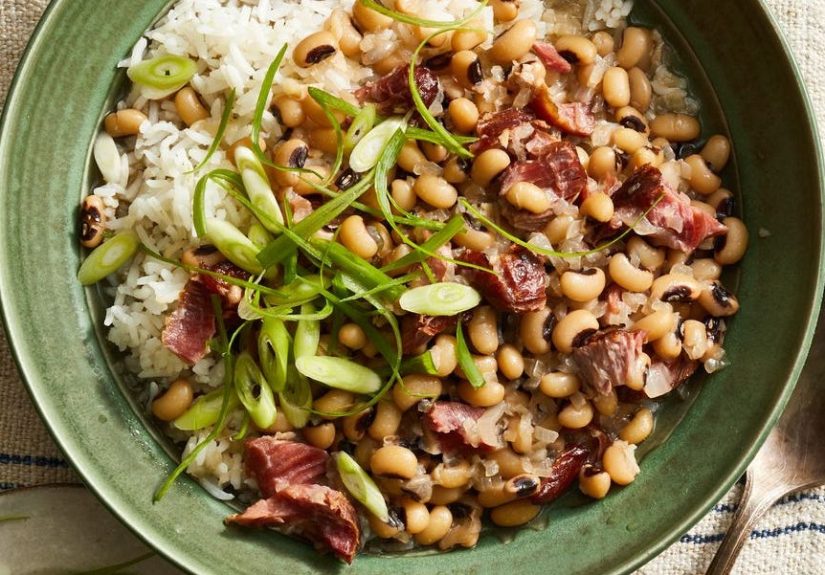
In many Southern U.S. households, black-eyed peas are the headline act on New Year’s Day. They’re commonly served
as Hoppin’ John (peas + rice, often cooked with pork), and they’re associated with good fortune and
prosperity.
Why it’s “lucky”: The peas are frequently described as symbols of coinssmall, round, and
plentiful. There’s also a long history tied to regional tradition and cultural survival, which gives the dish
meaning beyond superstition.
How to serve for 2025: Keep it classic with rice, onion, and a smoky pork elementor make it
weeknight-friendly with canned peas, pre-cooked rice, and a quick sauté. Vegetarian? Use smoked paprika and a
dash of vinegar to mimic that savory depth.
2) Collard Greens (or Other Leafy Greens)
Leafy greensespecially collardsshow up on New Year’s tables because they look like money. It’s that simple, and
honestly, it’s kind of charming. If you’ve ever held a bunch of collards and thought “this resembles my checking
account,” congratulations: you’re officially part of the tradition.
Why it’s “lucky”: The green color symbolizes cash and prosperity. Many families pair greens with
black-eyed peas for the “coins + bills” combo.
How to serve for 2025: Slow-simmered collards are iconic, but you can also roast hardy greens
(kale, collards) with olive oil and garlic for a crisp, modern twist. Add a splash of apple cider vinegar and a
pinch of red pepper flakes for brightness.
3) Cornbread
Cornbread is the golden sidekick that turns the Southern New Year plate into a full-on prosperity mood board.
It’s warm, comforting, andif you’re luckyserved with enough butter to qualify as a holiday.
Why it’s “lucky”: Its golden color is associated with wealth (think “gold bars,” but softer and
more socially acceptable at brunch).
How to serve for 2025: Bake it in a cast-iron skillet for crispy edges. Want extra symbolism?
Stir in corn kernels (more “gold”), or drizzle honey on top and call it “sweet luck.”
4) Lentils
Lentils are a New Year staple in Italian tradition, often served with pork (like sausage). They’re practical,
protein-packed, and they taste like you made an adult decisionwithout sacrificing flavor.
Why it’s “lucky”: Lentils are famously compared to coins because of their small, round shape.
More lentils, more “coin energy.”
How to serve for 2025: Try a simple lentil stew with carrots, celery, onion, and herbs. Or serve
lentils as a salad with lemon, olive oil, and roasted vegetables. If you want the classic pairing, add sausage
(or a plant-based option) and toast to “prosperity, but make it cozy.”
5) Pork
Pork appears in New Year traditions across multiple regions, including the U.S. (hello, pork and sauerkraut in
Pennsylvania). The logic is surprisingly consistent: pigs move forward, and we’d like our lives to do that too.
Why it’s “lucky”: Pork is often associated with progress and abundance. In some traditions, the
“forward-rooting” idea is the star; in others, it’s the richness and celebratory feel.
How to serve for 2025: You can roast a pork loin, simmer pulled pork, or keep it easy with
sausage. For a Pennsylvania-inspired plate, pair pork with sauerkraut (see honorable mentions) and add a starchy
side like potatoes or pierogies if your household tradition leans that way.
6) 12 Grapes at Midnight
Want a New Year tradition with built-in drama and a one-minute time limit? Enter: the 12 grapes ritual.
Traditionally, you eat one grape for each clock chime at midnight12 grapes, 12 months, 12 chances to not choke
on your optimism.
Why it’s “lucky”: Each grape represents a month of good fortune. The fun is in the intention:
you’re literally starting the year by “keeping up” with timepreferably with seedless grapes.
How to serve for 2025: Prep a small cup of 12 seedless grapes per person. If you want to be extra
(and safe), peel them. If you want to be extremely extra, label the cup with month names and use each grape as a
quick wish: “January: sleep. February: calm. March: please no surprise expenses.”
7) Fish
Fish shows up in New Year traditions in many cultures, and the symbolism usually points to abundance, prosperity,
and “may we have enough of what we need.” In some European and Scandinavian-influenced traditions, herring is a
notable example.
Why it’s “lucky”: Fish can symbolize abundance (plenty in the waters, plenty at the table). Whole
fish can also represent completenessstarting the year “whole.”
How to serve for 2025: Go with what your people actually like: salmon, sea bass, cod, or herring.
A whole roasted fish looks festive, but fillets are fine if you’re not trying to audition for a cooking show at
12:05 a.m.
8) Long Noodles
Long noodles are tied to longevity and long life in several Asian New Year traditions. The basic rule is simple:
keep noodles longdon’t cut thembecause the length is the point.
Why it’s “lucky”: The noodle length symbolizes a long life. Slurping is basically a blessing.
(Finally, a tradition that rewards bad table manners.)
How to serve for 2025: Stir-fry noodles with vegetables and a savory sauce, or do a warm noodle
soup with mushrooms and greens. The key is: serve them long, and let people twirl/slurp without judgment. It’s
New Year’s. We’re aiming for joy, not perfection.
9) Pomegranate
Pomegranates are famous for their jewel-like seeds and their symbolism: abundance, fertility, and good fortune.
They’re basically the edible version of “more blessings, please.”
Why it’s “lucky”: A pomegranate holds a lot of seeds, which makes it an easy symbol for plenty:
plenty of opportunities, plenty of love, plenty of “good things happening for no reason.”
How to serve for 2025: Sprinkle seeds on salads, yogurt, roasted vegetables, or even cocktails
and mocktails. It looks fancy with minimal effortperfect for New Year energy, when you want sparkle but also
want to sit down immediately.
How to Build a “Lucky Plate” (Without Turning It Into Homework)
If you want a simple formula for a New Year’s meal that feels meaningful and doable, try one of these combos:
Option A: The Southern Prosperity Trio
- Black-eyed peas (coins)
- Collard greens (cash)
- Cornbread (gold)
Add hot sauce, pickles, or a tangy vinegar-based slaw to brighten the plate and balance the richness.
Option B: The “Coin Jar” Dinner
- Lentils (coins)
- Pork (progress + abundance)
- Greens (because prosperity loves a sequel)
Option C: The Abundance & Longevity Bowl
- Fish (abundance)
- Long noodles (longevity)
- Pomegranate (extra blessings, plus sparkle)
The best “lucky meal” is the one you’ll actually cook and enjoy. If your schedule is chaotic, use shortcuts:
canned beans, bagged greens, store-bought cornbread mix, pre-cooked lentils, or a simple baked fish. The point is
the ritual, not culinary burnout.
Honorable Mentions (Because Luck Loves Options)
Want to expand your New Year menu beyond the nine? These are popular, symbol-rich additions:
-
Sauerkraut (and cabbage): Common in Pennsylvania and other areas with German influence, often
paired with pork. Tangy, comforting, and great for balancing rich foods. -
Dumplings: Frequently associated with wealth in Lunar New Year traditions because they resemble
money pouches or ingots. Also: delicious. -
Oranges and other round fruits: Often tied to prosperity and “fullness” because round shapes can
symbolize coins or completeness. -
Ring-shaped cakes (like king cake in season): Ring shapes can symbolize continuity; and in some
traditions, finding the hidden trinket is linked with “good luck” and community fun.
FAQs
Do lucky foods “work”?
Not like a lottery ticket. But rituals can be powerful: they help people reflect, connect with family, and start the
year with intention. And honestly, a pot of beans and greens can absolutely “work” as a great lunch.
What if I’m vegetarian or I don’t eat pork/fish?
No problem. Many lucky-food traditions are flexible. Swap pork for smoked spices or plant-based sausage. Swap fish
for a hearty, celebratory centerpiece dish. The symbolism comes from the story you chooseyour table, your rules.
New Year’s Eve or New Year’s Day?
Both are common. Some traditions happen at midnight (like 12 grapes). Others are New Year’s Day comfort meals. If
you’re hosting, do midnight grapes + a relaxed New Year’s Day “lucky brunch” and call it a two-day celebration.
Wrap-Up: Start 2025 With a Plate Full of Hope
Lucky foods are a delicious way to say: “I’m showing up for the year I want.” Whether you’re eating coins
(lentils), cash (greens), gold (cornbread), or a tiny grape countdown at midnight, you’re participating in a human
habit that’s older than any calendar appmarking time with meaning.
And if nothing else? You’ll begin 2025 with a good meal, a good story, and at least one person arguing about
whether cornbread should be sweet. (For the record: yes. But I respect your journey.)
Experiences: What These Lucky Foods Feel Like in Real Life (500+ Words)
There’s a particular kind of quiet that shows up on New Year’s Day morning. The fireworks are done, the group chat
is still asleep, and the world looks like it’s taking a deep breath before it runs full speed into January.
That’s when lucky foods hit differentlynot as “superstition,” but as comfort with a side of symbolism.
In one very classic scene, a Southern kitchen smells like onions, simmering black-eyed peas, and something smoky
that makes everyone suddenly believe in miracles. Someone stirs the pot like it’s a crystal ball. Another person
insists the peas have to be eaten on New Year’s Day, not “sometime this week,” as if luck has business
hours. Then the greens go oncollards bubbling away until they turn silkyand the cornbread starts baking, filling
the house with that warm, slightly sweet aroma that says, “We’re okay. We’re fed. We’re together.”
Meanwhile, in a different home, a pot of lentils is doing its slow, steady thing. It’s less flashy, more
“responsible adult,” like paying your credit card bill on time. Someone adds garlic, a bay leaf, and a glug of
olive oil and talks about how lentils look like coinstiny ones, yes, but still coins. And for a moment, everyone
feels like prosperity isn’t just a dream; it’s a plan. A meal plan, specifically.
The midnight grape ritual is its own genre of experience. You can spot the prepared people immediately: they’ve got
a cup of 12 seedless grapes, maybe even peeled, lined up like a tiny fruit army. The unprepared people are
scrambling at 11:58 p.m. like they’re defusing a bomb made of produce. When the clock starts chiming, the room gets
hilariously serious. Everyone is chewing like their future depends on itbecause, symbolically, it does. And when
someone inevitably laughs mid-grape, the whole group dissolves into chaos, which is honestly the most accurate
preview of the year ahead.
Fish nights tend to feel celebratory and a little ceremonial, especially if you serve it whole. There’s a sense of
“this is a centerpiece” energy: bright lemon, herbs, a tray coming to the table with a small wave of applause. Even
if you’re just doing salmon fillets, the idea is the same: abundance, nourishment, and something steady beneath the
noise of the world.
Noodles bring a different vibemore playful, more communal. People talk about not cutting them, and suddenly
everyone is weirdly protective of noodle length. There’s laughing, slurping, and at least one person trying to eat a
long strand without looking like they’re wrestling an eel. It’s messy in a way that feels lucky: life is long, not
tidy, and it’s better when you’re not alone in it.
And then there’s the pomegranate: the glamorous overachiever of the fruit bowl. The moment you crack it open, the
kitchen looks like it got sprinkled with rubies. People snack on the seeds like they’re edible confetti. It feels
like abundance you can see, count, and sharetiny bright reminders that good things can come in many small pieces.
That’s the real “experience” of lucky foods: you’re not just eating symbols. You’re creating a moment. You’re
telling yourself (and everyone at your table), “We’re stepping into a new year togetherand we’re doing it with a
meal worth remembering.”