Table of Contents >> Show >> Hide
- Table of Contents
- What Makes an Emergency Landing “Miracle-Level”?
- 8 Emergency Landings That Rival the “Miracle on the Hudson”
- 1) United Airlines Flight 232 (1989): Flying a DC-10 with almost no normal controls
- 2) TACA Flight 110 (1988): A jet lands on a levee like it meant to do that
- 3) Aloha Airlines Flight 243 (1988): A violent decompression, then a safe landing
- 4) JetBlue Flight 292 (2005): The sideways nose gear landing everyone watched live
- 5) Air Canada Flight 143 (1983): The “Gimli Glider” and the dangers of bad math
- 6) British Airways Flight 009 (1982): “All four engines have failed” (volcanic ash edition)
- 7) Air Transat Flight 236 (2001): The “Azores Glider” across the Atlantic
- 8) Southwest Flight 1380 (2018): Fast decisions after an engine failure
- The Patterns Behind the Miracles
- Bonus: The Human Side of Emergency Landings (About )
- Final Thoughts: Miracles Have Checklists
The “Miracle on the Hudson” is aviation’s modern-day legend: an airliner loses power, a captain makes a split-second call,
and the whole world watches a crisis turn into a masterclass. But here’s the thingcommercial flying has more than one
miracle in its highlight reel. Over the decades, crews have coaxed crippled aircraft onto runways, levees, and “please-let-this-work”
stretches of pavement using equal parts training, teamwork, and the kind of calm you can’t buy at an airport kiosk.
This story isn’t about glamorizing danger. It’s about the moments when a chain of problems gets interrupted by smart decisions,
solid procedures, and people who refuse to paniceven when their airplane is doing its absolute best impression of a brick.
What Makes an Emergency Landing “Miracle-Level”?
Not every emergency landing becomes famousand honestly, that’s good news. Many “emergencies” end with nothing more dramatic than
a gate change and a bunch of texts that say, “Landed. Long story.” The miracle-tier ones usually share a few ingredients:
1) The problem is sudden, unfamiliar, or compounded
Think: multiple systems failing, unusual damage, or a situation where the checklist exists… but reality is moving faster than
your finger can scroll.
2) The margin for error is tiny
Low altitude, limited landing options, bad weather, rough terrain, or a heavy aircraft that would really prefer to keep flying.
3) The outcome depends on decisions, not luck
Luck may show up, sure, but the headline-worthy saves are powered by disciplined flying, clear communication, and effective crew
resource management (CRM)basically, teamwork with a checklist and a time limit.
8 Emergency Landings That Rival the “Miracle on the Hudson”
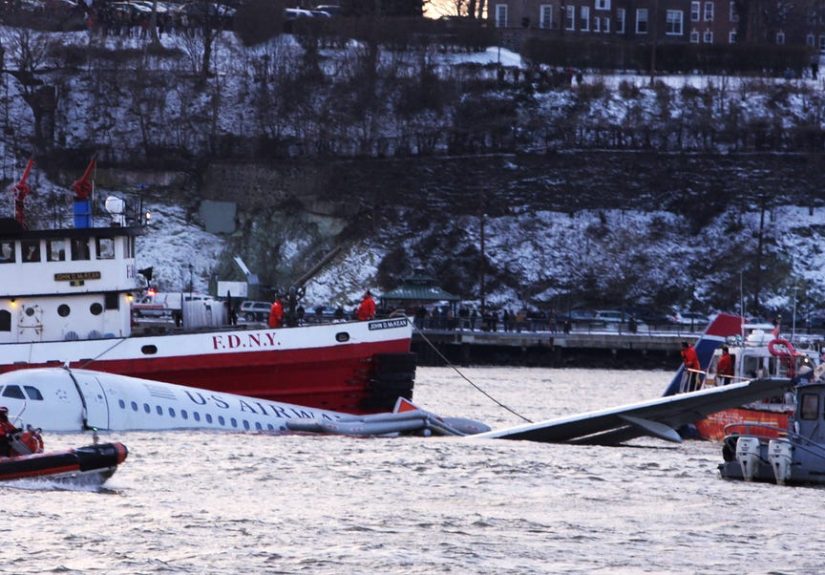
The “Miracle on the Hudson” (US Airways Flight 1549) set the modern benchmark: a dual engine loss after a bird strike, followed by
a controlled ditching on January 15, 2009, with everyone on board surviving. It’s our reference pointthe emergency landing that made
the whole world learn the word “ditch” without thinking of gardening.
1) United Airlines Flight 232 (1989): Flying a DC-10 with almost no normal controls
On July 19, 1989, United Flight 232 suffered a catastrophic engine failure that damaged critical systems, leaving the crew with
extremely limited conventional control. The aircraft could still change direction and attitude only in a rough, improvised way,
relying heavily on engine thrust adjustments and intense coordination among the cockpit crew.
What makes this rival “Miracle” status isn’t that everything went perfectlyit didn’t. But in a situation that had no clean playbook,
the crew fought for survivability minute by minute and brought the aircraft to Sioux City for an attempted landing. Many lives were
saved, despite the severity of the event. Aviation safety also took major lessons from this incident, especially around CRM and
passenger protection.
- Why it’s iconic: Controlled flight with severely degraded systems is aviation’s “hard mode.”
- Big lesson: Teamwork and task-sharing can be the difference between chaos and a fighting chance.
2) TACA Flight 110 (1988): A jet lands on a levee like it meant to do that
TACA Flight 110 on May 24, 1988 encountered extreme weather during descent near New Orleans and experienced a dual engine flameout.
Translation: the plane suddenly had the aerodynamic personality of a glider, except it was a Boeing 737-300 and nobody boarded a glider
expecting a beverage cart.
With no runway reachable, the pilots picked what they could: a narrow grassy levee near NASA’s Michoud facility. They managed a forced
landing with no reported injuries. It’s the kind of event that sounds fictional until you remember aviation is basically physics with
paperwork.
- Why it’s iconic: Precision decision-making under pressurechoosing “the best bad option.”
- Big lesson: Weather planning and situational awareness matter, but so does knowing how to glide a jet.
3) Aloha Airlines Flight 243 (1988): A violent decompression, then a safe landing
On April 28, 1988, Aloha Flight 243 experienced a major in-flight structural failure and explosive decompression. The incident was
terrifying and caused injuries and a tragic loss of life, but the flight crew still managed to land the aircraft safely at Kahului,
Hawaii. That landing became a turning point for industry conversations about inspection, fatigue cracking, and maintenance practices.
What makes this a “rival miracle” is the contrast between the severity of the damage and the crew’s ability to keep control and get the
airplane on the ground. It’s also a reminder that aviation safety isn’t just about pilotingit’s about the invisible maintenance systems
that keep aluminum and rivets honest.
- Why it’s iconic: A survivable landing after major structural damage.
- Big lesson: Maintenance oversight and structural inspection are as life-saving as any cockpit skill.
4) JetBlue Flight 292 (2005): The sideways nose gear landing everyone watched live
On September 21, 2005, JetBlue Flight 292 had a nose landing gear problem: the wheels were cocked about 90 degrees. Visually, it looked
like the aircraft was wearing a hat sideways. The crew circled to burn fuel and prepare, coordinated with ground teams, and then executed
a careful landing at Los Angeles International Airport.
The remarkable part wasn’t a dramatic “boom.” It was the slow, methodical professionalism: managing risk, keeping the cabin informed,
and setting up the touchdown to protect passengers. It’s a perfect example of how “boring” is actually the goalespecially when the
whole country is watching your front wheels like it’s the Super Bowl.
- Why it’s iconic: Calm procedure under intense public scrutiny.
- Big lesson: Time is a tooluse it to reduce weight, plan the landing, and align the team.
5) Air Canada Flight 143 (1983): The “Gimli Glider” and the dangers of bad math
On July 23, 1983, Air Canada Flight 143 ran out of fuel mid-flight due to a chain of measurement and fuel-loading errors during a period
when metric conversion practices were still settling in. The Boeing 767 became an unpowered glider at a moment when airliners weren’t
really expected to do… glider things.
The crew managed an emergency landing at Gimli, Manitobaat a former airfield being used for motorsports. No fatalities. The story became
legendary because it’s equal parts “incredible airmanship” and “please double-check the units.” It’s also an underrated reminder that
technology isn’t a substitute for verification; it’s a teammate that still needs supervision.
- Why it’s iconic: A powerless widebody lands safely using glider-style technique.
- Big lesson: Systems and numbers must be cross-checkedespecially when people and units change.
6) British Airways Flight 009 (1982): “All four engines have failed” (volcanic ash edition)
On June 24, 1982, British Airways Flight 009 flew into volcanic ash near Indonesia and lost power in all four engines. That sentence
alone is enough to make a pilot’s coffee go cold. Volcanic ash can melt and adhere inside engines, disrupting airflow and combustion.
The crew descended, worked the problem, and eventually managed to restart engines and land safely. This incident became one of the
catalysts for modern volcanic ash monitoring and aviation guidancebecause it turns out the sky can contain hazards you can’t see at
night until your engines file a complaint.
- Why it’s iconic: A widebody survives a scenario that sounds like a disaster movie plot.
- Big lesson: Nature is part of aviation riskmonitoring, warnings, and procedures save lives.
7) Air Transat Flight 236 (2001): The “Azores Glider” across the Atlantic
On August 24, 2001, Air Transat Flight 236 developed a fuel leak and eventually lost engine power over the Atlantic. The crew diverted to
Lajes in the Azores and executed a long, engine-out glide to land the Airbus A330 safely. Everyone on board survived, though some people
were injured during evacuation.
It’s a rival miracle because it combines multiple high-stress elements: distance from alternates, systems cascading as fuel disappears,
and the need to manage energy precisely. The event also produced concrete safety lessons: detecting abnormal fuel consumption, using
checklists correctly, and ensuring maintenance practices don’t create hidden single points of failure.
- Why it’s iconic: A large, modern airliner glides to a safe landing after fuel loss.
- Big lesson: Fuel management and checklist discipline aren’t paperworkthey’re survival tools.
8) Southwest Flight 1380 (2018): Fast decisions after an engine failure
On April 17, 2018, Southwest Flight 1380 experienced a left engine failure while climbing at high altitude. The crew initiated an emergency
descent and diverted to Philadelphia. Tragically, there was a passenger fatality, but the crew’s handling prevented the situation from
escalating further and brought the aircraft down safely.
This case stands out because it shows how quickly modern jet emergencies can unfoldand how training turns “shock” into action. The
subsequent investigation highlighted maintenance and inspection lessons related to engine components and fatigue, reinforcing how safety
improvements are often written in the margins of real events.
- Why it’s iconic: Effective control and rapid diversion after a serious engine event.
- Big lesson: Prevention mattersinspection methods and maintenance standards evolve for a reason.
The Patterns Behind the Miracles
If you line these stories up side-by-side, you start to see that “miracle” is rarely magic. It’s more like the visible tip of a
massive iceberg made of training, procedure, and teamwork.
1) Crew Resource Management (CRM): the art of not doing it alone
In the highest-stress events, the best crews split tasks, communicate clearly, and invite input. That might sound simple, but under
pressure, your brain wants to do the opposite: tunnel vision, clamp down, and white-knuckle the yoke. CRM is the skill of resisting that
instinct and turning the cockpit into a coordinated problem-solving team.
2) Energy management: airspeed is currency
When engines fail or systems degrade, pilots start “spending” altitude and airspeed like it’s a budget. Too much speed can break things.
Too little speed can end the flight early in the worst possible place. The crews who succeed manage energy with precisionsometimes using
turns, descents, and configuration changes like chess moves to arrive at the runway with just enough “spendable” airspeed left.
3) Checklists and discipline: boring saves lives
Many accident reports read like this: a small issue appears, then a decision is made, then another decision, and suddenly you’re far from
the safest path. Checklists are designed to interrupt that slide. The crews who do best treat procedure as a stabilizer: it keeps the
team aligned when adrenaline is trying to write its own plan.
4) The system outside the cockpit matters
Air traffic control, dispatch, maintenance programs, airport rescue services, and aviation regulators all play roles. Some “miracle”
landings succeed because the broader system supports good decision-makingthrough runway selection, emergency preparation, and safety
improvements learned from earlier incidents.
Bonus: The Human Side of Emergency Landings (About )
If you’ve never been on a flight that suddenly feels “different,” it’s hard to explain the emotional math your brain starts doing.
First comes the uncertainty: a noise that doesn’t belong, a change in the engine tone, a little dip that lasts one second longer than
you’d like. Then your mind begins building a story using whatever it can grabmovies, headlines, that one documentary you watched at
2 a.m. when you should’ve been sleeping. (Great for trivia, not great for your pulse.)
What’s striking in almost every major emergency landing story is how quickly passengers pick up on the crew’s tone. Calm voices create
calm cabins. Clear instructions give people something to do besides imagine worst-case scenarios. In events like JetBlue 292, the flight
took time to prepare, and that preparation didn’t just help the airplaneit helped the people inside it. Humans do better when the
situation feels structured, even if it’s scary.
From the cockpit perspective, the “experience” is often described as intensely practical. Pilots aren’t thinking in dramatic monologues.
They’re thinking in priorities. Fly the airplane. Confirm what’s happening. Communicate. Decide. Then do the next right thing. In the
best cases, you can almost see the mental checklist: “What do we have? What do we need? What can fail next? Where do we put this thing
if it gets worse?” That’s not panicthat’s pattern recognition and training turning stress into a plan.
There’s also a quiet humility that shows up again and again. Many crews describe successful emergency landings as “doing our jobs.”
That phrase can sound modest to the point of absurditylike calling a tightrope walk across a canyon “a brisk stroll.” But it reveals
something important: aviation safety is built around repetition. Crews train so that when the world gets loud, their actions can stay
simple. They practice unusual attitudes, engine failures, rejected takeoffs, emergency descents, and abnormal checklists until the
response is less “hero moment” and more “executed a procedure under pressure.”
For passengers, the most practical takeaway isn’t fearit’s respect for process. Safety briefings matter. Seatbelts matter. Listening
matters. None of that guarantees a perfect outcome, but it increases the odds that if something rare happens, you and everyone around
you can move with the flow of the plan instead of against it. In other words: the real miracle isn’t a single legendary landing. The
real miracle is a safety culture that keeps building better outcomes, flight after flight, year after yearoften without headlines.
Final Thoughts: Miracles Have Checklists
The “Miracle on the Hudson” became famous because it was visible, fast, and almost impossibly clean. But the other rivals on this list
prove a deeper point: survivability is often engineered long before the emergencythrough maintenance standards, training, CRM,
investigation, and the unglamorous discipline of doing things the right way.
So yes, celebrate the heroic moments. Just don’t forget what’s behind them: professionalism, preparation, and a whole industry trying
to make sure the next miracle is simply… a normal landing.