Table of Contents >> Show >> Hide
- Before You Pick a Bathroom Layout, Ask These Questions First
- 1. The Efficient Powder Room Layout
- 2. The Three-Quarter Bath Layout
- 3. The Classic Full Bath Layout
- 4. The Galley or Shared Bath Layout
- 5. The Primary Suite Bathroom Layout
- Bathroom Layout Mistakes to Avoid
- How to Choose the Right Layout for Your Home
- Everyday Experiences That Make Bathroom Layouts Matter
- Conclusion
Designing a bathroom sounds simple until you realize you are trying to choreograph a sink, toilet, shower, storage, lighting, and approximately one million morning routines inside a box with plumbing. A good bathroom layout is not just about where things fit. It is about how the room feels when someone is half-awake, late for work, looking for a towel, or trying to enjoy a peaceful bath without staring directly at the toilet. In other words, layout matters. A lot.
The best bathroom layouts balance beauty, flow, privacy, and practicality. They also respect the budget, because moving plumbing across the room is a fast way to make your wallet lie down dramatically on the floor. Whether you are remodeling a tiny powder room or plotting the primary bath of your dreams, the smartest move is to choose a floor plan that matches how the room will actually be used.
Below are five bathroom layouts that work for different homes, different square footage, and different lifestyles. Along the way, we will cover planning tips, design ideas, and small decisions that make a big difference. Because a dream bathroom should not only look amazing in photos. It should also survive real life.
Before You Pick a Bathroom Layout, Ask These Questions First
Before falling in love with a freestanding tub the size of a canoe, start with the basics. The best bathroom design begins with honest questions.
Who uses the bathroom?
A guest bathroom, kids’ bathroom, and primary bathroom all have different priorities. A guest bath can lean stylish and compact. A family bathroom needs durable surfaces, easier cleanup, and enough elbow room to prevent toothbrush diplomacy from breaking down. A primary bath often needs better storage, more privacy, and maybe a little luxury.
What happens in the room every day?
Think beyond “shower, sink, toilet.” Do two people get ready at the same time? Do you need a tub for children? Would a large shower be more useful than a bathtub you will admire twice a year? Do you need room for makeup, shaving, skincare, or laundry baskets that somehow multiply overnight?
Where will storage live?
Storage is the unglamorous hero of every successful bathroom layout. If you do not plan for towels, toiletries, backup soap, and cleaning supplies, all your pretty design choices will soon disappear behind countertop clutter. Recessed medicine cabinets, vanity drawers, tall linen storage, shower niches, and shelving over the toilet can all help.
How can you protect the budget?
One of the easiest ways to control remodeling costs is to keep plumbing fixtures grouped efficiently. A layout that lines up the vanity, toilet, and tub or shower along one wall is often more affordable than a plan that sends water lines wandering around the room like they are sightseeing.
How should the room feel?
That answer matters more than people think. Maybe you want a bright, practical family bath. Maybe you want a spa-like retreat with soft lighting and a giant shower. Maybe you just want a powder room that makes guests say, “Wow,” instead of “Where do I put my hands?” The emotional goal shapes the layout just as much as the square footage.
1. The Efficient Powder Room Layout
The powder room is the smallest bathroom layout on the list, but it punches well above its weight. Usually containing just a toilet and a sink, this half-bath is ideal near living spaces, entryways, or entertainment areas.
Best for
Guests, small homes, downstairs convenience, and homeowners who want maximum function in minimum square footage.
Why it works
A powder room is compact by design, so every inch matters. The smartest versions place the sink where it is visible first, not the toilet. That small layout choice instantly makes the room feel more polished. Wall-mounted sinks, corner sinks, and floating vanities work especially well here because they preserve visual openness and make the room feel less cramped.
Because this is a small space, it is also the perfect place to have a little fun. Bold wallpaper, dramatic sconces, moody paint, or a statement mirror can turn a practical room into a design moment. Since nobody is showering in there, you can be a bit more adventurous without worrying about every finish fighting daily steam.
Watch-outs
Do not let the door swing awkwardly into the sink or directly into someone standing at the vanity. Pocket doors or outswing doors can be a lifesaver in tight spaces. And if the room is truly tiny, choose fixtures with slimmer depth so the space does not feel like a stylish closet with plumbing.
2. The Three-Quarter Bath Layout
The three-quarter bath includes a toilet, sink, and shower, but no tub. Think of it as the efficient overachiever of bathroom layouts. It is compact, highly functional, and especially popular for guest bathrooms, basement bathrooms, and homes where showers are preferred over baths.
Best for
Guest baths, aging-in-place planning, busy households, and homeowners who would rather have a roomy shower than a bathtub they rarely use.
Why it works
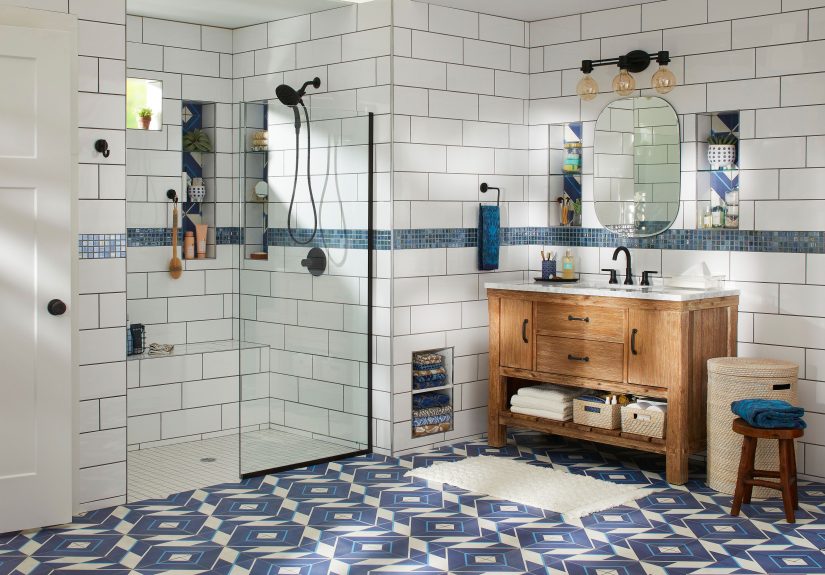
Removing the tub frees up valuable floor space and opens the door to a more comfortable shower. In many homes, that trade-off makes perfect sense. A walk-in shower often feels more modern, easier to access, and more luxurious than a cramped tub-shower combo.
This layout also works beautifully in small rectangular rooms. You can place the vanity near the entry, tuck the toilet in the middle, and install the shower at the far end, sometimes behind glass. That arrangement creates a natural visual path and makes the room feel longer. In narrower bathrooms, a half-wall with glass above it can provide subtle separation while keeping the room bright.
Design ideas that elevate it
Add a built-in niche so bottles are not colonizing the shower floor. Use large-format tile to reduce grout lines and create a calmer look. Frameless glass can make the shower feel almost invisible, which is excellent news for small bathrooms and anyone who dislikes visual clutter.
Watch-outs
If this is the only bathroom in the house, think carefully before skipping the tub. Families with small children often appreciate having at least one bathtub somewhere in the home. A dream bathroom is lovely. A practical resale decision is also lovely.
3. The Classic Full Bath Layout
The full bath is one of the most familiar bathroom floor plans: vanity, toilet, and a bathtub or tub-shower combination, often arranged in a row. It is classic because it works. It handles daily life, suits a wide range of homes, and can be surprisingly efficient in a relatively modest footprint.
Best for
Hall bathrooms, family bathrooms, smaller homes, and remodels where you want dependable function without reinventing the wheel.
Why it works
The full bath often shines in a narrow room, especially when fixtures line one wall. That configuration keeps plumbing efficient and makes renovation planning easier. It also creates a straightforward traffic flow: you walk in, reach the vanity, and move naturally toward the toilet and bathing zone.
For families, the tub-shower combo remains practical. It handles kids, pets, quick showers, and the occasional bubble bath that begins as “self-care” and ends with someone knocking on the door asking where the extra towels are. From a resale perspective, a full bath is also a safe, versatile choice.
How to make it feel bigger
Choose a vanity with drawers instead of a cabinet black hole where hair tools vanish forever. Use a glass shower screen instead of a heavy curtain if privacy allows. Install a recessed medicine cabinet to reclaim storage without crowding the room. Floating vanities and open-leg console sinks can also create more visible floor area, which helps a compact bath feel lighter and larger.
Watch-outs
A standard full bath can become visually bland if every finish is purely utilitarian. Add personality through tile, hardware, lighting, or a vanity color that has some confidence. Practical does not have to mean forgettable.
4. The Galley or Shared Bath Layout
If your bathroom is long and narrow, do not panic. You are not doomed to a weird hallway with a shower. A galley-style layout can be elegant and highly functional when the space is divided thoughtfully. This layout usually places fixtures on opposing walls or zones the room into a linear sequence.
Best for
Long bathrooms, shared bathrooms, Jack-and-Jill arrangements, and remodels where the room footprint is awkward but usable.
Why it works
The galley layout takes a challenging shape and turns it into an advantage. By placing the vanity on one side and the shower or tub on the other, you create a corridor-like flow that feels intentional rather than accidental. Glass shower panels help maintain sight lines, and pocket doors can prevent the space from feeling chopped up.
This style also works well for shared bathrooms because it supports zoning. One person can use the vanity while another uses the toilet or shower area, especially if you add a separate door around the wet zone or toilet compartment. That is the kind of domestic diplomacy that prevents morning traffic jams.
Design ideas that make it sing
Use vertical tile or wall paneling to emphasize height. Add mirrored cabinets with integrated lighting for function and glow. If the room ends at a window, keep the path visually clear so natural light can pull the eye forward. In especially tight spaces, a wet room layout can be a smart option because it simplifies the shower footprint and preserves circulation.
Watch-outs
Do not overload both walls with bulky storage. In a galley bathroom, too much depth on both sides can make the center aisle feel tight. Mix shallow cabinetry, wall-mounted fixtures, and strategic open space to keep the room breathable.
5. The Primary Suite Bathroom Layout
This is the dream-space layout people tend to imagine when they say they want a “spa bathroom.” It usually includes a larger vanity, generous shower, private toilet area, and sometimes a freestanding tub, linen storage, or separate grooming zones. The secret is not merely size. It is thoughtful zoning.
Best for
Primary bedrooms, homeowners planning a long-term remodel, and anyone who wants comfort, privacy, and a little daily luxury.
Why it works
A successful primary bathroom layout separates tasks instead of stacking them into one crowded area. Dual vanities can support two routines at once. A walk-in shower can become the star of the room. A water closet adds privacy. A freestanding tub can act as a focal point if the space truly supports it.
In larger bathrooms, it often helps to think in zones: grooming zone, toilet zone, shower zone, and relaxation zone. That approach makes the room feel calmer and more purposeful. It also keeps the space from becoming one giant echo chamber full of expensive fixtures that do not relate to one another.
Dream-worthy details
Consider a shower bench, built-in niches, layered lighting, radiant floor heating, and a tall cabinet for hidden storage. If you want a luxuriously open feel, a wet-room style setup that combines a tub and shower behind one glass enclosure can be stunning. Natural materials, soft neutrals, and clean-lined fixtures help the room feel timeless rather than trend-chasing.
Watch-outs
Do not add every luxury just because you can. A giant tub no one uses, a vanity with no drawer organization, or a massive shower without enough warmth can turn “dream bathroom” into “beautiful but mildly annoying room.” Prioritize features you will actually enjoy week after week.
Bathroom Layout Mistakes to Avoid
Even a gorgeous bathroom can fail if the layout ignores real-life use. Avoid these common mistakes:
Putting style ahead of clearance. If doors collide, drawers cannot open, or the toilet feels wedged into a corner, the room will never feel right.
Forgetting storage. A bathroom without enough storage becomes a countertop hostage situation in under three days.
Oversizing one feature. Yes, a huge vanity sounds nice, but not if it leaves no comfortable path through the room.
Ignoring lighting. Overhead-only lighting is not kind to faces, moods, or shaving accuracy.
Skipping future needs. Wider entries, curbless showers, and easy-access fixtures can make the bathroom more usable for longer, even if accessibility is not a current concern.
How to Choose the Right Layout for Your Home
If you are still deciding, use this simple rule: choose the layout that supports your daily routine first, then dress it up beautifully. A powder room should charm. A family bath should work hard. A guest bath should be easy and welcoming. A primary bath should feel restorative, organized, and slightly smug about how good it looks.
When in doubt, prioritize flow, storage, and comfort over novelty. A smart bathroom layout does not need to be flashy. It needs to make ordinary life easier while leaving enough room for beauty, personality, and the occasional five-minute escape from the rest of the house.
Everyday Experiences That Make Bathroom Layouts Matter
The funniest thing about bathroom design is that people often make decisions while imagining vacation energy and then live with those decisions on a Monday morning. That is why experience matters. A layout can look perfect on paper and still feel wrong in real life if it ignores how a room is actually used.
Take the powder room, for example. A good one feels effortless. Guests step in, find what they need immediately, and notice the mirror, the wallpaper, or the lighting before they notice the room is small. A bad one makes them do a tiny sideways shuffle around the door and wonder whether washing their hands will require elbow negotiation. The difference is rarely square footage alone. It is layout discipline. It is putting the sink where it feels natural, choosing a slimmer vanity, and making sure the room has breathing space, even when it is compact.
The three-quarter bath creates a different kind of experience. In everyday life, it often feels more modern and more useful than a bath with a tub-shower combo. People who switch to a roomy walk-in shower usually notice the comfort immediately. The room feels less crowded, cleaning gets easier, and the whole bathroom starts to work faster. You can step in, shower, step out, and move on with your day without fighting a curtain, climbing over a tub wall, or balancing shampoo on a ledge the width of a cracker.
Family full baths tell the truth about layout faster than almost any other room. If the vanity lacks storage, it shows. If the tub area is too tight, it shows. If the door swings into the wrong place, the room will announce that flaw loudly every single morning. But when a full bath is designed well, it becomes one of the hardest-working spaces in the house. Towels have a home. The vanity top stays usable. The tub handles bath night without chaos. The room may not feel glamorous every day, but it feels easy, and easy is underrated.
Long, narrow bathrooms are often where homeowners discover the power of visual flow. A galley layout can feel elegant when light travels from end to end, mirrors expand the room, and the shower does not block the view. People are often surprised by how calm a narrow bathroom can feel when the plan is clear and uncluttered. Instead of fighting the shape, the layout starts using it. That is a satisfying design experience because the room stops apologizing for its footprint and starts owning it.
Then there is the primary suite bathroom, which lives somewhere between utility and ritual. The best ones support ordinary routines in a quietly luxurious way. You are not bumping into someone while brushing your teeth. You are not digging through messy drawers for cotton swabs. You are not staring at the toilet from the tub like it is part of the decor. Instead, the room unfolds in zones. The vanity feels organized. The shower feels comfortable. The storage disappears into the background because it is doing its job. That kind of experience is what makes a bathroom feel expensive, even more than the tile or fixtures do.
In the end, dream bathrooms are memorable because they make daily life smoother. The room looks good, yes, but more importantly, it works when you are rushed, tired, hosting guests, bathing kids, or trying to steal ten quiet minutes at the end of the day. That is the real magic of a strong bathroom layout. It does not just decorate the space. It improves the experience of living in it.
Conclusion
The perfect bathroom layout is not one-size-fits-all. It depends on your home, your routine, your budget, and the way you want the space to feel. The good news is that there is a smart solution for nearly every footprint, from compact powder rooms to luxurious primary suites. Choose the layout that fits your life, plan the storage early, respect traffic flow, and let the pretty finishes come in afterward like the well-dressed guests they are.
Do that, and your bathroom will not just look like a dream space. It will actually live like one.