Table of Contents >> Show >> Hide
- How We Judged These 3D Pens (A Realistic At-Home Tryout)
- Quick Comparison: The 4 Best 3D Pens of 2025
- 1) 3Doodler Flow: Best Overall 3D Pen for Home Use
- 2) MYNT3D Professional (OLED): Best for Precision and Control
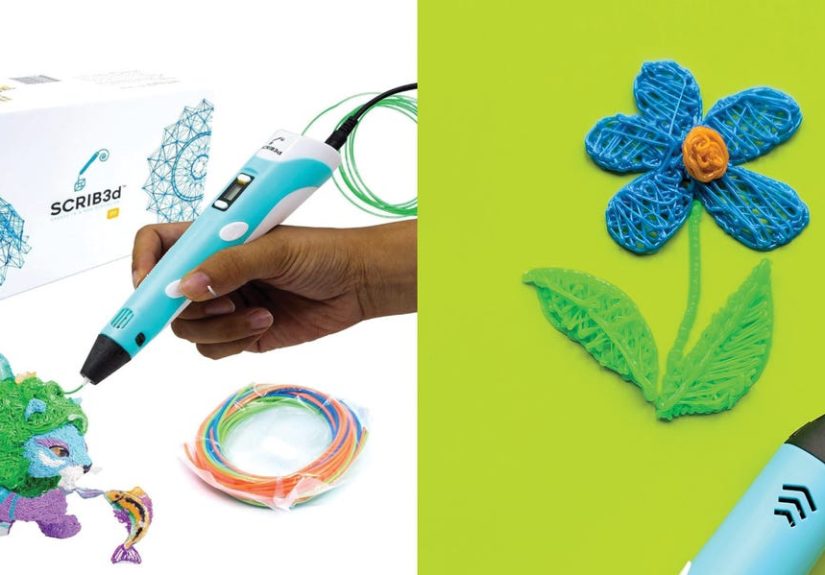
- 3) SCRIB3D P1: Best Budget 3D Pen That’s Still Worth Using
- 4) 3Doodler Start+: Best 3D Pen for Kids and Safety-First Homes
- Buying Guide: What Matters Most in a 3D Pen in 2025
- Tips for Cleaner Results at Home (Without Becoming a Filament Wizard)
- Conclusion: The Best 3D Pen of 2025 Depends on Your “Home Use Personality”
- Extra At-Home Experiences (500+ Words): What It’s Like Living With a 3D Pen
A 3D pen is basically a hot glue gun that went to art school and came back speaking fluent “plastic spaghetti.” You squeeze out warm filament, it cools fast, and suddenly your doodle has bones. That’s the magicand also why the best 3D pen for you depends on what you’re actually doing at home: quick repairs, crafty chaos with kids, detailed model work, or just satisfying “look what I made!” desk trophies.
In 2025, the best 3D printing pens aren’t necessarily the fanciestthey’re the ones that make the learning curve feel like a gentle ramp instead of a cliff made of melted PLA. Better screens, smoother speed control, safer kid-focused designs, and wider filament compatibility have made it easier to get clean lines without turning your project into a modern-art stress test.
Below are four standout 3D pens you can realistically use at homeplus a simple “home tryout” method, practical tips, and a longer at-home experience section at the end so you know what it’s like once the novelty wears off and you’re still trying to make a straight line.
How We Judged These 3D Pens (A Realistic At-Home Tryout)
Instead of treating every pen like it’s competing in the Olympics, we focused on what matters in living-room conditions: uneven tables, mixed skill levels, short attention spans, and the occasional dog who believes filament is gourmet pasta.
Our at-home rubric
- Warm-up + readiness: How quickly you can start without guessing if it’s actually hot enough.
- Flow control: Can you slow down for details and speed up for filling without losing control?
- Starts/stops: Does it ooze and blob when you pause, or behave like a civilized tool?
- Comfort: Grip, button placement, and whether your hand cramps after 10 minutes.
- Filament flexibility: Standard 1.75mm options vs. brand-specific refills.
- Safety: Especially for beginners and kidsheat, tip exposure, and general “oops” potential.
- Reliability: Clogs, jams, and how forgiving it is when you’re learning.
Quick Comparison: The 4 Best 3D Pens of 2025
| Pick | Best For | Filament | Controls | Why It Wins at Home |
|---|---|---|---|---|
| 3Doodler Flow | Most households (beginners → hobbyists) | Standard 1.75mm (PLA/ABS) | LCD + practical speed/temperature handling | Easy to start, flexible filament choices, great “first serious pen” vibe |
| MYNT3D Professional (OLED) | Detail work, makers, repairs, modelers | Wide thermoplastic range (within operating temps) | OLED + fine temperature steps + flow control | Precise control for cleaner lines and tougher projects |
| SCRIB3D P1 | Budget-friendly experimenting | PLA/ABS (1.75mm) | Temp modes + stepless speed slider | Low-cost entry, surprisingly capable, great “try it and see” pick |
| 3Doodler Start+ | Kids, classrooms, safety-first beginners | Low-temp, kid-safe refills | Simple, kid-friendly controls | Designed to be safer for younger creatorsless worry, more fun |
1) 3Doodler Flow: Best Overall 3D Pen for Home Use
If you want one pen that can handle family craft nights and adult hobby projects without feeling like a science fair hazard, the 3Doodler Flow is the easiest recommendation. It’s built around a simple promise: use common 1.75mm filaments (like PLA and ABS), keep controls understandable, and make it feel “plug in and go” without sacrificing too much precision.
Why it’s great in a real home setup
- Standard 1.75mm filament compatibility: Easier to find refills, more colors, and often better value.
- LCD feedback: Less guessing, more doingespecially helpful when you’re learning temperature behavior.
- Beginner-friendly feel: The Flow is the kind of pen that makes you want to keep practicing.
At-home projects it’s perfect for
- Custom labels (plant markers, storage bins, cable tags)
- Simple 3D doodles using stencils, then “welding” pieces together
- Light repairs (reinforcing a cracked plastic corner, adding a grip bump)
- Decor (ornaments, nameplates, textured frames)
What to watch out for
The Flow’s biggest advantagereal thermoplastic filamentalso means real heat. It’s not a toy. Use a silicone mat, keep fingers away from the tip, and treat ventilation like a normal part of the routine (especially with ABS).
Best for: Beginners who want to get good, families who share tools, and hobbyists who want flexibility.
2) MYNT3D Professional (OLED): Best for Precision and Control
The MYNT3D Professional Printing 3D Pen is what you buy when you’ve said, out loud, “I want my lines to look intentional.” It’s built for control: a large OLED display, adjustable feed, and fine temperature tuning so you can match the material instead of fighting it.
Why makers love it at home
- Fine temperature control: Adjustable in small increments for better filament behavior across tasks.
- OLED display: Easy monitoring while you workespecially useful when you’re switching materials.
- Flow control for detail: Slower extrusion can make corners, lettering, and seams look cleaner.
Where it shines
- Model-making: Reinforcing seams, building texture, adding tiny supports
- Functional hacks: Creating a custom clip, hook, spacer, or cable guide
- Repair work: “Plastic welding” style reinforcement (best with patience and practice)
Trade-offs
More control means more responsibility. You can run hotter, try more materials, and create stronger partsbut you also need to pay attention to ventilation, keep a safe working surface, and accept that “pro” tools don’t automatically give “pro hands.” (They do give you a better chance.)
Best for: Hobbyists leveling up, detail-focused creators, and anyone doing frequent repairs or model work.
3) SCRIB3D P1: Best Budget 3D Pen That’s Still Worth Using
The SCRIB3D P1 is proof you don’t need to spend a fortune to start making fun 3D builds. It’s widely sold, typically bundled with starter filament and stencils, and gives you the core features that matter most for beginners: adjustable temperature modes for common plastics and a speed slider that helps you learn control fast.
Why it’s a smart “first 3D pen” buy
- Value-friendly entry: Great for testing whether this hobby sticks.
- PLA/ABS support: Enough range for typical household projects.
- Stepless speed slider: Easy to “feather” flow as you learn.
At-home reality check
Budget pens can be slightly fussier about technique. Expect a short learning curve: anchoring lines, slowing down on corners, and practicing “lift and pause” without stringing. Once you get the rhythm, it’s surprisingly capable for craft-level builds and beginner model work.
Best for: Beginners on a budget, teens exploring maker hobbies, and gift-givers who don’t want to overcommit.
4) 3Doodler Start+: Best 3D Pen for Kids and Safety-First Homes
If you’re buying for a younger creator (or you just want the least stressful introduction possible), the 3Doodler Start+ is designed around safety and simplicity. The big idea: keep it kid-appropriate, with features meant to reduce burn risk and make the experience more “create and play” than “monitor and panic.”
Why parents and teachers like it
- Safety-focused design: Built for younger hands and safer handling.
- Simple learning: Less fiddling with settings, more time making things.
- Confidence builder: Kids can practice spatial thinking and creativity without constant adult takeover.
The trade-off (and it’s a fair one)
Kid-safe pens often use specific refills rather than standard spools. That’s not “bad”it’s how they keep temperatures lower and the experience more controlled. Just know you’re choosing safety and simplicity over maximum material flexibility.
Best for: Kids, classrooms, and households that want “safe-first” over “pro features.”
Buying Guide: What Matters Most in a 3D Pen in 2025
1) Filament type (and why ventilation still matters)
Most adult 3D printing pens use thermoplastics like PLA and ABS. PLA is often favored for easier handling and typically less harsh odor, while ABS can smell stronger. No matter what you use, treat ventilation as non-negotiable: crack a window, run a fan, and avoid hovering directly over the tip like you’re trying to smell “freshly baked filament.”
2) Temperature control = fewer blobs and better bonds
Pens with better temperature control and a clear display make it easier to match heat to the filament. That means smoother extrusion, better layer bonding, and fewer “why is it doing that?” moments. For beginners, this can be the difference between loving the hobby and rage-quitting into a pile of stringy plastic.
3) Speed/flow control is your steering wheel
A stepless speed slider is especially friendly for home use because it lets you slow down for detail and speed up for filling without feeling locked into presets. If you care about neat lettering or clean edges, flow control matters as much as temperature.
4) Comfort and ergonomics matter more than you think
If a pen feels awkward, you won’t use it. Look for a grip that doesn’t force a weird wrist angle and controls that are easy to reach without shifting your hand every 12 seconds.
Tips for Cleaner Results at Home (Without Becoming a Filament Wizard)
- Start with “flat pieces,” then assemble: Make two-dimensional parts on a template, then join them like panels.
- Anchor first: Put down a small bead to start a line; it helps prevent skating across the surface.
- Use the pen like a welder: You can join edges by re-melting and adding a small reinforcing line.
- Slow corners down: Most messy builds are just “too fast at the turns.”
- Practice vertical lines last: Vertical work is harder because gravity is undefeated.
- Pick PLA for calmer practice: It’s often the easiest “learn the basics” filament for many users.
Conclusion: The Best 3D Pen of 2025 Depends on Your “Home Use Personality”
If you want the most balanced, home-friendly experience, go with the 3Doodler Flow. If you want precision and serious control for detailed builds, the MYNT3D Professional (OLED) is the upgrade path that makes sense. If you’re watching your budget (or buying a first pen as a trial run), the SCRIB3D P1 is a strong entry point. And if you want safety-first creativity for younger makers, the 3Doodler Start+ is built to keep the fun high and the stress low.
Whichever pen you choose, the biggest “at-home success hack” is simple: work in a ventilated area, practice on stencils, and treat your first few projects like warm-upsnot masterpieces. Your future self (and your tabletop) will thank you.
Extra At-Home Experiences (500+ Words): What It’s Like Living With a 3D Pen
Here’s the part nobody tells you: the first day with a 3D pen is pure joy, the second day is mild confusion, and the third day is when you finally understand that you’re not “drawing,” you’re “managing molten behavior.” Once you accept that, everything gets easier.
A realistic at-home session usually starts with the same ritual: clear a small area, put down a silicone mat or scrap cardboard, and pre-pick a project that’s forgiving. The best beginner win is a flat stencil builda simple star, a name tag, or a little geometric panel. You trace slowly, let it cool for a few seconds, and peel it up. That first successful peel feels like you just discovered fire (except the fire is plastic and you should not touch the hot part).
Once you’ve made a couple flat pieces, the “aha” moment is assembly. You line two panels up like you’re building a tiny cardboard box, then you run a bead along the seam. This is where a pen with solid flow control feels like a super power: too fast and you get blobs; too slow and the bond is weak. The sweet spot is a steady pace where the filament looks like it’s laying down with purpose. It’s weirdly satisfyinglike frosting a cake, but for people who organize screws by size for fun.
In a normal home, 3D pens quickly turn into micro-fix tools. A loose cable that needs a guide on the back of a desk? You can create a tiny clip. A wobbly drawer organizer that keeps shifting? Add a small “stopper bump.” A kid’s toy with a cracked plastic edge? Reinforce the corner with a few careful passes (and yes, you’ll learn quickly that patience is the best filament accessory). These aren’t structural engineering miracles, but they’re surprisingly useful “good enough” fixes that feel like cheating.
The most fun household use might be customization. People make plant markers with raised lettering, decorate picture frames with textured borders, add grip ridges to tools, or create personalized keychains. Even when the lines aren’t perfectly smooth, the handmade look is part of the charm. In fact, slightly imperfect 3D pen art has the same vibe as homemade cookies: not bakery-perfect, but somehow more lovable.
You also learn a few “home truths.” One: ventilation matters, even if you don’t notice a strong smell. Two: speed changes everything; most mistakes come from rushing. Three: you’ll collect filament colors like they’re Pokémon. And four: everyone in the house will eventually ask you to “just make a small hook real quick,” which is how your 3D pen becomes both a craft tool and a tiny household service business.
The best long-term experience comes from choosing the pen that matches your home. If you want family-friendly ease and flexibility, an all-rounder is happiest. If you want cleaner seams and more control, the more adjustable “pro” style pen will make practice feel more rewarding. And if you’re buying for kids, the right safe-first pen means they can create more independentlywhich is the whole point of having a creativity tool in the first place.