Table of Contents >> Show >> Hide
Bathrooms are sneaky little rooms. They look harmless, sure, but they have a talent for exposing bad paint choices faster than almost anywhere else in the house. A shade that seemed charming on a sample card can suddenly look cold, dingy, or oddly dramatic once it meets mirror glare, LED bulbs, tile undertones, and the brutally honest light of 7:12 a.m. In other words, your bathroom does not care about your feelings.
That is exactly why certain bathroom paint colors tend to inspire serious remorse. Designers keep seeing the same story play out: a homeowner wants a fresh, clean, stylish update, picks a color that looks great online, and then discovers the room feels smaller, harsher, darker, or just plain weird in real life. If you are planning a bathroom refresh, this is the moment to learn from other people’s paint-induced heartbreak.
Below are the four bathroom paint colors people most often regret, why they backfire, and what to use instead if you want a bathroom that feels flattering, functional, and far less likely to make you mutter, “Well, that looked better on Pinterest.”
Why Bathroom Paint Mistakes Happen So Fast
Bathrooms are not like living rooms. They usually have less natural light, more shadows, more reflective surfaces, and more hard finishes competing for attention. White porcelain, chrome fixtures, stone counters, and glossy tile all bounce color in weird ways. Add cool LED bulbs or a windowless layout, and suddenly the paint on your walls is running the whole show.
That is why bathroom paint colors need to work a little harder. They have to look good in morning light, evening light, artificial light, and no light except that one ceiling fixture that always seems personally offended by your existence. They also need to play nicely with your skin tone, because a bathroom is one of the few rooms where you are constantly looking at your own reflection. A color that makes the room look chic but makes you look vaguely seasick is not a win.
1. Cool-Toned Blues
Why People Regret It
Blue sounds like a safe bathroom color. It is calm, classic, and associated with water, so on paper it seems like a slam dunk. But cool-toned blues are where people get into trouble. In real bathrooms, especially small or low-light ones, icy blue walls can make the space feel dull rather than serene. Instead of giving off spa energy, they can read chilly, flat, and weirdly lifeless.
The bigger problem is what those blue undertones do in the mirror. Bathrooms are where you shave, do skincare, apply makeup, and check whether life is treating you kindly. A cool blue wall can throw off your reflection and make your complexion look tired or washed out. That may be a design choice in a moody fashion campaign. It is less charming when you are just trying to brush your teeth without looking like a Victorian ghost.
Cool blues can also fight with existing finishes. If your bathroom has warm tile, cream stone, brass hardware, or beige flooring, an icy blue wall may create a subtle but persistent visual argument. And nobody wants their walls and floor locked in passive-aggressive conflict.
What to Use Instead
If you love blue, go softer and warmer. Look for blue-green shades, dusty blue-grays with warmth, or muted coastal tones that feel gentler in artificial light. Better yet, consider soft sage, pale eucalyptus, or a creamy neutral with a whisper of color. You still get calm, but without the freezer-burn effect.
2. Stark Gray
Why People Regret It
Gray had a long run. It was modern. It was safe. It matched everything. It was the sweatpants of interior design. But in bathrooms, stark or overly cool gray often reads clinical instead of sophisticated. What was supposed to feel sleek can wind up looking sterile, flat, and a little depressing.
The issue is not all gray. The problem is the wrong gray. Harsh grays without warm undertones tend to pull the life out of a bathroom, especially when paired with white fixtures and cool lighting. The room can feel like a waiting area in a very expensive dentist’s office. Functional? Sure. Inviting? Not exactly.
Gray is also a repeat offender when it comes to trend regret. Many homeowners chose gray because it felt neutral and universally appealing, only to realize later that it lacked warmth and personality. In a bathroom, where space is already limited, that emotional flatness gets amplified. The result can be a room that looks clean but never comfortable.
What to Use Instead
Swap cold gray for a warmer neutral. Think creamy greige, mushroom, pale taupe, soft putty, or a white with a little depth. These shades still feel polished and flexible, but they bring softness back into the space. They also pair better with the warmer tile, natural stone, brass accents, and earthy finishes that are dominating current bathroom design.
3. Crisp, Bright White
Why People Regret It
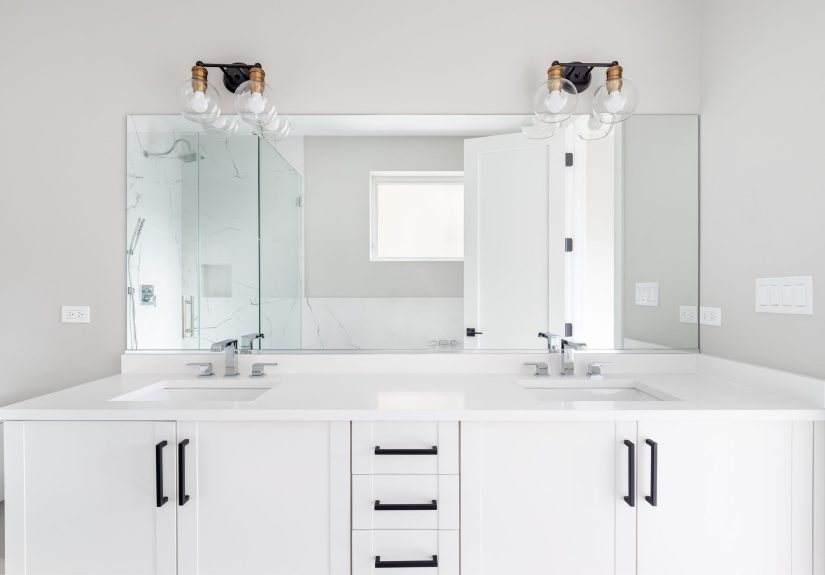
There is a reason white bathrooms remain popular: they can look clean, timeless, and expensive. But crisp, bright white is not the same thing as a soft, flattering white. In bathrooms, a sharp white can feel glaring, cold, and sterile, especially when there is not enough natural light to soften it.
This is one of the most common bathroom paint mistakes because people assume white is foolproof. It is not. Bright white has a way of exaggerating every hard surface in the room. Instead of creating a relaxing retreat, it can make the space feel overly stark and unforgiving. Tile looks harder. Lighting feels harsher. Morning reflection becomes a little too honest.
Another problem is that bright white can make other finishes look off. If your vanity is a warm wood tone, your floor leans beige, or your marble has creamy veining, a stark white wall can throw the whole palette out of balance. The room starts to look pieced together instead of intentional.
What to Use Instead
Choose a warmer white or off-white with creamy, taupe, blush, or beige undertones. These shades still brighten the room, but they feel more relaxed and more flattering. They also create the spa-like effect people are actually chasing when they say they want a “white bathroom.” Translation: they give you the serenity without the hospital corridor vibe.
4. Deep, Color-Drenched Dark Tones
Why People Regret It
Dark bathrooms photograph beautifully. A moody charcoal, inky navy, espresso brown, or near-black wall can look dramatic, luxurious, and deeply cool in magazine spreads. The catch is that real bathrooms have to function in real life. And dark color-drenched walls often ask more from a room than the room can deliver.
In a large bathroom with layered lighting, great ceiling height, and carefully chosen reflective materials, dark paint can absolutely work. But in the average bathroom, it can make the space feel smaller, heavier, and cave-like. Mirrors do not rescue it as much as people hope. Sometimes they just reflect the darkness back at you like a moody art installation.
Dark tones also create practical issues. Grooming tasks become harder under insufficient lighting, wall imperfections become more noticeable depending on finish, and the room may feel oppressive rather than cozy. It is the classic “looked romantic online, feels like a fancy bunker in person” problem.
What to Use Instead
If you want drama, be strategic. Reserve deeper shades for a powder room, a vanity, lower cabinetry, or a single architectural moment. In a primary bath, use mid-tone earthy colors that still have depth without swallowing the room. Think muted olive, smoky green, warm navy, or rich clay. You get personality without losing practicality.
How to Avoid Bathroom Paint Regret
Test the Color in Morning and Night
Bathroom lighting changes constantly, and many regrets happen because homeowners only look at a swatch once. Paint a large sample on multiple walls and check it in daylight, evening light, and under vanity lighting. What looks soft at noon may look icy at 9 p.m.
Compare It Against Tile, Countertops, and Towels
A bathroom wall color never lives alone. Hold your sample next to tile, stone, flooring, and cabinetry. If the undertones clash, the room will always feel a little “off,” even if you cannot immediately explain why.
Choose a Finish That Can Handle Humidity
Color matters, but finish matters too. Bathrooms need paint that can stand up to moisture and regular cleaning. In many cases, satin or semi-gloss is recommended for durability, though some bath-specific formulas are designed to perform well even in lower-sheen finishes. If the color is perfect but the finish is wrong, your walls may still age badly.
Think About Your Reflection
This sounds dramatic, but it is wildly practical. Your bathroom is a face room. Anything that makes your skin look gray, sallow, or washed out will start to annoy you faster than a trendier but less functional color in another part of the house.
What Bathroom Paint Colors Age Better?
The shades that tend to hold up best are the ones that balance warmth, softness, and flexibility. Warm whites, creamy off-whites, pale taupes, mushroom tones, muted greens, and dusty blue-greens usually perform better over time because they are easier to live with and easier to pair with evolving finishes.
These colors also work across a range of bathroom styles. They can support modern, traditional, coastal, farmhouse, transitional, and spa-inspired designs without feeling chained to one very specific moment in trend history. That is usually the sweet spot: enough personality to feel intentional, enough restraint to stay livable.
Experience Section: Lessons People Learn the Hard Way
Ask enough homeowners about bathroom paint, and you start hearing the same confessions. One person picked a pale icy blue because it looked peaceful online, only to discover it turned the whole room cool and dim once the sun went down. Another chose a sleek gray because it felt safe and modern, but after a few weeks they realized the room felt joyless, like it was designed by someone whose favorite hobby was alphabetizing tax documents. The paint itself was not “wrong” in a universal sense. It was wrong for that lighting, that tile, that mirror, that daily routine.
Then there is the white bathroom story, which is practically a genre at this point. A homeowner wants clean, crisp, hotel-like elegance. They choose the brightest white possible. They paint everything. The walls. The trim. Maybe the vanity too. At first, it feels fresh. Then the room starts to feel sterile. The marble looks colder. The vanity lights feel harsher. Makeup goes on differently than expected. Suddenly the “luxury spa” vision has drifted into “high-end urgent care.” The fix is often simple, which is almost funny: repaint with a softer white, and the whole room exhales.
Dark colors create a different kind of regret. People fall in love with dramatic bathroom photos because the images are controlled so perfectly. The lighting is layered. The room is styled within an inch of its life. There are candles, brass details, and probably one artfully folded towel that has never once met an actual human. In real life, though, the average bathroom has one overhead light, a mirror, and a schedule. Once the deep charcoal or black goes up, the room can feel smaller and harder to use. Beautiful? Possibly. Functional at 6:30 in the morning? That is where the romance ends.
One of the smartest lessons homeowners share is that undertones matter more than color names. A “white” is never just white. A “gray” is never just gray. A blue can lean green, violet, or steel, and those subtle shifts become very obvious in a bathroom. People who test samples against tile, vanity finishes, and skin tone tend to be much happier in the long run. People who choose from a phone screen while sitting on the couch tend to learn expensive life lessons.
Another common experience is realizing that the best bathroom colors are not always the most dramatic ones. They are the ones that support everyday life. The flattering ones. The forgiving ones. The ones that still look good when the room is humid, the light is bad, and you have exactly four minutes to get ready. In that sense, the most successful bathroom paint is not the color that shouts the loudest. It is the color that quietly makes everything else feel better.
The Bottom Line
The bathroom paint colors people regret most usually have one thing in common: they looked better in theory than they performed in real life. Cool-toned blues can feel chilly and unflattering. Stark gray often turns clinical. Crisp bright white can look harsh instead of calming. Deep, dark color-drenching can become heavy and impractical fast.
If you want a bathroom that still feels good six months from now, lean toward warmer, softer, and more adaptable shades. Test them carefully. Watch how they behave in your actual light. And remember: in a room full of mirrors, tile, steam, and sleepy faces, paint does not just decorate. It performs.
Choose wisely, and your bathroom will feel like a retreat. Choose poorly, and it may spend the next year roasting you before coffee.