Table of Contents >> Show >> Hide
- Start With Smart Everyday Storage
- 1. Keep a ring dish by the sink or bedside
- 2. Use a vintage teacup as a tiny jewelry catchall
- 3. Arrange small bowls and pinch dishes inside a drawer
- 4. Repurpose a muffin tin for category sorting
- 5. Store studs and rings in an ice cube tray
- 6. Upcycle an egg carton for small accessories
- 7. Use shallow jelly jars or mini jars for loose pieces
- 8. Thrift pretty plates and butter pats for drawer storage
- Upgrade Your Drawers Like a Pro
- 9. Dedicate one drawer only to jewelry
- 10. Use felt-lined drawer inserts
- 11. Add stackable trays inside a shallow drawer
- 12. Repurpose a silverware organizer
- 13. Use repurposed food storage containers as drawer bins
- 14. Clip earring pairs onto cardstock cards
- 15. Create roomy compartments for statement pieces
- 16. Store rings on a key ring for quick browsing
- 17. Sort by type first, then by finish
- 18. Separate fine jewelry from costume jewelry
- Go Vertical to Save Space and Prevent Tangles
- 19. Install wall hooks for necklaces
- 20. Use a tension rod with S-hooks inside a closet cubby
- 21. Mount a coat rack as a jewelry rail
- 22. Build a framed corkboard organizer
- 23. Try a pegboard jewelry wall
- 24. Use ribbon or lace strips for hanging earrings
- 25. Mount a flatware tray vertically as wall storage
- 26. Turn a shadow box into a jewelry display case
- Use Decorative Displays That Double as Decor
- Organize by Space, Routine, and Lifestyle
- How to Choose the Best Jewelry Organization Method for You
- Common Jewelry Organization Mistakes to Avoid
- Conclusion
- Experience Notes: What It Really Feels Like to Organize Jewelry (Extended Section)
If your jewelry collection currently looks like it survived a tiny, glittery tornado, you are not alone. Between tangled necklaces, runaway earrings, and rings that mysteriously disappear the moment you need them, jewelry clutter can get chaotic fast. The good news? You do not need a custom dressing room or a celebrity-sized budget to fix it.
The smartest jewelry organization ideas all follow a few simple rules: keep pieces separated, make favorites easy to see, protect delicate items from scratches, and create a system you will actually use on busy mornings. This guide pulls together practical, stylish, and budget-friendly ideas so you can build a setup that works for your space, whether you have a studio apartment, a roomy closet, or one overworked dresser drawer.
Below are 36 creative ways to organize jewelry, plus real-life organizing experiences at the end to help you choose what is worth trying first.
Start With Smart Everyday Storage
1. Keep a ring dish by the sink or bedside
A small catchall dish is the MVP of everyday jewelry storage. Use it for rings, studs, and the necklace you take off before bed. This simple move prevents “I know I put it somewhere safe” syndrome.
2. Use a vintage teacup as a tiny jewelry catchall
Teacups are charming, compact, and perfect for rings or dainty earrings. Bonus: they make your dresser look intentional instead of “I dumped my accessories here and ran.”
3. Arrange small bowls and pinch dishes inside a drawer
Instead of one big jumble zone, use several little bowls to sort by type or color. It is a great solution for people who want quick access without buying specialty organizers.
4. Repurpose a muffin tin for category sorting
Muffin tins are surprisingly good at separating rings, earrings, and bracelets. Slide one into a drawer and you instantly get a low-cost, easy-to-clean compartment system.
5. Store studs and rings in an ice cube tray
Ice cube trays are ideal for tiny pieces that vanish easily. Each compartment becomes a mini parking spot, which also makes getting ready much faster.
6. Upcycle an egg carton for small accessories
Egg cartons work well for earrings, brooches, and rings, especially if you are testing a system before investing in organizers. It is inexpensive, lightweight, and weirdly effective.
7. Use shallow jelly jars or mini jars for loose pieces
Small jars are perfect for bracelets, hoops, or backup earring backs. Clear jars let you see what you have at a glance, which means fewer duplicates and less digging.
8. Thrift pretty plates and butter pats for drawer storage
Vintage plates, saucers, and tiny dishes add personality while keeping jewelry separated. If your organizer makes you smile, you are more likely to maintain it.
Upgrade Your Drawers Like a Pro
9. Dedicate one drawer only to jewelry
Mixing jewelry with random receipts, lip balm, and mystery chargers is how tangles happen. A dedicated drawer creates boundaries and makes your collection feel manageable.
10. Use felt-lined drawer inserts
Felt-lined compartments help reduce sliding, scratches, and noisy metal-on-wood contact. They are especially useful for rings, delicate chains, and pieces with stones.
11. Add stackable trays inside a shallow drawer
Stackable trays multiply storage space without stuffing everything together. Use the top tray for daily wear and the bottom for special occasion pieces.
12. Repurpose a silverware organizer
Flatware trays are almost custom-made for jewelry. Long sections fit bracelets and necklaces, while smaller slots handle earrings and rings beautifully.
13. Use repurposed food storage containers as drawer bins
Small lidded or open containers can be grouped inside a drawer to create a flexible system. This works especially well if your collection changes often and you need adjustable storage.
14. Clip earring pairs onto cardstock cards
Cardstock “earring cards” keep pairs together and make it easier to scan your options. It is a practical trick for studs and smaller dangles that otherwise migrate.
15. Create roomy compartments for statement pieces
Not everything belongs in tiny slots. Chunky necklaces, large brooches, and bold cuffs need larger compartments so they do not crush or scratch smaller items.
16. Store rings on a key ring for quick browsing
A smooth key ring can hold multiple rings in one place. You can flip through your collection like a tiny jewelry rolodex (retro reference, but accurate).
17. Sort by type first, then by finish
Group earrings with earrings, necklaces with necklaces, and so on. Then split by gold-tone, silver-tone, or mixed materials. This system makes finding a match dramatically easier.
18. Separate fine jewelry from costume jewelry
Fine and fashion jewelry often need different care. Separate storage helps protect delicate items, reduces scratching, and keeps your most valuable pieces easier to monitor.
Go Vertical to Save Space and Prevent Tangles
19. Install wall hooks for necklaces
Hanging necklaces individually prevents knots and lets you see lengths, pendants, and colors at a glance. It is one of the best fixes for repeat tangling.
20. Use a tension rod with S-hooks inside a closet cubby
A tension rod turns unused closet space into a necklace-and-bracelet station. It is renter-friendly, budget-friendly, and surprisingly sturdy for daily use.
21. Mount a coat rack as a jewelry rail
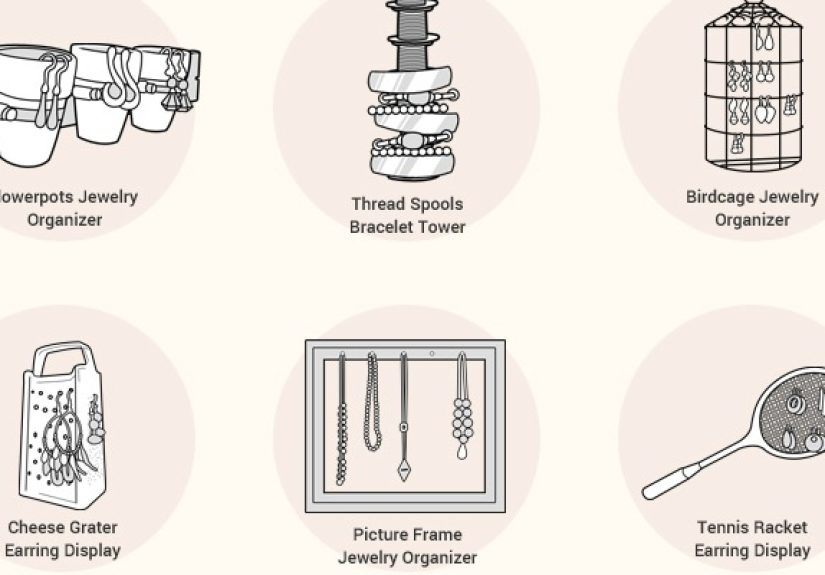
Coat racks are not just for jackets. Wall-mounted pegs can hold long necklaces, lariats, and bracelets while doubling as decorative display.
22. Build a framed corkboard organizer
A corkboard covered in fabric (or left plain for a minimalist look) creates a customizable jewelry wall. Use decorative pins or hooks for necklaces and bracelets.
23. Try a pegboard jewelry wall
Pegboards are the Swiss Army knives of organizing. With hooks, cups, and mini shelves, you can store jewelry, sunglasses, and even perfume in one neat zone.
24. Use ribbon or lace strips for hanging earrings
Attach ribbon or lace to a frame, then slip earring hooks through the fabric. It is a soft, pretty method that also makes your earrings feel like art.
25. Mount a flatware tray vertically as wall storage
A mounted silverware tray gives you ready-made compartments on the wall. It is clever, compact, and ideal for people who want visual storage without cluttering surfaces.
26. Turn a shadow box into a jewelry display case
Shadow boxes provide depth, protection, and style. Add hooks, mesh, or small ledges inside to create a custom display for mixed jewelry types.
Use Decorative Displays That Double as Decor
27. Place a necklace bust on your dresser
A display bust looks elegant and helps prevent necklace tangles. It is especially useful for heavier or layered necklaces that do not sit well on small hooks.
28. Use a T-bar stand for bracelets and daily necklaces
T-bar stands keep bracelets and short necklaces visible and easy to grab. They also help you rotate what you wear instead of defaulting to the same two pieces forever.
29. Repurpose a paper towel holder for bangles
If you own a lot of bangles, a standing paper towel holder is an unexpectedly great display. Slide them on, line them up, and enjoy instant bracelet order.
30. Drape bracelets or necklaces over decorative vases
Sculptural vases can become functional jewelry stands while adding style to a vanity or shelf. Use this for pieces you wear often, and keep tarnish-prone metals monitored.
31. Use a mirrored jewelry armoire
A mirrored armoire combines hidden storage with a full-length mirror, which is basically a two-for-one win. Great for larger collections or anyone short on drawer space.
32. Add a tabletop acrylic organizer for visibility
Clear acrylic organizers are excellent if you like seeing everything. They work particularly well for rings, studs, and small pendants while keeping your setup visually light.
Organize by Space, Routine, and Lifestyle
33. Create an accessory drop zone near your getting-ready area
Keep jewelry, belts, sunglasses, and a mirror in one station so your finishing touches live together. This reduces the “where are my hoops?” sprint before leaving the house.
34. Add stackable shelves above jewelry trays
Use a small stackable shelf on a dresser or closet shelf to create vertical levels. Store trays and boxes below, then use the wall or upper space for hooks.
35. Build in jewelry storage during a closet or vanity remodel
If you are designing cabinetry, include shallow drawers, lined compartments, or vertical pullouts. Built-in storage uses awkward side panels and dead space more efficiently.
36. Create a weekly “reset” routine to maintain the system
Even the prettiest organizer fails if everything gets tossed in a pile on Friday night. Spend five minutes once a week returning pieces to their homes and checking for tangles.
How to Choose the Best Jewelry Organization Method for You
Before buying anything, look at your collection honestly. Do you have ten delicate necklaces and two rings, or a full rainbow of bangles and statement earrings? Your best jewelry organizer depends on what you own, how often you wear it, and how much space you actually have.
Pick open storage if you want visibility
Open displays such as hooks, stands, and trays make it easier to wear more of your collection because you can see it. They are ideal for everyday pieces and quick accessorizing.
Pick closed storage if you want protection
Closed boxes, drawers, and armoires offer better protection from dust, humidity, and accidental snags. They are often the better choice for fine jewelry or sentimental pieces.
Use a hybrid setup for the best of both worlds
Most people do best with a hybrid system: open storage for daily wear, closed storage for long-term protection, and one travel case for jewelry on the go. Translation: practical and pretty can absolutely coexist.
Common Jewelry Organization Mistakes to Avoid
A few mistakes can undo even the most beautiful setup. Avoid storing everything in one catchall, mixing metals without separation, keeping jewelry in humid bathrooms, or using hard, unlined containers for delicate pieces. Also, if your organizer is too small, it is not a character flawit is just time for a better system.
Conclusion
Organizing jewelry does not require a dramatic makeover, just a smarter plan. Start with one trouble spot (usually necklaces or earrings), choose one or two solutions from this list, and build from there. The best jewelry organization ideas are the ones that fit your habits, protect your pieces, and make getting dressed feel easier.
Whether you go full jewelry armoire or proudly repurpose a muffin tin, the goal is the same: less tangling, less searching, and more actually wearing the pieces you already love.
Experience Notes: What It Really Feels Like to Organize Jewelry (Extended Section)
One of the most common experiences people have when organizing jewelry is surprise. You think you own “a few things,” then you empty one drawer and suddenly you are staring at three single earrings, seven black hair ties pretending to be jewelry, and a necklace you have not seen since a friend’s wedding. That first sort can feel messy, but it is also incredibly helpful because it shows you what you really wear and what has just been taking up space.
Another real-life pattern: the system that looks best online is not always the one that works best on a rushed weekday morning. A beautiful wall display can be great for necklaces, but if your rings always come off at the kitchen sink, you still need a dish there. Many people end up succeeding when they build “zones” based on habits instead of trying to force every piece into one perfect organizer.
People with sentimental jewelry often have a different experience than people organizing mostly fashion accessories. Sentimental pieces can slow down the process because every item has a memory attached to it. In that case, it helps to separate “wear often,” “special occasions,” and “keepsake” jewelry. Once those categories are clear, storage decisions become much easier and less emotional.
Small-space living also changes the experience. If you live in an apartment with limited drawers, vertical storage feels like a game-changer. A tension rod, hooks, or a framed earring display can free up surface space immediately. On the other hand, if you have kids or pets, open display may feel risky, and closed storage starts to look a lot smarter very quickly.
Frequent travelers usually discover that travel cases are not optionalthey are sanity savers. Without a dedicated case, jewelry gets tossed into pouches, pockets, and makeup bags, which is basically an invitation for tangles. A compact case with small compartments and a necklace strap often becomes the unsung hero of the entire setup.
Finally, the maintenance experience is what determines whether your system lasts. Most people do not need to reorganize from scratch every month; they just need a quick reset. Five minutes to return pieces, re-pair earrings, and untangle one chain is usually enough. The biggest win is not having a Pinterest-perfect display. It is opening your drawer, finding what you want in seconds, and starting your day without a mini treasure hunt.