Table of Contents >> Show >> Hide
- Jump to a section
- Foundational classics (aka: the books that built the house)
- Contemporary fiction & short stories (modern life, sharp edges, zero stereotypes)
- Horror, thrillers & speculative bangers (for your “just one more chapter” era)
- Nonfiction & memoir (for facts, fire, and “wait… I never learned this” moments)
- Poetry that rewires your brain (and maybe your heart)
- YA & kids (yes, adults belong here too)
- How to build a better Native-authored bookshelf (without turning it into a checklist)
- Reader experiences: what these books feel like in real life (and how to make them stick)
- Final thoughts
If your bookshelf had a personality, it would be beggingpolitely, but with intensityfor more Native voices. Native American literature isn’t one “genre.” It’s a whole library wing: literary fiction, horror, romance, history, memoir, poetry, and YA that punches way above its weight. These books don’t just “teach you something” (though yes, they’ll absolutely make you smarter). They also entertain, wreck you emotionally, make you laugh at inconvenient times, and remind you that Native life is contemporary, specific, and wildly diverse.
Below are 32 standout picks by Native American authorsorganized by vibeso you can build a shelf that’s less “I read one book in November” and more “I’m in this for the long haul.”
Foundational classics (aka: the books that built the house)
House Made of Dawn N. Scott Momaday
A landmark novel about a Native veteran returning home after World War II, carrying trauma, disorientation, and a deep longing to belong. The prose is lyrical and intentionalthis is the kind of book that makes you slow down and actually taste the sentences.
Best for: readers who love literary classics with emotional force and spiritual depth.
Ceremony Leslie Marmon Silko
If “healing” could be structured like a novellayered timelines, stories inside stories, memory and myth braided togetherthis would be it. It follows a mixed-heritage veteran trying to recover in the aftermath of war, while the narrative insists that personal recovery is never separate from community, land, and story.
Best for: fans of complex storytelling, folklore, and books you’ll want to reread.
Love Medicine Louise Erdrich
An interlinked, multi-voiced family saga that moves across decades, relationships, and community life with humor and heartbreak in equal measure. This is the novel that convinces people they like “literary fiction,” even when they swear they don’t.
Best for: readers who love big casts, messy families, and razor-sharp observation.
Winter in the Blood James Welch
Spare, blunt, and quietly devastating. A young man drifts through loss and alienation, trying to find a language for grief without turning it into a performance. The power here is in what’s not saidand how much it still hits.
Best for: readers who like minimalist novels with emotional gravity.
Shell Shaker LeAnne Howe
A propulsive Choctaw story that leaps between timelines and blends politics, mystery, cultural survival, and the long memory of community. It’s bold, inventive, and not remotely interested in being “nice” for anyone’s comfort.
Best for: readers who want history, satire, and suspense in one fearless package.
Pushing the Bear Diane Glancy
A haunting, polyphonic novel centered on the forced removal known as the Trail of Tears. It refuses to turn history into an easy lesson; instead, it becomes a chorus of voiceswomen, families, and communitiesenduring the unendurable.
Best for: readers drawn to historical fiction with poetic intensity and moral clarity.
Contemporary fiction & short stories (modern life, sharp edges, zero stereotypes)
The Night Watchman Louise Erdrich
Inspired by a real fight against U.S. government policy targeting tribal rights, this novel blends political urgency with intimate community life. It’s funny, tender, enraging, and deeply humanlike your favorite people, but on paper.
Best for: readers who want history + heart + characters you’ll miss.
There There Tommy Orange
A kaleidoscopic novel of urban Native lives, converging around a powwow in Oakland. It’s fast, voice-driven, and structurally clevereach perspective adding pressure until the book becomes a living, breathing collision of identity, longing, and consequence.
Best for: fans of multi-POV novels and contemporary literary momentum.
Wandering Stars Tommy Orange
A sweeping story that reaches back into historical trauma and forward into present-day survival, tracing how violence reverberates across generations. It’s ambitious and emotionally raw, yet still crackles with dark humor and fierce tenderness.
Best for: readers who like expansive, multigenerational narratives.
Where the Dead Sit Talking Brandon Hobson
A quiet, poignant novel about foster care, friendship, and the strange ways two young people try to be okay when life keeps proving they shouldn’t be. It’s subtle and compassionate, with a sense of dread that never turns melodramatic.
Best for: readers who love coming-of-age stories with emotional nuance.
The Removed Brandon Hobson
Grief takes many shapes; this novel lets it take all of themfamily drama, spiritual haunting, and a society that insists Native pain must be either invisible or inspirational (preferably both). It’s brave, inventive, and surprisingly tender.
Best for: readers who like literary fiction with supernatural undertones.
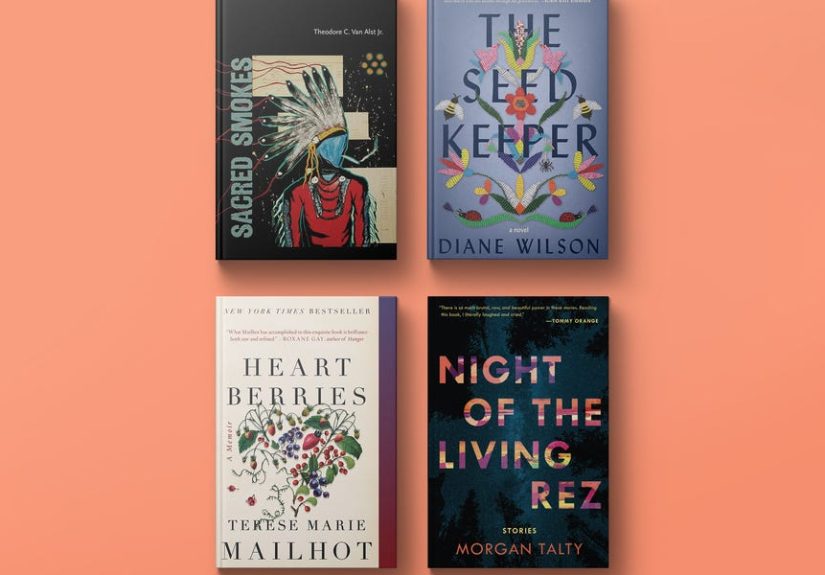
Night of the Living Rez Morgan Talty
A linked short story collection set in a Penobscot community, full of humor, ache, and complicated love. The stories are sharp without being cynicallike a friend who roasts you because they know you can take it (and because they care).
Best for: readers who like short stories that feel like a novel-sized punch.
Calling for a Blanket Dance Oscar Hokeah
Interconnected stories focused on an intertribal community in Oklahomaidentity, adoption, belonging, basketball, grief, laughter. The writing is warm and direct, and it captures the “small moments that are actually huge” better than most novels.
Best for: anyone who loves community-centered storytelling.
Old School Indian Aaron John Curtis
A contemporary novel that looks at identity, love, and complicated community ties with both bite and tenderness. It’s the kind of story that can be funny on one page and emotionally precise on the nextbecause that’s how real life works.
Best for: readers chasing fresh voices and modern Native life on the page.
The Seed Keeper Diane Wilson
A multigenerational narrative where seeds are more than seeds: they’re memory, resilience, and continuity. The book moves between past and present to show how family stories surviveeven when history did its best to erase them.
Best for: readers who love family sagas with land-based themes.
Horror, thrillers & speculative bangers (for your “just one more chapter” era)
The Only Good Indians Stephen Graham Jones
Literary horror with teeth. Four friends carry the consequences of a long-ago decision, and something comes to collect. It’s tense, socially sharp, and genuinely scaryplus it will make you rethink “outdoor bonding activities” forever.
Best for: horror fans who want character depth and cultural specificity.
Winter Counts David Heska Wanbli Weiden
A hard-driving crime novel set on a reservation, centered on an enforcer navigating family loyalty, justice, and community survival amid an opioid crisis. It’s fast, grounded, and refuses easy answersbecause real justice rarely comes with a neat bow.
Best for: thriller readers who like moral complexity and high stakes.
Sisters of the Lost Nation Nick Medina
A tense, unsettling mystery that pulls you into the realities of missing and murdered Indigenous women while never letting the story become a lecture. It’s a page-turner with a righteous pulseand it sticks with you after the last chapter.
Best for: mystery readers who want suspense with real-world urgency.
Trail of Lightning Rebecca Roanhorse
A post-apocalyptic adventure with a monster-hunting hero, Indigenous mythology, and serious momentum. It blends action, world-building, and character-driven stakes in a way that makes the genre feel freshly recharged.
Best for: fans of urban fantasy, dystopias, and “badass leads with a past.”
Black Sun Rebecca Roanhorse
Epic fantasy inspired by Indigenous cultures of the Americas, with politics, prophecy, and characters whose choices change everything. It’s vivid, cinematic, and layeredlike prestige TV, but with better sentence-level swagger.
Best for: fantasy readers hungry for fresh mythic architecture and big stakes.
Never Whistle at Night Edited by Shane Hawk & Theodore Van Alst Jr.
An anthology of Indigenous dark fiction that proves horror is a perfect vehicle for everything we’re not supposed to talk about: grief, history, fear, survival, and the uncanny. You’ll read one story and swear you’re done… then keep going anyway.
Best for: readers who love anthologies and being delightfully unsettled.
Nonfiction & memoir (for facts, fire, and “wait… I never learned this” moments)
Braiding Sweetgrass Robin Wall Kimmerer
A beloved blend of science, storytelling, and Indigenous teachings about reciprocity with the natural world. It’s gentle without being soft, wise without being preachy, and practical in a way that sneaks up on yousuddenly you’re rethinking gratitude, economy, and what it means to live well.
Best for: nature lovers, gardeners, and anyone craving hopeful clarity.
The Heartbeat of Wounded Knee David Treuer
A sweeping look at Native life from the late 19th century into the present, with an emphasis on survival, resistance, and contemporary reality. It pushes back against the “vanishing” narrative and replaces it with something truer: Native nations are here, active, and shaping the future.
Best for: readers who want big-picture history anchored in lived reality.
Everything You Know About Indians Is Wrong Paul Chaat Smith
Sharp essays that mix personal experience with cultural critiquesmart, funny, and fearless about calling out stereotypes (including the subtle “nice” ones). This is the book you hand to someone who thinks they’re informed, and then watch them recalibrate.
Best for: readers who love essays with bite, humor, and intellectual swagger.
By the Fire We Carry Rebecca Nagle
A powerful account of the long fight for justice on Native landlegal battles, political pressure, and the very real human consequences underneath policy language. It’s the kind of narrative history that reads like a thriller, except the stakes are painfully real.
Best for: readers drawn to law, activism, and stories of sustained resistance.
Poetry that rewires your brain (and maybe your heart)
An American Sunrise Joy Harjo
Poems that carry history, intimacy, and musicoften all at once. Harjo’s work can feel like a song you didn’t know you needed, the kind that leaves a hum in your chest long after you close the book.
Best for: readers who want lyric beauty with historical depth.
Postcolonial Love Poem Natalie Diaz
Electric, sensuous, and emotionally fearlessthis collection explores love, language, the body, and power with a voice that refuses to apologize for intensity. These poems don’t whisper. They walk straight up to you and tell the truth.
Best for: readers who want poetry that feels alive, urgent, and intimate.
WHEREAS Layli Long Soldier
A formally inventive collection that interrogates the language of government and apologyhow words can “recognize” harm while also dodging accountability. It’s brilliant, unsettling, and the definition of poetry as a tool for seeing more clearly.
Best for: readers who love experimental form and political precision.
Eyes Bottle Dark with a Mouthful of Flowers Jake Skeets
A striking debut that blends tenderness and brutality, coming-of-age and community pain, beauty and the cost of it. The poems are vivid and groundedoften quiet on the surface, but emotionally loud in the best way.
Best for: readers who want poetry that’s cinematic, intimate, and honest.
YA & kids (yes, adults belong here too)
Firekeeper’s Daughter Angeline Boulley
A YA thriller with intelligence, warmth, and a strong sense of place and community. There’s romance, danger, family pressure, and a protagonist making hard choices while holding onto who she is. It’s binge-readable, but it also has real emotional substance.
Best for: readers who like fast plots, big feelings, and smart storytelling.
Elatsoe Darcie Little Badger
A contemporary fantasy-mystery in a world where some people can raise ghost animals and magic is woven into everyday life. The book is witty, warm, and deeply imaginativeproof that Indigenous storytelling can be playful, modern, and unapologetically fun.
Best for: readers who want fantasy with heart, humor, and momentum.
We Are Grateful: Otsaliheliga Traci Sorell
A beautiful picture book rooted in the idea of gratitude across seasons and everyday life. It’s a gentle way to introduce kids (and grown-ups who forgot how to slow down) to community-centered values and language.
Best for: families, classrooms, and anyone who wants a meaningful read-aloud.
How to build a better Native-authored bookshelf (without turning it into a checklist)
- Read across nations and genres. “Native American” isn’t one culture, one history, or one voice. Mix poetry with thrillers, classics with new releases, and urban settings with reservation stories.
- Look for tribally specific storytelling. The best books don’t flatten identity into a generic “Native character.” They’re rooted in place, community, and lived detail.
- Let joy be part of the shelf. Yes, many books confront trauma and injustice. But Native writing is also funny, romantic, weird, tender, and wildly imaginative. Don’t build a shelf that only holds pain.
- Use libraries and award lists intelligently. Ask librarians for Native-authored recommendations, and check Indigenous-led reading lists for guidance.
- Support Native voices materially when you can. Request titles at your local library, buy from independent bookstores (including Native-owned shops), and show up for author events when possible.
Reader experiences: what these books feel like in real life (and how to make them stick)
Here’s a funny thing about building a shelf of Native American books: you start out thinking you’re collecting “titles,” and you end up collecting ways of seeing. The experience is less like ticking off a list and more like upgrading your internal operating systemsometimes with joy, sometimes with grief, occasionally with a plot twist that makes you stare at the wall like you’re waiting for it to explain itself.
If you begin with the classicssay, a novel about returning from war or trying to heal inside a world that keeps insisting you’re supposed to disappearyou may notice how often the stories resist clean closure. That’s not a flaw. It’s an invitation. Many Native-authored books treat “ending” as a Western obsession and “continuing” as a truer shape: community continues, language continues, land continues, memory continues. The reading experience can feel almost physical, like you’re learning to breathe in a different rhythm.
Contemporary fiction can be an emotional sneak attack. You might pick up an urban novel expecting a big social statement and instead find yourself laughing at the sharp humor of everyday lifeonly to realize, a few chapters later, that the jokes are also survival tools. Or you’ll read a linked story collection “just for a quick story,” and suddenly you’re seeing how the same families, the same pressures, the same love and frustration echo from one story to the next. It feels a lot like real community: interconnected, sometimes messy, never easily summarized.
Genre bookshorror, thrillers, speculative fictionadd a different kind of experience: momentum. The pages turn fast, your pulse goes up, and the themes hit you sideways. Horror can turn guilt into a literal presence. A crime novel can show how justice works (or doesn’t) when systems are stacked. Fantasy can build a world where Indigenous power and myth aren’t “background flavor,” but central architecture. And because these books are built to keep you reading, the ideas stay with you longerlike a song you didn’t choose but can’t stop humming.
Nonfiction and memoir often bring the “wait, why didn’t anyone teach me this?” experience. You’ll recognize dates and policies you vaguely remember from school, but the framing changes everything. The best Indigenous nonfiction doesn’t just supply missing facts; it changes the story the facts are serving. Readers often describe this as clarifying and destabilizing at onceclarifying because the patterns finally make sense, destabilizing because you realize how much the default narrative depended on selective forgetting.
Poetry is its own kind of reading experience: slower, sharper, more intimate. A single line can carry history in a way a textbook never could. Some poems make you feel seen; others make you feel indicted; the best do both in the space of a paragraph. A practical tip: read the poems out loud, even if it feels silly. Poetry was never meant to be trapped in silent, polite page-turning. When you hear the cadence, the argument and the beauty land differently.
Want these books to “stick” beyond the final page? Try pairing them like you’d pair food. Read a classic novel, then a contemporary one that echoes its themes in a modern setting. Follow a thriller with an essay collection that names the stereotypes the thriller refuses to perform. Read a memoir alongside a poetry collection so you can experience the same emotional terrain in two different formsstory and song. And if you’re reading with friends, skip the boring book-club questions. Ask instead: What did this book refuse to do for the reader? Where did it demand attention? What did it treat as sacred, and what did it treat as negotiable?
The biggest shift many readers report is this: after a few Native-authored books, it becomes harder to accept the “single story” version of anything. You notice when history is told as if it ended. You notice when “culture” is treated like a costume. You notice when Indigenous people are used as symbols instead of shown as full humans with humor, contradictions, ambition, and ordinary Tuesdays. Andbest of allyou end up with a shelf that doesn’t just look impressive. It actually changes the way you read the world.
Final thoughts
If you take one thing from this list, let it be this: Native American literature is not a special category you visit once a year. It’s a living, evolving body of workfunny, fierce, romantic, scary, brilliant, and deeply specific. Start anywhere, but don’t stop at one book. Your future self (and your bookshelf) will thank you.