Table of Contents >> Show >> Hide
- What You’ll Learn
- First: What “Inchworm” Usually Means (and Why It Matters)
- Way 1: Go Low-Tech First (Scout, Hand-Pick, Block, and Clean Up)
- Way 2: Use BiologyBt (Btk) + Natural Enemiesto Do the Heavy Lifting
- Way 3: When You Need Extra FirepowerUse Selective Sprays (Carefully)
- Prevention: Make Inchworms a Minor Nuisance, Not a Seasonal Tradition
- Real-World Experiences: What “Taking Care of Inchworms” Actually Feels Like (and What People Learn)
- Conclusion: Your 3-Way Plan (Simple, Effective, and Not Overdramatic)
Inchworms look like nature’s tiny yoga instructorsstretch, loop, repeatuntil you realize they’re doing it across your favorite tree like it’s an all-you-can-eat salad bar.
The good news: you don’t need to declare chemical warfare. With a smart, targeted approach, you can protect trees, shrubs, and veggies without nuking beneficial insects or your weekend.
First: What “Inchworm” Usually Means (and Why It Matters)
“Inchworm” is a common name for caterpillars that move in a looping motionrear end catches up, front end stretches forward, repeat.
Many inchworms are larvae of geometer moths (a group where caterpillars often have fewer middle prolegs, which is why they “loop” instead of crawling smoothly).
Some “loopers” on vegetables (like cabbage looper) aren’t true geometer inchworms, but the management basics overlap: early detection + targeted control works best.
Common signs you’ve got inchworms
- Leaf damage: ragged edges, “windowpane” chewing, or missing chunksespecially on tender new growth.
- Green or brown “twiggy” caterpillars: many blend in like tiny stick impersonators.
- Frass: little pepper-like droppings on leaves or below the plant.
- Silk threads: some inchworms dangle when disturbed (dramatic? yes. effective? also yes).
Why does identification matter? Because timing is everything. Most caterpillar controls work best on young larvae.
If you wait until they’re bigger, hungrier, and emotionally invested in your landscaping… you’ll need more effort for less payoff.
Way 1: Go Low-Tech First (Scout, Hand-Pick, Block, and Clean Up)
This is the “least drama” approachand it’s surprisingly effective for small trees, shrubs, and garden beds.
It’s also the best place to start if you’re trying to keep your yard friendly for pollinators and beneficial insects.
1) Scout like a detective, not a guesser
The goal is to catch inchworms while they’re still tiny. Check plants every few days during active growth (spring for many tree inchworms; throughout the warm season for vegetable loopers).
Flip leaves, look along stems, and inspect the newest growthcaterpillars love tender, fresh “salad.”
- Trees: look at lower branches and new leaf clusters. Early feeding often starts in the canopy, but you’ll spot clues below.
- Veggies: check brassicas (broccoli, kale, cabbage), lettuce, and anything leafy. Look for small holes and frass.
2) Hand-pick (yes, really) and prune when practical
For small infestations, hand-picking is fast, satisfying, and oddly therapeuticlike popping bubble wrap, but for gardeners.
Gently remove caterpillars and drop them into soapy water if you’re choosing to kill them, or relocate them away from valued plants if you prefer a more merciful approach.
If you find clusters on a small branch or heavily infested leaves on shrubs, prune and discard those sections to immediately reduce the population.
This works especially well early in an outbreak.
3) Use physical barriers where they make sense
Barriers are your “bouncer at the door” strategykeep the moths from laying eggs where you don’t want them.
-
Floating row covers for vegetables:
Lightweight fabric laid over hoops or directly over plants can block adult moths from laying eggs.
Put covers on early (before you see caterpillars) for best results. Remove or open them during flowering if you need pollination. -
Tree banding for cankerworms:
Some cankerworm species have wingless females that crawl up trunks to lay eggs. Sticky bands can trap them.
But this method is not a magic wand: some extension guidance notes banding can be messy and may not work well as a stand-alone solution, especially on a neighborhood scale.
If you try it, install correctly, monitor frequently, and avoid trapping non-target wildlife.
4) Clean-up and plant care that makes plants less “snackable”
Healthy plants tolerate chewing better than stressed plants. Water during drought, mulch appropriately, and avoid heavy nitrogen “super-feeding”
that can create extra-tender growth (basically, the plant equivalent of serving cake for every meal).
Also: remove severely infested plant debris and destroy crop residues in veggie beds after harvest. Less leftover habitat can mean fewer pests returning next round.
Quick example: the 10-minute yard check
If you’ve got a young fruit tree and you see early leaf holes, do a fast routine:
inspect 10 leaves on three branches, hand-pick what you find, then reassess in 48 hours.
If damage is increasing and you’re still finding larvae, move to Way 2 (Bt) while they’re small.
Way 2: Use BiologyBt (Btk) + Natural Enemiesto Do the Heavy Lifting
If Way 1 is the “gentle parenting” approach, Way 2 is the “structured boundaries” approach: still targeted, still thoughtful, and very effective when timed right.
This is where integrated pest management (IPM) shinesusing the least-disruptive tool that actually works.
1) Encourage the good guys (predators and parasitoids)
In many years, natural enemies keep inchworms from turning into a full-blown leaf apocalypse.
Birds, beneficial insects, and parasitic wasps can reduce caterpillar populationsespecially if you avoid broad-spectrum insecticides that wipe them out.
- Plant small-flowered nectar sources (think dill, fennel, yarrow-style blooms) near gardens to support beneficial insects.
- Skip “preventative” broad sprays. Let beneficials do their job unless damage crosses your comfort threshold.
2) Bt (Btk): the targeted caterpillar solution
Bacillus thuringiensis var. kurstaki (Btk)often shortened to “Bt”is a biological insecticide that targets caterpillars when they eat treated leaves.
It’s selective, which is exactly what you want when you’re trying to protect beneficial insects.
How Bt works (in plain English)
Caterpillars must ingest it. Once they do, they stop feeding and die over the next day or two.
Translation: it doesn’t need to knock pests off the plant immediately to be successfulthe key metric is “are they still chewing?”
Bt success rules (these matter a lot)
- Spray early: Bt works best on young, actively feeding caterpillars.
- Cover the leaves: Caterpillars have to eat the treated surface. Thorough coverage beats heroic dosage.
- Reapply as needed: Rain, irrigation, and new plant growth can reduce coverage. Follow the label for reapplication timing.
- Be mindful of butterflies: Bt doesn’t know “pest caterpillar” vs. “future butterfly” if they eat treated leaves.
Use it on the specific plant being attacked, not as a yard-wide fog of doom.
Tree timing example (cankerworms/inchworms on shade trees)
If you’re seeing inchworms on oaks, elms, or ornamentals in early spring, Bt can be a good option while larvae are small.
For tall trees, effectiveness depends on coverageif you can’t reach the canopy and chewing is severe, it may be time to consult an arborist.
Vegetable garden timing example (loopers on brassicas)
If you spot small “loopers” on broccoli or kale, Bt is especially effective early.
Combine it with row covers next season, and you’ll often go from “constant battle” to “occasional cameo appearance.”
Way 3: When You Need Extra FirepowerUse Selective Sprays (Carefully)
Sometimes the infestation is heavy, the plant is valuable, or the timing got away from you (it happens).
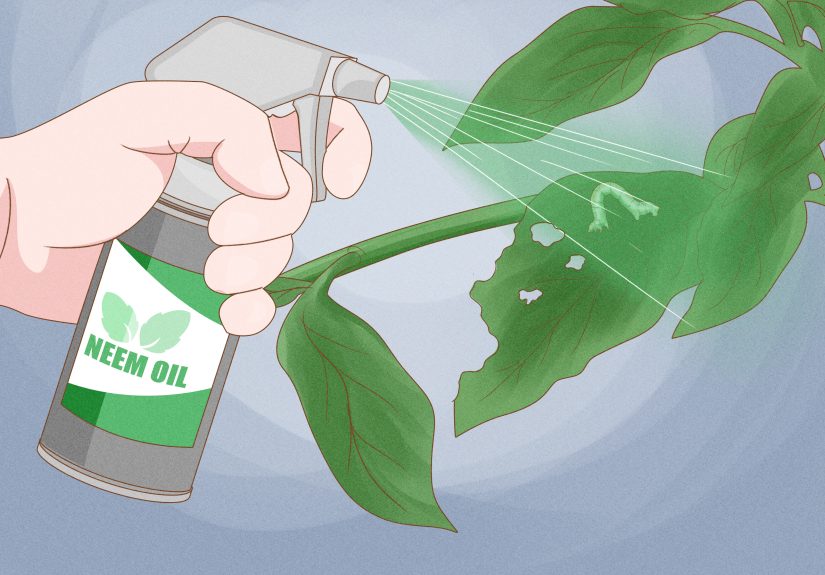
If chewing is accelerating and you’re losing significant foliage, selective insecticides can helpespecially if you avoid broad-spectrum products.
1) Spinosad: strong, effective, but not “spray-and-forget”
Spinosad is derived from a soil bacterium and is used to control a range of insect pests.
It can work well on caterpillars, including certain loopers, and is commonly available in homeowner products.
But “natural origin” does not mean “harmless,” especially for some beneficial insects.
- Use only when needed: if Bt + hand-picking are failing or the infestation is advanced.
- Timing matters: apply in the evening when pollinators are less active, and avoid spraying flowers.
- Follow the label exactly: this is both a legal and a safety requirement.
Practical expectation-setting: you may still see caterpillars for a short time after treatment, but feeding should slow or stop.
Monitor and reapply only as directeddon’t chase perfection with daily spraying.
2) Other selective options (especially for vegetable loopers)
Some IPM programs recommend other selective caterpillar products (for example, certain “reduced-risk” or more targeted active ingredients) when warranted.
If you’re gardening in a way that prioritizes beneficial insects, ask for “selective caterpillar control” at a local garden center or consult your county extension guidance.
Your goal is simple: hit the caterpillars, not everything else that breathes.
3) Know when to call a pro
If a large shade tree is being heavily defoliated and you can’t reach the canopy, a professional application may be safer and more effective than DIY ladder acrobatics.
(Inchworm control should not require a trip to the ER. That is not “integrated pest management.” That is “integrated regret.”)
Prevention: Make Inchworms a Minor Nuisance, Not a Seasonal Tradition
Prevention is basically “future-you doing a favor for present-you.” Here are the habits that usually pay off:
- Start scouting early: especially in spring on trees and whenever leafy vegetables are growing.
- Use row covers proactively: put them on before moths lay eggs.
- Protect beneficials: avoid broad-spectrum sprays that remove the natural checks and balances.
- Keep plants resilient: proper watering and reasonable fertility help plants tolerate some chewing without spiraling into stress.
- Act fast with Bt: early larvae are the easiest to control.
FAQ: Are inchworms dangerous to people or pets?
Inchworms don’t sting, bite, or carry diseases in the way some pests do.
The main problem is plant damage. The bigger risk in “taking care of inchworms” is actually from misusing pesticidesso keep treatments targeted and label-compliant.
Real-World Experiences: What “Taking Care of Inchworms” Actually Feels Like (and What People Learn)
If you’ve never dealt with inchworms before, here’s the honest truth: most people don’t notice them until the leaves start looking like they lost a fight with a paper shredder.
That’s not because you’re inattentive. It’s because inchworms are small, camouflaged, and weirdly talented at the art of “standing perfectly still like a twig.”
Experience #1: “My tree looks thin… is it sick?”
A common story goes like this: the tree leafs out, everything looks fine, and thentwo weeks laterthe canopy seems lighter.
You might blame drought, fertilizer, or a mysterious neighborhood curse.
Then you look closely and notice chewed edges and tiny green “sticks” looping across the leaves.
What usually works: a quick assessment (how widespread is chewing?), followed by a targeted response.
For a small ornamental tree or young fruit tree, people often get good results from hand-picking plus a timely Bt application.
The key lesson is that early action feels “too small to matter”… right up until you realize it prevents the bigger problem.
Experience #2: “I sprayed something once and it didn’t work”
This is extremely commonand usually comes down to timing, not effort.
Many caterpillar controls require ingestion and work best on young larvae.
If the caterpillars are already larger, they may keep chewing longer, or you may not have hit the leaves they’re actually eating.
Another curveball: rain or overhead watering can wash residues off, which makes a “one-and-done” approach unreliable.
What people learn: better coverage, earlier timing, and realistic expectations.
A well-timed Bt spray can be more effective than a stronger product used late.
And with selective options like spinosad, restraint matterstarget the problem area instead of blanketing the whole yard.
Experience #3: “My broccoli patch is a caterpillar daycare”
Vegetable gardeners often meet inchworm-adjacent “loopers” on brassicas.
The first season is usually a surprise: the plants look great, then suddenly you’re picking tiny green caterpillars off kale like it’s an unpaid side job.
Some gardeners try random sprays, get mixed results, and feel like they’re losing.
Then comes the breakthrough combo: row covers early + scouting + Bt when larvae are small.
People who adopt this pattern often report a dramatic reduction in damage the next season.
The row cover prevents egg-laying, and Bt becomes an occasional tool rather than a weekly ritual.
Experience #4: “I don’t want to harm butterflies”
This concern comes up a lot, and it’s valid.
Bt is selective for caterpillars, but that includes caterpillars you may want to keep, depending on where you spray.
The practical compromise many gardeners land on: treat only the plant being attacked, avoid spraying milkweed or butterfly host plants, and lean harder on hand-picking and barriers in “pollinator zones.”
Experience #5: “It’s not about perfectionit’s about acceptable damage”
Probably the most useful mindset shift: you don’t have to eliminate every inchworm to “win.”
Many healthy trees and garden plants can tolerate some chewing.
The goal is to prevent heavy defoliation and protect plant growth during critical times.
Once you aim for “manageable,” the process gets easier, cheaper, and less stressfuland your yard stays friendlier to the helpful creatures doing pest control for free.
Conclusion: Your 3-Way Plan (Simple, Effective, and Not Overdramatic)
Taking care of inchworms is really about taking care of your plantswithout turning your yard into a chemistry experiment.
Start with Way 1 (scouting, hand-picking, barriers, clean-up). If chewing continues, level up to Way 2 (Bt/Btk plus protection for beneficials).
And if the situation demands it, use Way 3 (selective sprays like spinosad) carefully and only as needed.
The best strategy is the one you’ll actually do: a quick check every few days, early action, and targeted tools.
That’s how you keep inchworms from becoming permanent residents with squatter’s rights on your leaves.