Table of Contents >> Show >> Hide
- Before You Start: Know What You’re “Cleaning”
- Way #1: Soften and Loosen Wax with Ear Drops (Cerumenolytics)
- Way #2: Gentle Ear Irrigation at Home (Only If It’s Safe for You)
- Way #3: Professional Ear Cleaning (Fastest, Safest “Deep Clean”)
- How Often Should You Deep Clean Your Ears?
- Common Mistakes That Turn “Ear Cleaning” into a Problem
- When to Call a Clinician Instead of DIY-ing It
- Wrap-Up
- Real-World Experiences: What People Learn the Hard Way (and the Easy Way)
- SEO Tags
“Deep clean your ears” sounds satisfyinglike pressure-washing a driveway. But your ear canals are not a driveway, and
the goal isn’t to blast them spotless. In fact, your ears are designed to clean themselves, and earwax (cerumen) is
part of the built-in maintenance plan.
So what does a safe deep clean actually mean? Usually: removing excess earwax that’s causing symptoms,
without poking, burning, or otherwise turning your ear into a DIY science project. Below are three smart, evidence-based
ways to do thatplus what to avoid (yes, including the “spa candle” situation).
Before You Start: Know What You’re “Cleaning”
Earwax isn’t gross clutter. It’s protectivetrapping dust and debris, helping keep the skin in your ear canal from drying
out, and generally acting like a tiny security guard. If your earwax isn’t causing symptoms or blocking the canal,
it’s often best left alone.
Signs earwax might be the problem (and not something else)
- Muffled hearing or a “plugged” feeling
- Ringing in the ear (tinnitus)
- Fullness/pressure
- Your hearing aid suddenly acts like it’s on strike
Important: ear pain, drainage, bleeding, sudden hearing loss, severe dizziness, or fever are not classic “just wax”
symptoms. Those need a clinician’s eyes on thembecause infections and other ear issues can mimic wax buildup.
Two “don’ts” that save a lot of regret
-
Don’t stick things in your ear canal. Cotton swabs (Q-tips), hairpins, keys, and “I was just improvising”
objects can push wax deeper or injure the canal/eardrum. - Don’t use ear candles. They don’t remove wax the way ads claim, and they can cause burns and serious damage.
Way #1: Soften and Loosen Wax with Ear Drops (Cerumenolytics)
If you want the safest “start here” option, it’s usually wax-softening drops. The big idea is simple: wax that’s hardened
and stuck becomes wax that’s softer and more willing to move out of the canal.
What to use
- OTC earwax drops (often carbamide peroxide-based)
- Hydrogen peroxide-based ear drops (as labeled and tolerated)
- Mineral oil or baby oil (often used to soften wax)
- Saline (simple saltwater solutions are commonly cited as softeners)
How to do it (without turning it into a circus act)
- Warm the bottle in your hands for a minute or two. Cold drops can make you dizzy and sad.
- Lie down or tilt your head so the affected ear faces up.
- Use the amount listed on the label (more isn’t “more effective,” it’s just “more liquid”).
- Stay in position for several minutes so the drops can do their job.
- Let it drain and wipe only the outer ear. No spelunking.
A normal experience: crackling sounds, a “swishy” feeling, or temporarily worse blockageespecially if the ear is only partially blocked
and liquid gets trapped between wax and eardrum. If symptoms keep worsening or you develop pain, stop and get checked.
Who should skip drops and call a clinician first
- Known or suspected eardrum perforation (“hole in the eardrum”)
- Ear tubes now or in the past
- Prior ear surgery (unless your ENT has cleared you for home methods)
- Active ear infection symptoms (pain, drainage, fever)
Way #2: Gentle Ear Irrigation at Home (Only If It’s Safe for You)
Ear irrigation means flushing the ear canal with fluid to help wash softened wax out. It can work wellwhen done gently
and only for the right person. The fastest way to make irrigation unsafe is to do it with high pressure or when you have
risk factors (like a perforated eardrum or prior ear surgery).
What you’ll need
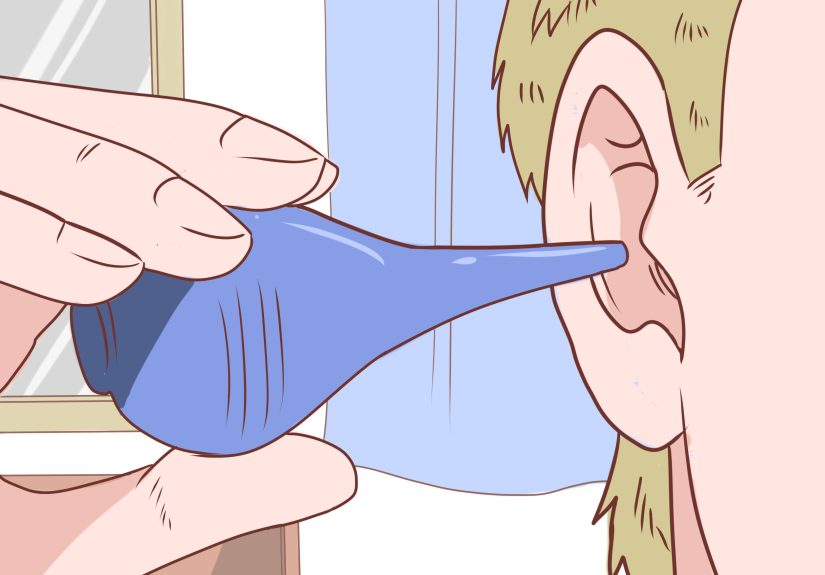
- A rubber bulb syringe (or an OTC irrigation kit)
- Clean water at body temperature (cold or hot water can cause dizziness)
- A towel and a way to catch water (sink, shower, or a bowl)
How to irrigate safely
- Soften first. Irrigation works best after a few days of drops if wax is stubborn or packed in.
- Lean over a sink with the affected ear angled down so water can drain out.
- Gently pull the outer ear (up and back for adults) to help straighten the canal a bit.
- Squirt a small stream along the side of the canal, not directly “at” the eardrum. Think “gentle rinse,” not “power wash.”
- Let it drain, then repeat a couple of times if neededstill gently.
- Stop immediately if you feel sharp pain, significant dizziness, bleeding, or worsening hearing loss.
Aftercare: dry the outside, not the inside
Pat the outer ear dry with a clean towel. If you’re prone to swimmer’s ear or moisture issues, ask a clinician what’s safe for you.
Avoid putting random drying concoctions in your ear unless your doctor recommends it for your situation.
Do NOT do home irrigation if any of these apply
- Ear pain, drainage, bleeding, or fever
- Perforated eardrum, ear tubes, prior ear surgery (unless cleared)
- Known chronic ear disease or frequent ear infections
- You’re doing this on a young child without pediatric guidance
Way #3: Professional Ear Cleaning (Fastest, Safest “Deep Clean”)
If you want the “I’d like this resolved today” optionor you’ve tried drops and gentle irrigation with no successprofessional earwax removal
is the move. Clinicians can actually see what they’re doing, which is a wildly underrated feature when you’re working next to an eardrum.
What a clinician may do
- Manual removal using specialized instruments under direct visualization
- Microsuction (common in ENT settings)
- Irrigation with controlled technique and proper equipment
Professional care is especially important if you wear hearing aids, have a history of impaction, have ear anatomy that traps wax,
or have medical factors that raise complication risk.
How Often Should You Deep Clean Your Ears?
For many people: rarelyor never. A good default routine is:
- Clean only the outer ear with a washcloth
- Dry the outer ear after showers and swimming
- Leave the canal alone unless you’re symptomatic
Over-cleaning can irritate the canal and may even increase the odds of wax impaction. If you’re someone who repeatedly gets blocked wax,
talk with a clinician about a prevention plan that fits your ears (not your neighbor’s ears, your cousin’s ears, or your favorite influencer’s ears).
Common Mistakes That Turn “Ear Cleaning” into a Problem
- “Just the tip” Q-tip cleaning (it often pushes wax deeper)
- Sharp objects (scratches + bacteria = bad combo)
- Ear candling (burn risk and not effective)
- High-pressure devices (too much force for a delicate space)
- Ignoring red-flag symptoms and assuming it’s wax
When to Call a Clinician Instead of DIY-ing It
- Ear pain, drainage, bleeding, fever, or significant dizziness
- Sudden hearing loss (especially one-sided)
- Symptoms that don’t improve after several days of safe home care
- You have ear tubes, prior ear surgery, or a suspected perforated eardrum
- You’re cleaning a child’s ears and aren’t sure what’s safe
Wrap-Up
If you remember only one thing, make it this: deep cleaning your ears doesn’t mean going deeper.
It means choosing methods that help wax move out safelysoften first, irrigate gently only when appropriate, and don’t hesitate
to let a professional handle it when your ears are being stubborn (or you value having an intact eardrum).
Real-World Experiences: What People Learn the Hard Way (and the Easy Way)
The internet makes ear cleaning look like a satisfying “before-and-after” reel. Real life is… a little more human.
Here are some common experiences people run intoshared not as medical advice, but as practical patterns that explain why the safe methods above work.
The “I Wear Earbuds All Day” Experience
Many constant-earbud folks notice a plugged feeling, especially after long workdays or workouts. The usual story: earbuds block airflow, trap moisture,
and prevent wax from naturally migrating outward. People often try to “fix” it with a cotton swab because it feels like the quickest solutionthen
the ear feels more clogged. What’s happening is predictable: the swab compresses wax deeper. The smoother fix tends to be boring but effective:
a few days of wax-softening drops, then stopping and seeing a clinician if hearing doesn’t bounce back. The biggest “aha” moment people report is realizing
that the ear canal isn’t supposed to feel squeaky cleanit’s supposed to feel normal.
The “Swimmer’s Season” Experience
Another classic: frequent swimmers (or anyone who basically lives in a humid environment) feel fullness after water exposure. They assume water is trapped,
so they poke around trying to “open it up.” Sometimes it is water, sometimes it’s wax that swelled when wet, and sometimes it’s irritation that
turns into swimmer’s ear. What people learn quickly is that aggressive cleaning can tip the ear canal into inflammation. A gentle approachdrying only the
outer ear, avoiding canal digging, and using safe softening drops (when appropriate)usually beats frantic prodding. And when there’s pain or drainage,
the “wax solution” isn’t the solution at all; that’s when medical care saves time and prevents complications.
The “Hearing Aid Suddenly Sounds Weird” Experience
People who wear hearing aids often describe wax as the sneakiest saboteur: sound gets muffled, feedback squeals, or the device feels inconsistent. Many end up
on a cycle of cleaning, re-cleaning, and blaming the batteryuntil someone checks the ear canal and finds wax impaction or a wax-clogged filter. The takeaway
is that hearing aids can increase the likelihood of wax buildup because they sit in or near the canal and change how wax moves. The best experiences come from
a simple maintenance rhythm: cleaning the device as instructed, keeping routine checkups, and using clinician-approved prevention strategies rather than frequent
DIY “deep cleans.”
The “I Tried a Trendy Hack” Experience
Every year brings a new hack: candles, vacuum gadgets, metal scoops with LED lights, you name it. The shared thread in people’s stories is that the hack
feels productiveuntil it causes pain, bleeding, or persistent blockage. Ear candling experiences often include burns, dripping wax, and disappointment
(“Wait… that wasn’t earwax?”). Scoop tools often lead to scratches and irritation. The more positive version of this experience is when someone replaces hacks
with a calm decision tree: “Do I have red-flag symptoms? If yes, clinician. If no, try drops. If still blocked, professional removal.”
The “I Thought Cleaning More Would Help” Experience
Some people are naturally thorough cleaners. They clean ears like they clean keyboards: regularly and enthusiastically. The surprise is learning that over-cleaning
can backfiredrying and irritating the canal, increasing itchiness, and possibly prompting more wax issues. Once people switch to outer-ear-only cleaning and stop
“checking” the canal with swabs, the itchiness often becomes less frequent, and the urge to clean calms down too. In other words, the easiest ear-care habit
is sometimes… doing less. Which is a rare life tip that is both medically sensible and emotionally convenient.
Bottom line: the safest experiences tend to come from respecting what the ear is built to do, using gentle methods when needed, and getting help promptly when
symptoms don’t fit the typical “wax” pattern.