Table of Contents >> Show >> Hide
- Before You Start: The 3-Minute Bang Prep That Makes Everything Easier
- Way #1: The Classic Round-Brush Swoop (Best for Curtain Bangs and Polished Fringe)
- Way #2: The Velcro Roller “Set and Forget” (Best for Long-Lasting Bounce)
- Way #3: The Side-to-Side Cowlick Tamer (Best for Wispy Bangs and Stubborn Growth Patterns)
- Bang Problems, Solved: Quick Fixes That Save Your Morning
- Heat and Hair Health: How to Blow Dry Bangs Without Frying Them
- Conclusion: Pick Your Bang Method and Make It Yours
- Experiences: What Actually Happens When You Blow Dry Bangs in Real Life (The Extra )
Bangs are the hair equivalent of a new personality. One day you’re “low-maintenance,” the next you’re
scheduling your morning around a two-inch section of hair like it’s the CEO of your face.
The good news: blow-drying bangs doesn’t have to be a daily wrestling match with a round brush and your will to live.
With the right prep and one of the three methods below, you can get a fringe that looks intentionallike you meant
to do thatwithout heat-frying it into sad confetti.
This guide covers three reliable ways to blow dry bangs (aka fringe): the classic round-brush swoop, the velcro-roller
“set it and forget it,” and the side-to-side cowlick tamer for bangs that refuse to cooperate. Each method includes
step-by-step instructions, who it works best for, and quick fixes for the most common bang catastrophes.
Before You Start: The 3-Minute Bang Prep That Makes Everything Easier
If blow-drying is the performance, prep is the rehearsal. Skip it and you’ll still get a resultjust not the one you wanted.
Here’s how to set your bangs up for success.
1) Get the moisture level right: “damp,” not “drowning”
Bangs dry fast, which is greatunless they dry in the wrong direction while you’re answering one text.
Start with bangs that are damp (think: towel-blotted and no longer dripping). If your bangs are already dry
and you’re restyling, lightly mist them with water instead of soaking them.
2) Use heat protectant, but don’t marinate your bangs in product
A light heat protectant helps reduce damage and frizz. Keep it minimal: bangs are short, close to your scalp, and
can turn greasy fast. One or two sprays (or a tiny pea-size amount of cream) is plenty. If your bangs separate easily,
a small amount of mousse at the roots can add grip and shape.
3) Attach the concentrator nozzle (yes, it matters)
The nozzle focuses airflow so you can direct hair where you want it. Without it, you’re basically blow-drying your bangs
with “weather.” Aim airflow down the hair shaft to keep the cuticle smoother and the finish shinier.
4) Pick the right tool for your bang type
- Blunt or dense fringe: small-to-medium round brush or a flat/boar bristle brush for tension and control.
- Curtain bangs: medium round brush (or velcro roller) for that swoopy bend away from the face.
- Wispy or airy bangs: fingers + a brush finish (too much brushing can make them stringy or too “done”).
5) Heat and airflow: medium is your friend
Bangs are close to your forehead and eyes, so comfort and safety count. Use low-to-medium heat, keep the dryer moving,
and hold it a few inches away. Finish with a cool shot to “set” the shape once you like it.
Way #1: The Classic Round-Brush Swoop (Best for Curtain Bangs and Polished Fringe)
This is the salon classic: tension + direction + heat + cool-down. It’s how you get bangs that look smooth, lifted,
and gently curved instead of flat or puffy. If you want that “I definitely have my life together” bang shape, start here.
What you’ll need
- Blow dryer with concentrator nozzle
- Round brush (small/medium for short bangs; medium for curtain bangs)
- Heat protectant
- Optional: light mousse or blow-dry cream
Step-by-step
-
Section your bangs. Clip the rest of your hair back. If you have curtain bangs, split them down the middle
into two sections (left and right). If you have blunt bangs, keep them as one section. -
Rough-dry first (10–20 seconds). Use your fingers to shake bangs gently while you rough-dry on medium heat
until they’re about 70–80% dry. This prevents over-styling soaking-wet hair, which can turn frizzy or uneven. -
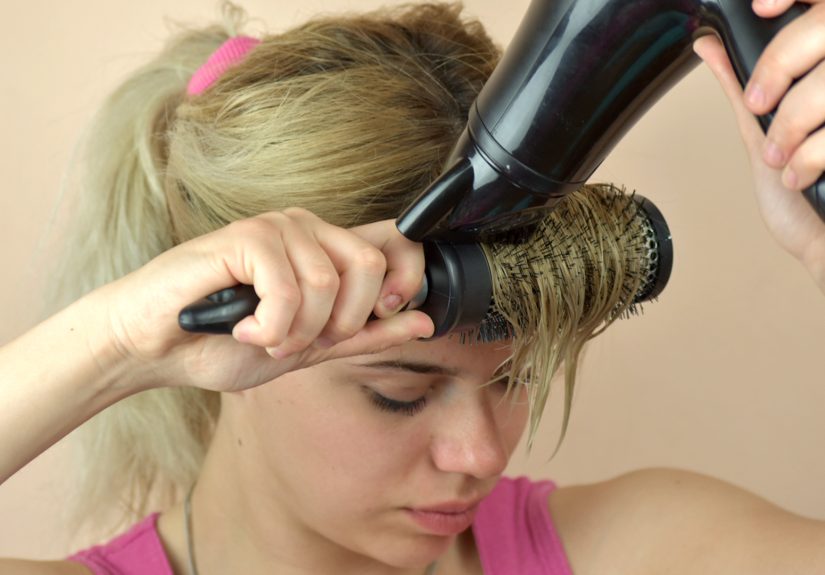
Get lift at the root. Place the round brush under your bangs at the roots. Lift up slightly (not yankingjust gentle tension)
and aim airflow downward toward the brush. -
Create the bend. Roll the brush so the bangs wrap slightly around it. For curtain bangs, roll each side
away from your face. For blunt bangs, roll forward for a soft curve (not a tight curl). -
Follow the brush with the dryer. Keep the nozzle aligned with the brush as you slowly pull and roll.
Think of it like a duet: brush leads, dryer follows. If the dryer goes rogue, your bangs will too. -
Cool shot to lock it in. When bangs are dry and shaped, blast with cool air for 5–10 seconds while still holding
the brush in place. Then gently release.
Pro tips that make a big difference
- For stubborn cowlicks: start by drying bangs forward (down), then do your round-brush shaping after.
- For extra volume: over-direct bangs slightly to the opposite side before styling them back where you want.
- For fine hair: use less product and more cool-shot setting. Too much product = greasy by lunchtime.
Common mistakes (and quick saves)
- Too much curl: you rolled the brush too tightly. Re-mist lightly, then dry with less rollingmore smoothing.
- Flat bangs: you didn’t lift at the roots. Reset by lifting the roots with the brush and directing heat at the base.
- Frizz: your dryer was too close or your airflow wasn’t directed downward. Slow down and aim the nozzle down the hair.
Way #2: The Velcro Roller “Set and Forget” (Best for Long-Lasting Bounce)
If you want bangs that stay cute longerespecially curtain bangsvelcro rollers are your best friend.
They give shape without requiring you to do a full arm workout with a brush. The secret is heat + tension + cooling time.
Yes, cooling time. Your bangs need a moment to “remember” what you taught them.
What you’ll need
- Blow dryer (nozzle optional here, but still helpful)
- Velcro roller (smaller for short bangs; medium for curtain bangs)
- 2–4 clips (optional, but great for security)
- Heat protectant
Step-by-step
- Start with damp bangs. Apply heat protectant. If your bangs get oily easily, avoid heavy creams and keep it light.
-
Rough-dry to about 80–90%. Use fingers to dry bangs quickly. You want them mostly dry so the roller shapes them,
not just holds wet hair hostage. -
Roll with intention. Place the roller at the ends of your bangs and roll upward toward the roots.
For curtain bangs, roll each side away from the face for that signature swoop. For blunt bangs, roll forward for a soft bend. - Warm it up. Blow warm air over the roller for 10–20 seconds. Keep the dryer moving and a few inches away.
-
Cool it down (the real magic). Use cool air for 10 secondsor just leave the roller in place for 5–10 minutes while you
finish makeup, get dressed, or stare at your closet like it personally betrayed you. - Unroll gently. Don’t yank it out like you’re starting a lawnmower. Slowly unwind, then lightly shape with fingertips.
Why this works so well
Hair sets as it cools. The roller holds the curve while the hair temperature drops, which helps the shape last longerespecially in fine hair
that flattens easily or in styles like curtain bangs that look best with airy lift.
Roller troubleshooting
- Roller gets stuck: your bangs were too wet or you rolled too tight. Next time, rough-dry more before rolling.
- Not enough bend: you used a roller that’s too big. Smaller rollers create more curve (but don’t go tiny unless you want retro curls).
- Too much volume: brush lightly with a soft brush or smooth with palms. You want “bouncy,” not “surprised.”
Way #3: The Side-to-Side Cowlick Tamer (Best for Wispy Bangs and Stubborn Growth Patterns)
Some bangs behave. Some bangs have opinions. If yours splits in the middle, flips weirdly, or tries to form a tiny hair tornado,
you likely have a cowlick or strong growth pattern at the hairline. The fix is not “fight it harder.”
The fix is redirecting the roots before you style the ends.
What you’ll need
- Blow dryer (nozzle optional but helpful)
- Your fingers (elite styling tools, surprisingly)
- Optional: a small brush (paddle, round, or boar bristle)
- Optional: creaseless clips for setting
- Heat protectant
Step-by-step
-
Dry bangs straight down first. With bangs damp, aim airflow downward and use your fingers to comb them into place.
This gives you a clean baseline. -
Go side-to-side at the roots. Now the key move: push bangs at the roots to the left while drying,
then push them to the right while drying. Repeat a few times. You’re teaching the roots to relax instead of locking into one split. -
Choose your finish based on your bang style.
- Wispy bangs: stop here or add a tiny forward bend with fingers. Over-brushing can make them look stringy.
- Blunt bangs: finish with a quick round-brush pass for smoothness and a slight curve.
- Curtain bangs: split down the middle and do a quick away-from-the-face shape on each side (round brush or a mini roller).
-
Set while cooling. Pin bangs with a creaseless clip in the direction you want while they cool for 1–2 minutes.
This is especially helpful if your bangs try to “rebel” the second you blink. -
Finish with minimal product. A tiny spritz of flexible hairspray or a dab of lightweight oil on fingertips (emphasis: tiny)
can add separation and control without making bangs stiff.
This method is especially good if…
- Your bangs split in the center no matter what you do
- Your fringe flips up at one corner
- You want that effortless, slightly undone bang look (French/Birkin vibes) rather than a perfect blowout
Bang Problems, Solved: Quick Fixes That Save Your Morning
“My bangs are greasy by noon.”
Use less product, and keep conditioner away from the bang area in the shower if you can. When styling, aim heat at the roots briefly
(not forever) and finish with cool air. Between washes, a tiny amount of dry shampoo at the roots can helpapply lightly and brush through.
“They’re puffy… like I’m in an ’80s montage.”
Too much air + not enough direction = puff. Use the concentrator nozzle, aim airflow downward, and add a quick smoothing pass
with a brush. Finish with cool air. If you must use a flat iron, keep it to one light pass and avoid cranking the heat.
“They’re flat and sad.”
Bangs need lift at the roots. Start by lifting the base with a brush or fingers while directing heat at the root area.
If your hair is fine, a touch of mousse at the roots can help. Roller setting also adds lasting lift without overworking the hair.
“Humidity ate my bangs.”
Humidity loves a fringe. Focus on a smoother blow-dry (downward airflow), use a light anti-frizz product, and always cool-shot to set.
If you’re walking into a swampy day, keep a mini dry shampoo or travel-size hairspray for quick touch-ups.
“I’m growing them out and they look awkward.”
Lean into side-swept styling. Use the side-to-side method to control roots, then blow-dry the ends slightly away from your face.
Pin the longer piece with a creaseless clip for a minute to help it stay swept.
Heat and Hair Health: How to Blow Dry Bangs Without Frying Them
Bangs are small, but they’re frequent flyers. Because you might style them more often than the rest of your hair,
it’s worth being a little strategic:
- Use low-to-medium heat and avoid holding the dryer too close to the hairline.
- Keep the dryer moving instead of parking it in one spot.
- Use heat protectant on damp hair before blow-drying.
- Let hair partially air-dry when possible so you need less heat time overall.
Translation: you can still have cute bangs and hair that feels like hair, not crispy craft supplies.
Conclusion: Pick Your Bang Method and Make It Yours
There’s no single “right” way to blow dry bangsthere’s the way that fits your hair type, your bang cut, and the amount of time you’re willing
to spend negotiating with two inches of hair before coffee. If you want polished and swoopy, use the round brush method. If you want lift that lasts,
go velcro roller. If your bangs are ruled by a cowlick monarchy, do the side-to-side root reset first, then shape.
The real secret is simple: start with damp bangs, direct airflow on purpose, and let the hair cool in the shape you want.
Do that, and your bangs will look less like a surprise and more like a decision.
Experiences: What Actually Happens When You Blow Dry Bangs in Real Life (The Extra )
Let’s be honest: blow-drying bangs is rarely a calm, spa-like experience. It’s more like a tiny morning reality show where your bangs play the villain,
and you’re trying to win a styling challenge before the clock runs out. Over time, most people develop a “bang routine” that’s less about perfection
and more about repeatable winsbecause nobody wants to redo their fringe three times while their coffee gets cold.
One common learning moment is discovering that soaking-wet bangs are a trap. When bangs are too wet, you spend longer blasting them with heat,
and they can dry in weird patches: the roots puff up, the ends cling to your forehead, and suddenly you’re doing emergency brush choreography.
A better routine usually starts with a quick towel blot, then rough-drying with fingers for 10–20 seconds. That small step changes everything because you’re
shaping hair that’s ready to cooperate, not hair that’s still deciding whether it’s water or hair today.
Another real-life discovery: bangs have moods based on your hairline. Some mornings they fall perfectly forward. Other mornings they split
like the Red Sea down the middle. The side-to-side method is often the “oh, this actually works” moment for people with cowlicks. The first time you dry your
bangs left, then right, then left again at the roots, it feels almost too simplelike you’re gently confusing your hair into behaving. And then, weirdly,
it does. The roots stop insisting on one dramatic part, and you can finish with a quick round-brush swoop or even just a finger-shape and go.
Velcro rollers also tend to become a secret weapon for anyone who wants bangs that stay styled past the first hour. In real life, the roller method often looks like this:
you rough-dry, roll the bangs, warm them up, and then forget about them while you do everything else. The cooling time is the hidden benefityour bangs set while you’re
living your life. People who swear by rollers usually keep one in a drawer, a purse, or a travel bag because it’s the easiest way to bring back volume after a hat,
a humid walk, or an overly aggressive face-washing session.
And then there are the tiny habits that feel silly until they save you: using the cool shot for a few seconds, clipping bangs while they cool, or keeping product light
so you don’t end up with oily fringe by lunch. Many bang veterans also learn to separate “styling the bangs” from “styling all the hair.” Even on messy-hair days,
doing just the bangs can make you look pulled togetherlike the rest of your hair is messy on purpose (the dream).
The best part is that blow-drying bangs doesn’t have to be an all-or-nothing skill. You can master one method and stick with it forever. Or you can rotate based on
reality: round brush when you want polished, roller when you want staying power, side-to-side when your cowlick wakes up feeling bold. Once you accept that bangs are
a daily relationshipnot a one-time achievementyou’ll stop chasing perfection and start getting consistently good hair days.