Table of Contents >> Show >> Hide
- Why Little Kids “Love” Certain Adults (And Ignore Others)
- 1) Be a “Safe Base”: Predictable, Kind, and Respectful
- 2) Play Like You Mean It: Follow Their Lead
- 3) Make Them Feel Seen: Serve-and-Return + Specific Positive Attention
- What If a Child Doesn’t Warm Up to You Right Away?
- Quick Cheat Sheet: 3 Ways to Be Loved by Little Kids
- Experiences From Real Life: What This Looks Like in the Wild (About )
- Conclusion
Little kids are basically tiny judges with snack crumbs on their cheeks. They don’t care about your résumé, your
“professional voice,” or the fact that you once owned a lava lamp. They care about one thing:
Do you feel safe, fun, and worth paying attention to?
If you’ve ever watched a toddler sprint past a room full of adults to hand a sticker to the one person who sat on the
floor and made a silly facecongrats, you’ve seen the system at work.
Being “loved by little kids” isn’t about bribing them with candy or pulling off a magical Disney-adult performance.
It’s about building trust in kid-sized ways.
Before we start, a quick (important) note: kids don’t “owe” affection. The goal isn’t to get hugs on command.
The goal is to become someone a child genuinely enjoys and feels safe withsomeone they choose to connect with.
That’s a healthier kind of love anyway (and it’s way less creepy).
Why Little Kids “Love” Certain Adults (And Ignore Others)
Young children are wired to attach to people who reliably meet their needsemotional needs included. Their brains
are constantly scanning: Is this person predictable? Do they notice me? Will they be kind when I’m messy, loud,
slow, or upset?
What looks like “love” in little kids often shows up as:
- They seek you out (even when you’re not holding snacks).
- They bring you toys, drawings, or “important” rocks.
- They want you to watch them do the same jump 37 times.
- They copy you (your phrases, your gestures, your goofy dance moves).
- They melt down less around youor recover faster when they do.
So how do you become that person? Here are three ways that work in real lifenot just in parenting books and
overly perfect social media reels.
1) Be a “Safe Base”: Predictable, Kind, and Respectful
If there’s one “secret,” it’s this: little kids fall in love with emotional safety. They might laugh at a
clown, but they trust a calm grown-up. Your vibe matters more than your vocabulary.
Get on their level (literally)
Standing over a small child while talking is like a giant giving a TED Talk. It’s intimidating, even if you’re being
nice. Try kneeling, sitting, or crouching so your face is closer to theirs. Softer voice, slower pace, warmer eyes.
You’ll look less like a “rule dispenser” and more like a human.
Keep your promises small (and therefore believable)
Little kids learn trust through tiny consistency. If you say, “I’ll play after I finish this,” then actually play after
you finish. If you say, “One more minute,” make it one more minute. Your follow-through is your friendship currency.
A practical trick: instead of vague promises, use concrete ones:
“When I wash my hands, I’ll come back and you can show me your blocks.”
Children understand sequences better than abstract time.
Respect their “no,” even when it’s inconvenient
Kids notice who listens to their boundaries. If a child doesn’t want a hug, don’t take it personally (and definitely
don’t guilt them with “Aww, you don’t love me?”). Offer options:
“High-five, fist bump, wave, or nothingyour choice.”
Ironically, boundary-respecting adults often get more affection over timebecause children feel in control and safe.
Repair fast when you mess up (because you will)
Even great adults get tired, impatient, or distracted. Kids don’t need perfection; they need repair.
If you snap or ignore them too long, try a simple, age-appropriate reset:
- Name it: “I used a grumpy voice.”
- Own it: “That wasn’t fair to you.”
- Reconnect: “Can we try again?”
Repair teaches kids two big things: relationships can handle mistakes, and you’re emotionally safe even when things
get bumpy. That’s the kind of grown-up kids stick to like glitter.
Use firm boundaries with a friendly face
A surprising truth: kids often like adults more when rules are clear. Chaos feels scary. The trick is to set limits
without becoming a cartoon villain.
Try “warm-and-clear” language:
“I won’t let you hit. You can stomp your feet, or squeeze this pillow.”
This protects everyone and gives the child a better optionso you become the helper, not the enemy.
2) Play Like You Mean It: Follow Their Lead
If you want to be loved by little kids, you must accept a humbling reality:
they are the director; you are the enthusiastic supporting actor.
Child-led play works because it gives kids something they crave: control, attention, and connection. When you join
their world without taking over, you’re basically saying, “I see you. I’m here. You matter.”
Do a 10-minute “kid world” session
You don’t need hours. You need consistency and presence. Set a short windowten minutes is perfectand let the child
choose what happens. Your only job is to be engaged.
- Put your phone away like it personally offended you.
- Let them decide the game, the roles, and the rules (even if the rules make zero sense).
- Match their energy. If they whisper, whisper. If they roar, roar (within indoor-voice reason).
Ten focused minutes can feel like a whole vacation to a preschooler.
Narrate instead of interrogate
Adults love questions. Kids love momentum. Too many questions can feel like a quiz show with no prizes.
A better approach is “sportscaster mode,” also known as describing what you see:
- “You lined up all the cars by color.”
- “That dinosaur is hiding behind the couch like it’s on a mission.”
- “You’re working really hard to balance that block.”
This kind of attention makes kids feel seen without putting them on the spot.
Let them be the boss (and enjoy the comedy)
If you’re playing “restaurant” and the child serves you an imaginary sandwich made of “spiders and banana,” the correct
response is not, “That’s gross.” The correct response is, “Wow, the chef is bold today.”
Humor is a shortcut to connection. The more you can be silly without being mocking, the more kids will gravitate toward you.
Use “yes, and” energy
Borrow a trick from improv: accept the child’s idea and add to it.
If they say, “This block is a phone,” you say, “Hello? Is this the pizza dinosaur hotline?”
The child feels powerful and creative, and you become their favorite co-conspirator.
3) Make Them Feel Seen: Serve-and-Return + Specific Positive Attention
A lot of adults try to win kids over by talking at them. Kids bond faster when you interact with themback-and-forth,
like a friendly game of catch.
In child development, this responsive back-and-forth is often described as “serve and return.” The child “serves” a cue
(a sound, a look, a gesture, a question, a dramatic announcement like “I HAVE A BOOGER”), and you “return” with a warm,
relevant response.
Notice the “serve” hiding in plain sight
Little kids serve cues constantly:
- They point at something.
- They repeat a phrase.
- They show you a toy.
- They ask “Why?” 400 times.
- They melt down because the banana broke (a tragedy, honestly).
Your move is to respond in a way that says, “I’m with you.” That can be words, facial expression, or action.
Give specific praise (not generic “good job” confetti)
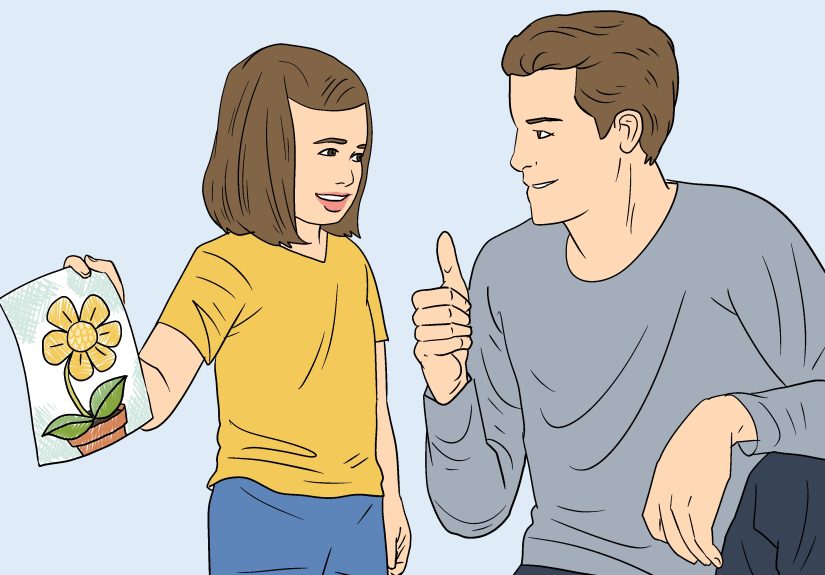
“Good job!” is fine. But it’s like giving someone a thumbs-up without telling them what you liked.
Specific praise builds connection because it proves you were paying attention.
- “You shared the blue crayon even though you were still using itthat was kind.”
- “You kept trying even when the puzzle was tricky.”
- “You used gentle hands with the baby.”
This supports confidence and makes kids want to stay in your orbit.
Validate feelings before you fix the problem
When a child is upset, the fastest way to lose their trust is to dismiss them:
“You’re fine.” “It’s not a big deal.” “Stop crying.”
To adults, it’s small. To them, it’s their entire universe.
Try this sequence instead:
- Reflect: “You’re mad that the tower fell.”
- Normalize: “That’s frustrating.”
- Offer help: “Do you want help, do you want me to listen, or do you want a hug?”
Kids who feel understood calm down fasterand they remember who helped them feel safe.
Create tiny rituals that say “You belong here”
Routines aren’t just for sanity; they’re relationship glue. A small ritual can become a child’s favorite part of the day:
- A silly handshake when you arrive.
- A “two-minute story” before bedtime.
- A short “tell me the best part of your day” chat in the car.
- A consistent goodbye routine: wave, blow a kiss, or “see you later, alligator.”
Predictable connection builds securityand security looks a lot like love.
What If a Child Doesn’t Warm Up to You Right Away?
First: don’t panic. Some kids are slow-to-warm, shy, or simply having a day. Your job is to be steady, not sparkly.
Here’s a simple approach that works with many toddlers and preschoolers:
Start parallel, then gradually connect
- Parallel play: sit nearby and play with your own blocks or crayons.
- Gentle comments: “I’m making a road.” “This crayon is super bright.”
- Invite, don’t demand: “If you want, you can add one block.”
- Celebrate proximity: if they move closer, keep your cool (internally you may celebrate like you won a championship).
Many kids connect best when they don’t feel pressured to perform friendliness.
Let the child “teach” you something
Kids love feeling competent. Ask for kid-level expertise:
“How does this toy work?” “Can you show me your favorite way to do it?”
Teaching flips the power dynamic in a good way: the child becomes the confident guide, and you become the respectful learner.
Quick Cheat Sheet: 3 Ways to Be Loved by Little Kids
- Be safe: calm voice, consistent follow-through, respect boundaries, repair fast.
- Be playful: get on the floor, follow their lead, narrate, “yes, and” their imagination.
- Be responsive: notice cues, respond warmly, validate feelings, give specific positive attention.
The best part? These strategies don’t just help kids like you. They help kids feel bettermore secure, more capable,
more understood. And that’s the kind of grown-up energy little kids chase down the hallway.
Experiences From Real Life: What This Looks Like in the Wild (About )
Since “be loved by little kids” can sound abstract, here are three realistic, composite-style scenes (the kind parents,
teachers, and caregivers commonly describe) that show how the three strategies play out in everyday life.
Scene 1: The Family Party (a.k.a. The Toddler Courtroom)
You walk into a family gathering and a toddler stares at you like you’re a suspicious new character in their favorite show.
Instead of rushing in with “Hi! Give me a hug!” you crouch near the edge of the room and start stacking plastic cups
into a towerquietly, minding your own business. After a minute, the toddler waddles closer, still cautious.
You narrate softly: “I’m making a tall tower… oh wow, it’s wobbly.” No pressure. No spotlight.
The toddler drops a cup next to you. You treat it like a royal offering:
“You brought the special building cup. Excellent choice.” The toddler smirks.
Two minutes later, they’re handing you cups like you’re on their construction crew. You didn’t “win them over” with hype.
You earned trust by being safe and letting them lead. By the end of the party, they’re dragging you by the hand to see
the world’s most important object: a leaf.
Scene 2: Babysitting With Tears (The Broken Banana Tragedy)
A preschooler’s banana snaps in half. They melt down like the stock market.
The temptation is to fix it fast: “It’s fine! Just eat it!” But instead you try connection first:
“You’re really upset the banana broke.” The child sobs harderbecause you got it right.
You stay calm and offer choices: “Do you want help, do you want me to listen, or do you want a hug?”
The child sniffles: “Listen.” So you listen. Then you add, “That’s so frustrating.”
When the child’s breathing slows, you offer the next step: “We can put it in a bowl, or we can make it into ‘banana boats.’
You choose.” The child points: bowl. Ten minutes later they’re telling you a long story about a cat who lives on the moon.
The lesson: kids bond hard with adults who make big feelings feel safe.
Scene 3: The “Watch Me!” Olympics at the Playground
A child yells, “WATCH ME!” and does a jump that looks identical to the previous twelve jumps. This is not a test of your
entertainment tolerance. It’s a test of attention and connection.
Instead of a distracted “uh-huh,” you give a real return: you face them, track their movement, and respond with something
specific: “You jumped from the third step all the way to the groundand you landed on both feet.”
The child’s face lights up. They do it again, but bigger.
Then you make it playful: “Should I do a tiny jump or a giant jump?” They scream, “GIANT!” You do a dramatic giant jump
(safely), and they laugh so hard they nearly forget to be cool. Now you’re not just an adult nearbyyou’re their person.
Across all three scenes, the pattern is the same: safety builds trust, play builds closeness, and responsive attention
builds the feeling kids chase mostbeing truly seen. If you do those three things consistently, a lot of little kids will
decide you’re their favorite grown-up… and you’ll probably end up with a pocket full of rocks and a heart full of pride.
Conclusion
Being loved by little kids isn’t about tricksit’s about relationship skills in a smaller, sillier language.
Be steady enough to feel safe, playful enough to be fun, and present enough to make them feel seen.
The rest tends to take care of itself.