Table of Contents >> Show >> Hide
- Start Here: The Rules That Make Bedding Easier to Store
- 21 Bedding Storage Ideas That Actually Work
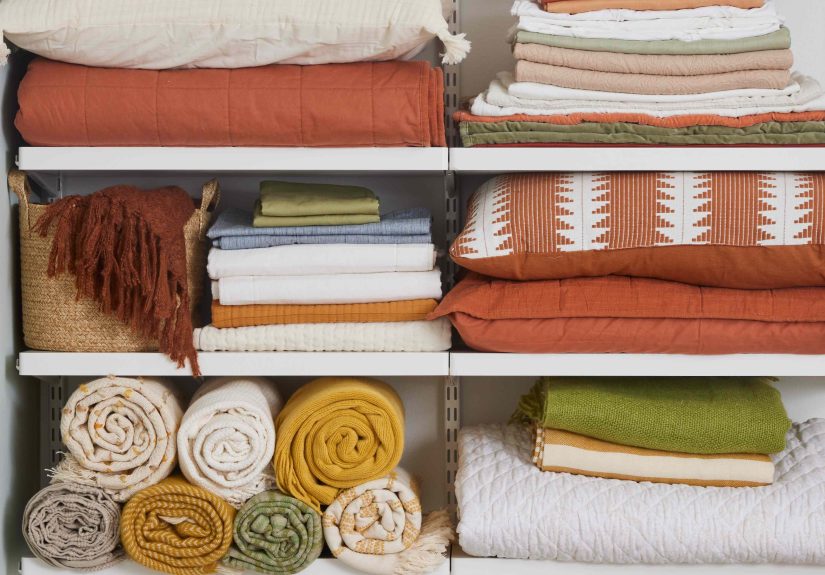
- 1. Store sheet sets inside one of their pillowcases
- 2. Create a “bed-in-a-bag” zone for each bed
- 3. Use shelf dividers so stacks stay upright
- 4. Store bulky comforters in breathable fabric bags
- 5. Use vacuum bags for short-term, space-saving storage
- 6. Turn under-bed space into your bedding basement
- 7. Add a storage bench at the foot of the bed
- 8. Use a trunk for quilts and guest blankets
- 9. Keep everyday throw blankets in baskets
- 10. Roll comforters instead of folding them
- 11. Organize bedding by season
- 12. Label by size, room, or person
- 13. Use over-the-door organizers for smaller bedding pieces
- 14. Dedicate one shelf to guest bedding only
- 15. File-fold lighter linens in drawers
- 16. Use clear-front storage bags for quick identification
- 17. Give decorative pillows their own hidden home
- 18. Use a blanket ladder or wall rack for pretty everyday layers
- 19. Keep heavy bedding low and lighter items higher
- 20. Edit your bedding collection before buying more containers
- 21. Build a simple reset routine after laundry day
- How to Choose the Right Bedding Storage Idea for Your Space
- Mistakes That Make Bedding Storage Harder Than It Needs to Be
- Real-Life Experiences With Bedding Storage That Just Makes Sense
- Conclusion
If your linen closet looks like it lost a wrestling match with three comforters, four sheet sets, and one deeply dramatic body pillow, you are not alone. Bedding is bulky, floppy, seasonal, and weirdly talented at taking over every available shelf. One extra duvet somehow turns a calm closet into a textile avalanche. That is exactly why smart bedding storage matters.
The good news is that organizing your sheets, blankets, pillows, quilts, and comforters does not require a luxury walk-in closet or a PhD in folding. The best bedding storage ideas are usually the most practical ones: keep matching sets together, use the space under the bed, store heavy items low, rotate seasonal bedding, and choose containers that fit both your room and your fabric type. In other words, less “Pinterest performance art,” more “I can find the queen fitted sheet without ruining my afternoon.”
Below are 21 bedding storage ideas that just make sense, whether you are working with a roomy linen closet, a tiny apartment bedroom, or a guest room that also functions as an office, gym, and occasional laundry staging area.
Start Here: The Rules That Make Bedding Easier to Store
Before we get into the actual ideas, a few universal truths deserve a quick spotlight. First, only store bedding that is clean and completely dry. Second, keep frequently used items easy to reach and seasonal extras farther back or higher up. Third, think in sets and categories, not random fabric piles. And finally, use breathable storage for delicate or natural-fill bedding when long-term freshness matters.
That little bit of strategy is what separates a tidy system from a closet full of folded optimism.
21 Bedding Storage Ideas That Actually Work
1. Store sheet sets inside one of their pillowcases
This is the classic for a reason. Fold the fitted sheet, flat sheet, and one pillowcase, then tuck the whole stack into the remaining pillowcase. Suddenly, your shelf looks orderly, your sets stay together, and you are no longer playing “is this the king pillowcase or the standard one?” at bedtime.
It is one of the simplest sheet storage ideas around, and it works especially well in linen closets, dresser drawers, and guest rooms.
2. Create a “bed-in-a-bag” zone for each bed
Take the pillowcase trick one step further by storing each full bedding set together in its own dedicated bundle or bag. Label it by bed size or room name: “Guest Queen,” “Kids’ Twin,” or “Main Bedroom Winter Flannel.” This method cuts decision fatigue and stops mismatched bedding from migrating across the house like confused geese.
3. Use shelf dividers so stacks stay upright
Neatly folded bedding has a short life expectancy when shelves are wide open. Shelf dividers help keep sheet sets, pillow shams, and folded blankets from toppling into one another. Think of them as traffic lanes for linens. Boring? Yes. Effective? Also yes.
4. Store bulky comforters in breathable fabric bags
Comforter storage gets tricky because big bedding items need protection without getting trapped in stale conditions. For long-term storage, fabric or cotton bags are a smart move. They guard against dust while allowing airflow, which is especially helpful for down comforters, quilts, and other bedding that does not love being squashed into airtight misery.
5. Use vacuum bags for short-term, space-saving storage
Vacuum-sealed bags can be brilliant when you need to shrink bulky comforters, spare pillows, or guest bedding fast. They are especially useful in small homes where every inch counts. The catch? They are best for certain materials and shorter storage windows, not every bedding type forever. If you are storing delicate natural fibers or down long term, breathable options are usually the safer bet.
6. Turn under-bed space into your bedding basement
Under-bed storage is prime real estate for extra blankets, seasonal quilts, and backup sheet sets. Use wide, shallow bins or zippered fabric containers that slide easily and keep dust out. If your bed frame sits too low, risers or a higher-profile frame can create instant storage space without adding furniture.
This is one of the best bedding storage ideas for small bedrooms because it hides bulk where nobody has to look at it.
7. Add a storage bench at the foot of the bed
A storage bench is one of those suspiciously useful pieces that makes you wonder why every bedroom does not have one. It gives you a place to sit, a polished finished look, and hidden space for extra blankets, decorative pillows, or spare sheets. It is basically furniture with a secret.
8. Use a trunk for quilts and guest blankets
If you love a more classic or collected look, a trunk works beautifully for bedding storage. It is ideal for guest blankets, heirloom quilts, and seasonal layers you want nearby but not out in the open. Bonus points if it doubles as a coffee table, end-of-bed piece, or window-seat substitute.
9. Keep everyday throw blankets in baskets
Not all bedding belongs hidden away. Baskets are perfect for throws that get used constantly in bedrooms, living rooms, or reading corners. They are easy to access, easy to toss things into, and much prettier than a sad heap on the arm of the sofa that has been “temporary” since last November.
10. Roll comforters instead of folding them
Some bedding is just too bulky to behave on a shelf. Rolling comforters and larger blankets can save space, reduce deep fold lines, and keep stacks from sliding apart. This method also works well in deeper shelves, baskets, and storage bins where folded squares tend to slump.
11. Organize bedding by season
Summer cotton quilts and winter flannel sheets should not fight for the same front-row shelf space year-round. Rotate bedding seasonally so the pieces you use now are easiest to grab. Off-season items can go to a higher shelf, under-bed bin, or labeled storage bag. Your closet gets roomier, and your daily routine gets faster.
12. Label by size, room, or person
Labels sound unnecessary until you own three beds with different sizes and one fitted sheet that seems committed to anonymity. Label shelves, bins, or baskets by bed size, bedroom, or family member. This is especially helpful in busy households where everyone puts laundry away with varying levels of accuracy.
13. Use over-the-door organizers for smaller bedding pieces
Pillowcases, crib sheets, mattress protectors, and extra shams do not need to hog full shelves. Over-the-door organizers with pockets or baskets make smart use of vertical space inside a closet door. It is one of the easiest ways to improve linen closet organization without installing anything fancy.
14. Dedicate one shelf to guest bedding only
Guest bedding tends to disappear into the general population unless it has a designated home. Give it one clearly defined shelf or bin with everything needed for visitors: sheets, pillowcases, extra blanket, and maybe even a mattress protector. Future you, frantically making up a bed at 9:47 p.m., will be deeply grateful.
15. File-fold lighter linens in drawers
If you keep bedding in a dresser or built-in drawers, file folding is a clever way to maximize space and visibility. Instead of stacking everything flat, stand lighter items upright so you can see each one at a glance. This method works especially well for pillowcases, crib sheets, and lightweight summer bedding.
16. Use clear-front storage bags for quick identification
Opaque bins are neat until you have to open six of them to find one king sham. Clear-front or windowed storage bags offer a happy middle ground: tidier than open storage, but still visible enough to find what you need quickly. They are particularly useful for under-bed storage and closet top shelves.
17. Give decorative pillows their own hidden home
Decorative pillows are charming until bedtime turns them into a small landslide. Store them in a bench, trunk, oversized basket, or lidded ottoman instead of letting them colonize chairs, floors, and every horizontal surface within range. If you swap pillows seasonally, keep off-duty covers zipped inside one labeled bag.
18. Use a blanket ladder or wall rack for pretty everyday layers
If you have throws or lighter quilts you use often, display can be storage. A blanket ladder, wall-mounted rack, or even a simple towel bar can keep blankets accessible while adding texture to the room. It is functional décor, which is just a fancy way of saying your blankets finally got a job.
19. Keep heavy bedding low and lighter items higher
There is a simple physics lesson here: big heavy comforters do not belong on the highest shelf unless you enjoy overhead wrestling. Store bulky bedding low or at floor level in bags or bins. Lighter sheet sets and pillowcases can go on middle shelves, while rarely used seasonal items can head upward.
20. Edit your bedding collection before buying more containers
Sometimes the real storage solution is owning less bedding. If your closet is crammed with scratchy sheets, lonely pillowcases, or comforters nobody actually uses, declutter first. Donate what is still in good condition, recycle worn-out textiles where possible, and keep the bedding that fits your beds, lifestyle, and climate. Containers do not solve clutter; they simply give it a uniform shape.
21. Build a simple reset routine after laundry day
The best bedding storage system in the world fails if clean linens get abandoned in a laundry basket for four business days. Create a small reset routine: fold immediately, return sets to their assigned zone, and do a 30-second shelf tidy once a week. Bedding storage works best when it is maintained in tiny moments, not heroic organizing marathons once every leap year.
How to Choose the Right Bedding Storage Idea for Your Space
The smartest bedding storage ideas are the ones that match your home, not somebody else’s dream closet on the internet. If you live in a small apartment, under-bed bins, storage benches, and pillowcase-bundled sheet sets will probably do more for you than decorative open shelving. If you have a roomy linen closet, shelf dividers, labeled categories, and seasonal rotation can create a cleaner, more efficient system. And if your home has frequent guests, dedicated guest bedding zones are worth their weight in gold.
It also helps to think about how often you use each item. Everyday sheets should be easy to grab. Seasonal bedding can be a little less accessible. Delicate or expensive pieces deserve breathable protection. Decorative layers should be either displayed attractively or hidden decisively. There is no prize for pretending seven throw blankets are “minimal.”
Mistakes That Make Bedding Storage Harder Than It Needs to Be
A few habits make bedding storage far more chaotic than it needs to be. Storing bedding before it is fully dry can lead to stale smells and trouble later. Mixing sizes together guarantees frustration. Overstuffing shelves makes every retrieval feel like a rescue mission. Using flimsy containers for heavy bedding creates sagging, ripping, and general disappointment.
Another common mistake is treating all fabrics the same. Some items are fine compressed for a while; others do better with airflow. When in doubt, clean the bedding first, store it in a cool and dry place, and choose the least aggressive method that still keeps your space functional.
Real-Life Experiences With Bedding Storage That Just Makes Sense
There is a special kind of chaos that happens when a household has more bedding than it has obvious places to put it. Maybe it starts innocently: one extra blanket for movie night, a backup comforter for guests, new sheets because the old ones were pilling, then holiday flannel bedding because it felt festive and responsible. Suddenly, your linen closet is packed so tightly that removing one pillowcase causes three blankets to stage a dramatic escape.
In real life, bedding storage problems usually show up in the same ways. In small apartments, there is often no dedicated linen closet at all, so bedding gets split between dresser drawers, the top shelf of a bedroom closet, and that one under-bed bin everyone forgets exists until they stub a toe on it. In family homes, the issue is less about no storage and more about too much variety: twin sheets, queen sheets, guest bedding, throw blankets, mattress protectors, and seasonal layers all trying to live together peacefully. They rarely do.
One of the biggest lessons people learn is that the most useful system is not the fanciest one. A beautiful closet full of matching bins can still fail if nobody knows what is inside them. But a simple routine of storing full sheet sets in pillowcases, labeling one shelf for each bed, and rotating out winter bedding in spring can make a home feel instantly calmer. The reason these methods work is not because they are trendy. It is because they remove friction. You can see what you have, reach what you need, and put things back without creating fresh chaos.
Another common experience is realizing that bedding often takes up more emotional space than physical space. People hang onto old comforters “just in case,” keep random pillowcases from discontinued sets, and stash decorative pillows they do not even like because they were expensive once upon a time. But once those extras are edited down, the storage problem often shrinks dramatically. It turns out many homes do not need more storage products. They need fewer mystery linens.
Seasonal changes also reveal whether a system truly works. If switching from lightweight summer bedding to cozier winter layers feels like unpacking a haunted attic, the setup probably needs work. But if the off-season bedding is clean, zipped into a labeled bag, and tucked under the bed or on a high closet shelf, the transition is easy. That kind of convenience matters more than perfection.
And then there is guest bedding, which somehow becomes urgent exactly when you are short on time. Homes that keep guest sheets, pillowcases, and an extra blanket in one clearly marked place are always ahead of the game. Everyone else is pulling unfolded bedding from three different rooms while apologizing to their visitors and pretending this is all part of the plan.
At the end of the day, the best bedding storage ideas are the ones people actually stick with. Not because they are flashy, but because they make everyday life smoother. They help your room look better, your closet feel bigger, and your bedtime routine become less annoying. That is the kind of organizing that just makes sense.
Conclusion
Bedding storage does not need to be complicated to be effective. The smartest solutions are usually the simplest: keep sets together, use hidden storage, make the most of vertical and under-bed space, rotate by season, and match the storage method to the bedding itself. Whether you rely on baskets, bins, benches, trunks, or a neatly labeled linen closet, the goal is the same: less clutter, easier access, and a bedroom that feels calm instead of crowded.
Because really, your bedding should help you sleep better, not give you organizational trust issues.