Table of Contents >> Show >> Hide
- Why Hairpin Legs Work So Well with Industrial-Chic Style
- Quick Buying Guide: Picking the Right Hairpin Legs
- 1) Get the Height Right (So Your Knees Don’t File a Complaint)
- 2) Choose Rod Thickness and “Number of Rods” Based on the Job
- 3) Pick a Finish That Matches Your Room’s Metal Story
- 4) Installation Basics: Strong, Straight, and Not Splintered
- 5) Protect Your Floors (Because Industrial-Chic Shouldn’t Mean “Scratched-to-Death”)
- 20 Ways to Use Hairpin Legs in Industrial-Chic Interiors
- 1) Reclaimed-Wood Coffee Table (The Classic for a Reason)
- 2) Live-Edge Console Table (Entryway, But Make It Cool)
- 3) Slim Sofa Table (Small Space MVP)
- 4) Butcher-Block Kitchen Island or Prep Table
- 5) Dining Table with a Mixed-Material Top
- 6) Wall-Supported “Floating” Hallway Table (A Little Design Magic)
- 7) Hairpin-Leg Bench for the Entry or Dining Nook
- 8) DIY Desk That Doesn’t Look Like Office Beige
- 9) Standing Desk Converter Base (For the “My Back Has Opinions” Crowd)
- 10) Media Console with an Open Base
- 11) Record Stand or Turntable Table
- 12) Nightstands That Match (Without Being Boring)
- 13) Bathroom Vanity with an Open Industrial Frame
- 14) Plant Stand “Podium” (Let Your Monstera Be Dramatic)
- 15) Side Tables in Pairs (Matching, Not Identical)
- 16) Bar Cart Alternative: A Two-Tier “Booze Shelf” Table
- 17) Laundry Room Folding Table
- 18) Craft Table for Kids (or Adults Who Craft Like Kids)
- 19) Window Seat Support (Built-In Look, DIY Effort)
- 20) Pet Bed Platform (Yes, Your Dog Deserves Good Design Too)
- Styling Tips: Keep It Industrial, Not Icy
- Common Hairpin-Leg Mistakes (and How to Avoid Them)
- Real-World Lessons from Hairpin-Leg Projects (Extra Experience Section)
- Conclusion
Hairpin legs are the design equivalent of a leather jacket: they make almost anything look cooler,
a little tougher, and somehow more “I totally meant to do that.” They’re slim, minimal, and unapologetically
metalexactly why they belong in industrial-chic interiors, where exposed brick, concrete, and steel accents
get to be the main characters instead of being hidden behind drywall and polite furniture skirts.
Whether you’re outfitting a loft, warming up a modern farmhouse with industrial edge, or just trying to
make your hand-me-down tabletop look like it has a trust fund, hairpin legs are a fast track to that
warehouse-meets-cozy vibe. Let’s talk about how to choose them, style them, and put them to work in
twenty different wayswithout turning your home into a pretend factory.
Why Hairpin Legs Work So Well with Industrial-Chic Style
Industrial-chic design thrives on honest materials: wood that looks like wood, metal that looks like metal,
and surfaces that don’t apologize for a few “life happened here” marks. Hairpin legs fit because they’re
visually light but materially toughthin steel rods that read airy, while still giving furniture that
utilitarian, workshop-ready backbone.
Bonus: hairpin legs play nicely with the industrial palette (black, gray, warm browns) and they also bridge
stylesmid-century modern, Scandinavian, rustic, even minimalistso you can keep the “chic” in industrial-chic.
Quick Buying Guide: Picking the Right Hairpin Legs
1) Get the Height Right (So Your Knees Don’t File a Complaint)
Hairpin legs come in common furniture heights: low for coffee tables, medium for benches and consoles,
and tall for desks and dining tables. As a sanity check: dining tables are typically around 28–30 inches tall,
while coffee tables often land in the 16–18 inch range depending on the look and sofa height.
2) Choose Rod Thickness and “Number of Rods” Based on the Job
The industrial look is about sturdiness, not just aesthetics. For heavier tops (thick butcher block,
live-edge slabs, stone, or wide dining surfaces), go thicker and consider three-rod designs or reinforced options.
For small side tables and nightstands, slimmer legs can look sharper and more delicate.
3) Pick a Finish That Matches Your Room’s Metal Story
Matte black is the classic industrial move. Raw steel (sealed) feels more workshop-authentic.
Brass or warm metallic finishes can nudge the look toward “industrial glam” if you’re mixing in warmer tones.
If you’re already using mixed metals (say, black hardware + stainless appliances), hairpin legs can be the
neutral anchor that keeps it intentional.
4) Installation Basics: Strong, Straight, and Not Splintered
Most hairpin legs are designed to be DIY-friendly with a mounting plate and pre-drilled holes. For wood tops,
use pilot holes to avoid splitting and consider sturdy screws sized for furniture building. If you expect to
remove legs regularly (moving, swapping tops, tight doorways), threaded inserts + machine screws make life easier.
And if you’re attaching to non-wood surfaces, the attachment method changes entirelyplan accordingly.
5) Protect Your Floors (Because Industrial-Chic Shouldn’t Mean “Scratched-to-Death”)
Bare metal ends can scuff floors. Add non-marring feet or rubber protectors. It’s a small upgrade that prevents
a big regret and helps keep legs from sliding on tile or other slick surfaces.
20 Ways to Use Hairpin Legs in Industrial-Chic Interiors
1) Reclaimed-Wood Coffee Table (The Classic for a Reason)
Pair matte-black hairpin legs with reclaimed boards or barn wood for a coffee table that looks like it came
from a stylish salvage yard. Add a vintage rug underneath to keep the room from feeling too “cold warehouse.”
2) Live-Edge Console Table (Entryway, But Make It Cool)
A live-edge slab + hairpin legs is industrial-chic catnip. Place it under a round mirror with a black metal frame,
then style it with a small tray for keys and a plant to soften the steel.
3) Slim Sofa Table (Small Space MVP)
Behind-the-sofa consoles are perfect for narrow rooms. Use a thin wood top and hairpin legs to keep the footprint
light, then add a task lamp and a charging station. Functional, not fussy.
4) Butcher-Block Kitchen Island or Prep Table
Industrial kitchens love hardworking surfaceswood + metal is the signature mix. A butcher-block top on sturdy
hairpin legs gives you a mobile, open-base look that keeps kitchens feeling airy instead of bulky.
5) Dining Table with a Mixed-Material Top
Try a thick wood top (walnut, oak, or a sealed reclaimed slab) with beefier hairpin legs. For a more industrial
vibe, add a blackened steel stretcher or a minimalist metal brace underneath.
6) Wall-Supported “Floating” Hallway Table (A Little Design Magic)
Want the look of a floating surface but still need support? Mount one side to the wall and use a single hairpin leg
as the visible prop. It’s a clever industrial-chic trick that feels architectural, not cluttered.
7) Hairpin-Leg Bench for the Entry or Dining Nook
A thick plank bench with hairpin legs reads “factory stool energy,” but friendlier. Add a leather cushion or a wool
throw to keep it from feeling like a locker room accessory.
8) DIY Desk That Doesn’t Look Like Office Beige
A simple desktop on hairpin legs is the easiest way to build a work-from-home setup that matches an industrial-chic
space. Pair it with a metal task chair or a vintage-style lamp for that studio vibe.
9) Standing Desk Converter Base (For the “My Back Has Opinions” Crowd)
For a standing-height build, choose tall, sturdy legs and a stable top. Add a lower shelf (between the legs) for
weight and storagemore stability, more industrial utility.
10) Media Console with an Open Base
Industrial-chic rooms like visible structure. Build a low cabinet or open shelf unit and mount it on short hairpin legs
so it feels light, modern, and easy to clean underneath.
11) Record Stand or Turntable Table
A small, sturdy table for vinyl gear looks right at home in industrial interiors. Use a thick top to reduce vibration,
then add a lower shelf for records (hello, practical styling).
12) Nightstands That Match (Without Being Boring)
Swap bulky nightstands for compact boxes or floating-style cubes on short hairpin legs. Add a black sconce and warm
bedding to keep the room balanced and cozy.
13) Bathroom Vanity with an Open Industrial Frame
Industrial bathrooms often use black fixtures and concrete-like finishes. An open-base vanity on hairpin legs feels
airy and modernjust make sure the wood is sealed for moisture.
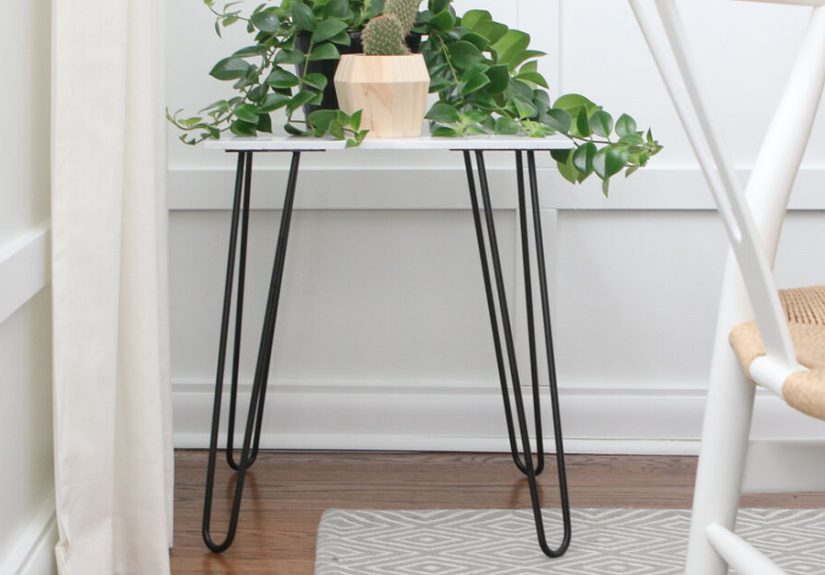
14) Plant Stand “Podium” (Let Your Monstera Be Dramatic)
Industrial-chic spaces love greenery as contrast. A small top on hairpin legs creates a clean pedestal for plants,
especially against brick, plaster, or concrete walls.
15) Side Tables in Pairs (Matching, Not Identical)
Use the same leg finish but vary the topsone reclaimed wood, one smooth stained wood. That mix feels curated,
not like you bought a “side table starter pack.”
16) Bar Cart Alternative: A Two-Tier “Booze Shelf” Table
Industrial-chic entertaining loves function. Add a lower shelf between the legs for bottles and glassware.
A metal tray on top keeps spills from turning into a tragic wood-stain memoir.
17) Laundry Room Folding Table
Add a simple work surface on hairpin legs for folding and sorting. Industrial style thrives in utility roomsthis is
one of those “why didn’t I do this sooner?” upgrades.
18) Craft Table for Kids (or Adults Who Craft Like Kids)
Hairpin legs make a great base for a durable craft surface. Use a wipeable top, add baskets below, and suddenly your
“creative chaos” looks like purposeful industrial organization.
19) Window Seat Support (Built-In Look, DIY Effort)
For a bench top that needs extra support, hairpin legs keep the look slim while still carrying weight. Add storage bins
under the seat to reinforce the industrial “function-first” feel.
20) Pet Bed Platform (Yes, Your Dog Deserves Good Design Too)
Hairpin legs can lift a simple wood platform into a stylish, airy pet bed. It’s a small detail that reads “designed,”
not “I grabbed this at the last minute because someone chewed my rug again.”
Styling Tips: Keep It Industrial, Not Icy
The biggest complaint about industrial interiors is that they can feel cold. The fix is easy: layer warmth on top of
the raw stuff. Think leather, wool, textured rugs, wood grain, and plants. Industrial style loves contrastso let the
sleek black metal meet softer materials and a little color.
- Use warm wood tones to balance black metal and gray walls.
- Mix textures (linen, leather, boucle, worn rugs) so the room feels lived-in, not staged.
- Go easy on “factory props”one great industrial light is a vibe; fifteen is a theme park.
- Add greenery as the “softener” that makes metal and concrete feel inviting.
Common Hairpin-Leg Mistakes (and How to Avoid Them)
Wobble
Wobble usually comes from uneven floors, a thin top, or legs that aren’t suited for the load. Use levelers or feet,
choose thicker legs for heavier tops, and consider adding an under-shelf or brace for wide spans.
Scratched Floors
If your table sounds like a tiny metal crab skittering across tile, you need floor protection. Clip-on rubber feet,
felt pads, or non-marring protectors solve this quickly.
“Too Much Industrial” Syndrome
If everything is black metal and bare wood, the space can feel like a trendy coffee shop where nobody is allowed
to relax. Add softness: textiles, warm lighting, and at least one comfortable “sink into it” seat.
Real-World Lessons from Hairpin-Leg Projects (Extra Experience Section)
If you read enough DIY writeups and makeover stories, you start noticing the same “aha” momentslittle lessons people
learn after they’ve done one hairpin-leg project and immediately planned three more. Here are the most useful, real-world
takeaways that show up again and again (usually right after someone says, “It’ll only take an hour!”).
First: pilot holes are not optional if you care about your tabletop. Hairpin legs are simple to install,
which sometimes tricks people into skipping prep. But when you drive screws straight into hardwood or reclaimed boards,
you can split the wood, strip the screw, or end up with a leg plate that sits crooked. The “experienced” move is to mark
holes carefully, drill pilots, and then attach. It’s the difference between “handmade” and “why is the table whispering
creaks at me?”
Second: industrial-chic is a balance, not a costume. People often start with the right ideametal legs +
wood topbut then stack on too many industrial clichés: pipe shelves, wire baskets everywhere, Edison bulbs in every room,
and suddenly the home feels like a movie set where the main character is “warehouse.” The projects that look best usually
keep the hairpin legs as the industrial punctuation mark, then add warmth with textiles, art, and lighting that flatters
humans (not just steel beams).
Third: proportion makes or breaks the look. Hairpin legs are visually light, which is their superpower
and also their trap. A very thick, heavy top on very skinny legs can look like it’s wearing shoes two sizes too small.
Meanwhile, ultra-thick, heavy-duty legs on a delicate top can look like a tank supporting a tea tray. The sweet spot is
matching the visual weight of the top with the visual weight of the legs. When in doubt, err slightly sturdier in
industrial-chic rooms; the style likes a little heft.
Fourth: floor protection is a “do it now or regret it later” detail. In real homes, tables get nudged,
chairs scoot, benches slide, and dogs treat furniture like agility equipment. Bare metal ends can scuff hardwood and leave
skid marks on tile. This is why so many successful projects include rubber feet, non-marring caps, or levelers. It’s not
glamorous, but neither is explaining a scratch to your security deposit.
Fifth: stability improves dramatically when you add a shelf. A lower shelf between hairpin legs isn’t just
storageit acts like a stabilizer. People who build console tables, islands, desks, or bar stations often report the same
thing: the moment they added an under-shelf (or a subtle brace), the piece felt more solid, more “real furniture,” and less
like a stylish balancing act. Industrial-chic loves visible function, so an under-shelf fits the aesthetic while upgrading
performance.
Finally: the best projects tell a small story. Hairpin legs shine when paired with a top that has some
characterreclaimed wood with grain and knots, a live-edge slab, a salvaged door, a vintage cabinet base, even a simple
top finished well. Industrial-chic interiors aren’t about perfection; they’re about materials that look honest and purposeful.
When you combine that kind of surface with the clean lines of hairpin legs, you get furniture that feels intentionallike it
belongs in your space and your life, not just your Pinterest board.
Conclusion
Hairpin legs are one of the easiest ways to bring industrial-chic style into a space: a little metal, a little edge,
and a whole lot of versatility. Use them to build a signature coffee table, upgrade a kitchen island, lighten up bulky storage,
or add a functional work surface that actually looks good. Keep the room balanced with warm textures, thoughtful lighting,
and floor protectionbecause “industrial” is a style choice, not a lifestyle of constant repairs.