Table of Contents >> Show >> Hide
- Why Deer-Resistant Shade Plants Are Such Smart Garden Picks
- 17 Deer-Resistant Shade Plants That Earn Their Spot
- 1. Hellebore
- 2. Astilbe
- 3. Brunnera
- 4. Lungwort
- 5. Foamflower
- 6. Bleeding Heart
- 7. Barrenwort (Epimedium)
- 8. Coral Bells (Heuchera)
- 9. Autumn Fern
- 10. Maidenhair Fern
- 11. Japanese Forest Grass
- 12. Spotted Deadnettle (Lamium)
- 13. Canadian Wild Ginger
- 14. Ajuga
- 15. Solomon’s Seal
- 16. Japanese Plum Yew
- 17. P.J.M. Rhododendron
- How to Make These Plants Look Even Better in a Shade Garden
- Real-Garden Lessons From Growing Deer-Resistant Shade Plants
- Final Thoughts
If you garden in the shade, you already know the struggle. The sunny borders get all the magazine covers, while the dim corners under trees are expected to survive on “whatever is left.” Then deer show up like unpaid landscape critics and start taste-testing your hard work. Rude. The good news is that a shady garden does not have to be dull, and it definitely does not have to become an all-you-can-eat buffet.
The trick is choosing deer-resistant shade plants that bring color, texture, movement, and structure to the parts of the yard that receive little direct sun. Some of these plants shine with flowers, some earn their keep with dramatic foliage, and a few do both without making you hover over them like an anxious stage parent. Even better, many are reliable, low-fuss performers that can turn a shadowy bed into one of the prettiest spots on your property.
Before we dig in, one important reality check: deer-resistant does not mean deer-proof. A hungry deer with limited options may nibble almost anything. Still, plants with fuzzy, leathery, aromatic, bitter, or toxic foliage are usually lower on the menu. That is exactly where this list comes in.
Why Deer-Resistant Shade Plants Are Such Smart Garden Picks
Shade gardens often need to work harder than sunny borders. They compete with tree roots, hold moisture in some spots and dry out in others, and can quickly look flat if every plant is the same medium green. Deer-resistant shade plants solve several problems at once. They help reduce browsing pressure, they thrive in lower light, and many offer details that make a shady bed look intentional rather than forgotten.
The best combinations mix flower color with foliage contrast. Think silver leaves against dark evergreens, feathery fronds next to broad heart-shaped leaves, or bright chartreuse grasses spilling around deep green shrubs. That kind of layering makes the space feel alive even when nothing is blooming. In other words, your shade garden can stop looking like the backyard’s waiting room.
17 Deer-Resistant Shade Plants That Earn Their Spot
1. Hellebore
Hellebores are the overachievers of the shade garden. They bloom in late winter to early spring, often when the rest of the yard still looks half asleep, and their flowers linger for weeks. The foliage stays handsome for much of the year, giving you real value beyond bloom season. Plant them in partial to full shade with rich, well-drained soil, and they will reward you with a quiet, elegant kind of drama that feels very expensive without actually charging admission.
2. Astilbe
If your shady bed needs a little fluff, astilbe is your plant. Its feathery plumes rise above ferny foliage in shades of pink, red, lavender, or white, adding a soft, airy look that breaks up heavier leaf textures. Astilbe prefers moisture-retentive soil, so it is especially useful in those not-too-dry shady spots where other perennials pout. It is excellent near paths, downspouts, and woodland edges where the ground stays evenly moist.
3. Brunnera
Brunnera is what happens when a plant decides to be both subtle and unforgettable. In spring, it sends up clouds of tiny blue flowers that resemble forget-me-nots. After that, its heart-shaped leaves keep the show going, often splashed with silver or cream. Brunnera is especially useful for brightening dark corners because reflective foliage catches even limited light. Give it moist, rich soil and protection from harsh afternoon sun, and it will make the whole bed look cooler and calmer.
4. Lungwort
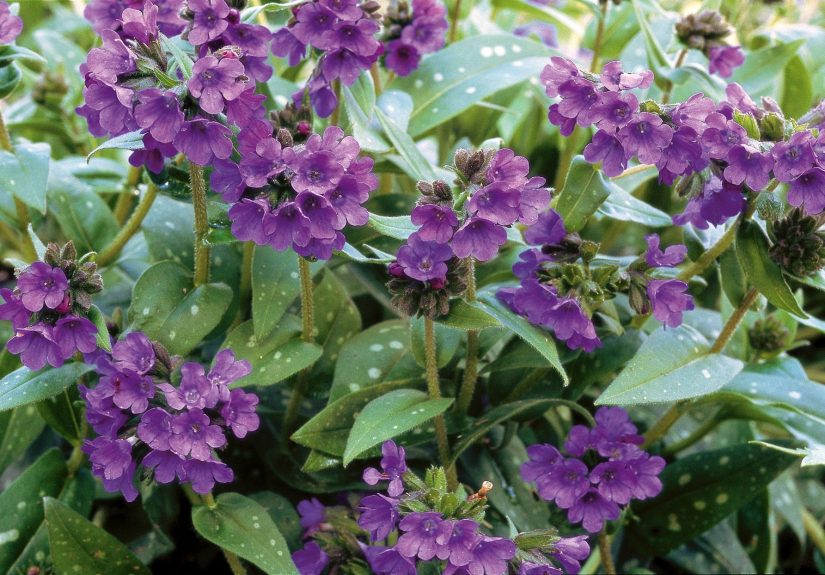
Yes, the name is unfortunate. No, the plant is not. Lungwort has spotted or silver-washed leaves and charming spring flowers that can open pink and mature to blue or purple. It is one of the easiest ways to add pattern to a shady border without resorting to anything flashy or fussy. Lungwort likes consistent moisture and humus-rich soil, and it looks especially good near the front of a bed where the foliage can be appreciated up close.
5. Foamflower
Foamflower brings a soft, woodland feel that suits shady gardens beautifully. Its bottlebrush-like spring flowers float above low mounds of attractive leaves, and many varieties hold handsome foliage well beyond bloom time. This plant works wonderfully as a ground-hugging layer beneath shrubs or mixed with ferns and heucheras. If your goal is to make a shade bed look natural but still polished, foamflower is one of the easiest ways to get there.
6. Bleeding Heart
Bleeding heart is one of those classic shade plants that never really falls out of favor, and for good reason. The arching stems and dangling heart-shaped flowers have a romantic, old-garden charm that softens any planting scheme. Traditional types bloom in spring and may go dormant when summer heat arrives, so pair them with later-emerging companions like ferns or coral bells. Think of bleeding heart as the garden equivalent of a brief but memorable cameo.
7. Barrenwort (Epimedium)
Barrenwort is not flashy in the loudest sense, but it is quietly brilliant. Its wiry spring flowers hover above tidy foliage, and many varieties take on bronze or red tones in spring and fall. Better yet, epimedium is one of the best options for dry shade once established, which makes it incredibly useful under mature trees where moisture disappears fast. If your garden includes a difficult spot that seems determined to reject joy, start with epimedium.
8. Coral Bells (Heuchera)
Coral bells are foliage superstars. Depending on the variety, you can get leaves in lime, caramel, silver, burgundy, purple, blackish plum, or combinations that sound suspiciously like paint chips at a hardware store. The flowers are airy and attractive, but the real value is season-long color. In dappled shade, coral bells add contrast without overwhelming nearby plants. Use them to edge pathways, fill gaps between shrubs, or repeat through a bed for a more coordinated look.
9. Autumn Fern
Autumn fern proves that green is not your only option in shade. New fronds emerge with warm coppery or bronzy tones before maturing to glossy green, giving the plant a built-in color shift that keeps things interesting. It handles shade beautifully and adds a more structured look than many softer ferns. Tuck it between broader leaves like hosta alternatives or brunnera, and you instantly get better contrast and a more layered design.
10. Maidenhair Fern
Maidenhair fern is pure grace. With delicate leaflets held on dark, wiry stems, it adds movement and softness that heavier plants simply cannot fake. It thrives in humus-rich soil with reliable moisture and appreciates protection from hot afternoon sun. While it has an airy appearance, it is tougher than it looks when planted in the right place. Use it anywhere a shade bed feels too stiff and needs a little elegance loosened into it.
11. Japanese Forest Grass
Japanese forest grass is one of the best foliage plants for making shade look brighter. Its arching, cascading habit catches light beautifully, and chartreuse or gold-striped varieties can practically glow in dim spots. It has a slower, refined growth habit, which makes it ideal for edging, containers, and the front of borders. Plant it where the blades can spill over stones or the edge of a path, and suddenly your shady corner has movement instead of just standing there being beige.
12. Spotted Deadnettle (Lamium)
Lamium is a hardworking ground cover with silver-marked leaves and small flowers in pink, purple, or white. It spreads well enough to fill gaps and soften bare ground, but many gardeners find it easier to manage than more aggressive shade spreaders. Because the foliage is often heavily silvered, it can brighten a shady bed even when not in bloom. Use it around stepping stones, along borders, or as a living mulch beneath shrubs with enough air circulation.
13. Canadian Wild Ginger
Canadian wild ginger is a fantastic choice for gardeners who want a native-looking ground cover with real substance. Its glossy, kidney-shaped leaves form a dense, handsome carpet that looks polished without seeming overly formal. The small flowers hide beneath the foliage, so this plant is mostly about leaf texture and dependable coverage. It is a strong option for woodland gardens, naturalized beds, and places where you want a lush green floor instead of exposed soil and weeds.
14. Ajuga
Ajuga is low, colorful, and willing to do the job. Many varieties have bronze, chocolate, or deep green foliage, and spring brings spikes of blue to purple flowers that pollinators appreciate. It works especially well in cool, shady spots where you need a quick carpet of color between larger perennials. Just give it decent drainage and enough breathing room. Ajuga can spread enthusiastically, which is great when you need coverage and less great when it starts auditioning for world domination.
15. Solomon’s Seal
Solomon’s seal brings architecture to the shade garden. Its gently arching stems carry dangling, bell-like flowers in spring and elegant foliage through the growing season. Variegated forms are especially useful for brightening dark beds because the creamy leaf margins create a soft glow. This plant looks best when repeated in drifts, where the stems can lean and overlap in a natural rhythm. It has an old-fashioned beauty that feels relaxed rather than prim.
16. Japanese Plum Yew
If you need evergreen structure in shade, Japanese plum yew deserves serious consideration. This shrub has deep green, needle-like foliage and a calm, architectural presence that anchors surrounding perennials. It is especially valuable in spots where boxwood struggles or where you want a deer-resistant foundation plant without relying on the usual suspects. Use it as a low hedge, specimen, or backdrop to flowering perennials, and your shade bed will look intentional in every season.
17. P.J.M. Rhododendron
P.J.M. rhododendron offers the rare combination of evergreen foliage, spring flowers, and decent deer resistance. In bloom, it delivers a generous wash of lavender-pink color. Out of bloom, it still contributes year-round structure and dark foliage that sets off lighter perennials beautifully. It is a smart shrub for woodland edges, foundation plantings, or layered shade borders where you want something woody to hold the scene together while the perennials come and go.
How to Make These Plants Look Even Better in a Shade Garden
The easiest mistake in shade gardening is planting one of everything and hoping chaos reads as charm. It usually does not. Repeat plants in groups of three, five, or more so the bed feels cohesive. Let one bold foliage plant, such as coral bells or Japanese forest grass, act as your visual thread through the design.
Also, pay attention to moisture. “Shade” is not one-size-fits-all. Some shady areas are cool and damp, while others under thirsty trees are basically a polite form of drought. Match moisture-loving plants like astilbe, maidenhair fern, and lungwort to richer soil with regular water. Save tougher performers like epimedium, wild ginger, and Japanese plum yew for the leaner spots.
Finally, build contrast on purpose. Pair silver brunnera with dark evergreens. Set feathery ferns next to broad hellebore leaves. Add chartreuse grass near deep burgundy coral bells. A little contrast goes a long way in low light, where subtle differences can completely transform the bed.
Real-Garden Lessons From Growing Deer-Resistant Shade Plants
Gardeners who work with deer-resistant shade plants usually discover the same thing pretty quickly: success is less about finding one magical plant and more about building the right mix. In real gardens, the best results often come from combining dependable foliage plants with a few seasonal bloomers, then repeating them enough that the bed looks deliberate. A single hellebore can be lovely. Five hellebores backed by autumn ferns and edged with lamium look like you hired a designer who drinks excellent coffee and says things like “let the texture breathe.”
Another common experience is learning that deer pressure changes from season to season. New growth is especially tempting, and even plants deer usually ignore can get sampled when food is scarce. That is why many gardeners start by protecting young plants for their first season, even if those plants are considered deer resistant. Once established, they tend to bounce back better and hold their shape more confidently. This is especially true with coral bells, brunnera, and epimedium, which often look modest at planting time and much more impressive a year later.
Shady gardens also teach patience in a good way. Sun gardens often shout. Shade gardens tend to unfold. The first year you notice the hellebores. The second year the wild ginger has filled in under them. By the third year, the Japanese forest grass is spilling over the border, the astilbe plumes are floating in summer, and the whole bed has gone from “this area is awkward” to “this may actually be my favorite part of the yard.” It is a slower kind of satisfaction, but a very real one.
Many gardeners also discover that foliage matters more in shade than they first expected. Flowers are wonderful, of course, but in a lower-light space, leaf color and shape do most of the heavy lifting. Silver, chartreuse, burgundy, and glossy dark green all reflect and absorb light differently. That is why a shade border with just a few blooms can still feel rich and layered if the foliage is varied enough. Brunnera, heuchera, autumn fern, and Japanese plum yew are especially strong in this role because they keep showing up long after brief bloom periods are over.
Perhaps the biggest lesson is that “deer-resistant” works best when paired with good garden strategy. Gardeners often get stronger results when they plant in drifts, avoid tucking tender favorites right at the woodland edge, and use shrubs or coarse-textured plants as barriers around more tempting growth. A bed anchored with plum yew or rhododendron, then layered with hellebores, epimedium, and ferns, tends to hold up better than a scattershot planting of whatever was on sale. In other words, the plants matter, but placement matters too.
And then there is the emotional payoff. A successful shade garden feels calm in a way bright flower borders sometimes do not. It is cooler, softer, and more intimate. When you add deer-resistant plants that actually stay put and perform, the whole space starts to feel less like a problem to solve and more like a destination. That is the sweet spot: a garden that looks lush, asks for reasonable care, and does not send you into a minor spiral every time a deer strolls by like it owns the deed.
Final Thoughts
The best deer-resistant shade plants do more than survive. They brighten dark beds, soften hard edges, provide months of foliage interest, and help you build a garden that feels rich even in low light. Start with a backbone of reliable texture, add a few bloomers for seasonal sparkle, and repeat the winners. The result will be a shade garden that looks layered, lively, and much less appealing to wandering deer. Which, honestly, is the kind of peaceful coexistence most gardeners are willing to celebrate.