Table of Contents >> Show >> Hide
- What Makes an Animal Brain “Unbelievable”?
- The 14 Fascinating Animal Brains
- 1) Octopus: The Animal With a “Network Brain”
- 2) Cuttlefish: Self-Control, Invertebrate Edition
- 3) Honeybee: The Tiny Brain That Gets “Zero”
- 4) Desert Ant: The Built-In GPS That Doesn’t Need Satellites
- 5) Jumping Spider (Portia): Planning a Detour Before Moving
- 6) Fruit Fly: A Neuroscience MVP in Miniature
- 7) Archerfish: Face Recognition… and It Shoots Water
- 8) Archerfish Again: Counting Isn’t Just for Primates
- 9) Cleaner Wrasse: The Mirror Test That Sparked a Scientific Food Fight
- 10) Pigeon: The Art Critic You Didn’t Know You Needed
- 11) Raven: Planning for Tomorrow Like a Feathered Economist
- 12) New Caledonian Crow: Tool Logic and Hidden Causes
- 13) Clark’s Nutcracker: Memory That Survives Winter
- 14) Dolphin and Elephant: Two Different Giants, Two Different “Brain Surprises”
- So… What Do These Brains Have in Common?
- Experience Add-On (): How to Feel the “Unbelievable” in Real Life
- Conclusion
If you think “amazing brain” automatically means “big fluffy mammal with soulful eyes,” prepare to be politely corrected by a creature that
tastes with its arms, a fish that can pick you out of a lineup, and an insect that understands the idea of nothing.
Animal brains come in wildly different shapes and sizessome centralized, some distributed, some so tiny they could ride a grain of rice like a skateboard.
And yet they solve problems, navigate impossible terrain, remember for months, and communicate in ways that feel suspiciously like strategy.
This list isn’t about ranking “smartest animals” (that debate gets messy fast). Instead, it’s a guided tour of 14 brainsand nervous systemsthat
do at least one thing so well it sounds made up. The twist: it’s real science. The bigger twist: it changes how you look at intelligence, period.
What Makes an Animal Brain “Unbelievable”?
“Unbelievable” doesn’t mean “human-like.” In fact, the best examples often succeed by being not human-like:
ultra-efficient wiring, specialized sensory processing, or social problem-solving that’s basically group chatonly wet, feathery, or six-legged.
When scientists say “cognition,” they’re usually talking about skills like learning, memory, planning, flexible problem-solving, and communication.
Keep those in mind, because the animals below are about to show off.
The 14 Fascinating Animal Brains
1) Octopus: The Animal With a “Network Brain”
Octopuses don’t run their bodies like a single headquarters. A huge portion of their neurons live in the arms, not just the head,
which helps explain why each arm can explore, taste, and manipulate objects with eerie independence.
Their suckers are packed with sensors, and the arms can handle local “decisions” while the central brain focuses on bigger prioritieslike escaping,
opening a shell, or redecorating the tank at 2 a.m. (Octopus interior design is aggressive.)
2) Cuttlefish: Self-Control, Invertebrate Edition
Cuttlefish are masters of instant camouflage, but their brainpower isn’t only about looks. In controlled experiments, cuttlefish have shown
delay of gratificationwaiting for a better reward instead of grabbing the first snack available.
That kind of self-control is often linked with advanced learning and flexible decision-making. Translation: this squid cousin can say “not now”
to fast food… which is more than most humans can do in an airport.
3) Honeybee: The Tiny Brain That Gets “Zero”
Honeybees already had a résuménavigation, symbolic communication (the waggle dance), and impressive learning.
Then researchers pushed the envelope: bees demonstrated an ability to understand the concept of zero (as in “nothing”),
placing it appropriately in an ordered set. It’s a reminder that brain size isn’t destiny; circuits and efficiency matter.
A bee brain is small, but it’s not “simple.” It’s more like “compact and terrifyingly optimized.”
4) Desert Ant: The Built-In GPS That Doesn’t Need Satellites
Desert ants can forage far from home and still return with shocking accuracyacross terrain where landmarks are basically “more sand.”
They pull this off using path integration: continuously updating a “home vector” based on direction and distance traveled, often guided by the sun’s position.
Some research suggests they integrate stride information as part of distance estimationan internal odometer that turns footsteps into navigation math.
If you’ve ever gotten lost in a parking lot, yes, an ant is now silently judging you.
5) Jumping Spider (Portia): Planning a Detour Before Moving
Portia jumping spiders hunt other spidersoften by choosing routes that require moving away from prey first, then looping back.
What’s mind-bending is that Portia can plan these detours ahead of time, selecting a route after scanning the environment.
That means it’s not just reacting step-by-step; it’s forming a plan and committing to it.
In other words, this spider can do “strategy” with a brain you’d need a microscope to politely greet.
6) Fruit Fly: A Neuroscience MVP in Miniature
Fruit flies look like background characters in a kitchen tragedy, but in neuroscience they’re a headline act.
Researchers have mapped circuits involved in learning and memoryespecially in structures called mushroom bodiesshowing how experience can change behavior.
Flies can learn associations, store memories, and adjust choices based on outcomes.
The lesson isn’t “flies are secretly geniuses.” It’s that sophisticated learning can emerge from compact, well-organized neural circuits.
7) Archerfish: Face Recognition… and It Shoots Water
Archerfish hunt by spitting water jets at insects above the surface. Cool already.
But here’s the brain-flex: in experiments, archerfish learned to discriminate among multiple human faces shown on screenseven when
researchers controlled for obvious cues like brightness and general head shape.
So yes, there’s a fish that can learn your face and then accurately spit at it. Try not to take it personally.
8) Archerfish Again: Counting Isn’t Just for Primates
Archerfish also appear in studies of numerical cognition. Under carefully controlled conditions, they can be trained to choose between different quantities,
suggesting they can use numerical information rather than relying only on simple visual “more stuff” cues.
The broader point is bigger than one fish: number sense shows up across distant branches of the animal tree, implying evolution likes this tool
and keeps reinventing it.
9) Cleaner Wrasse: The Mirror Test That Sparked a Scientific Food Fight
Cleaner wrasse live by removing parasites from other fish, which makes them socially strategic and constantly tuned to bodies and markings.
They became famous when studies suggested they can pass versions of the mirror “mark test,” a benchmark often linked to self-recognition.
The findings are debated (and rightly scrutinized), but newer research continues to explore whether these fish use a mental representation of their own face/body.
Either way, the bigger story is that fish cognition is more complexand more worth testing carefullythan stereotypes ever allowed.
10) Pigeon: The Art Critic You Didn’t Know You Needed
Pigeons are easy to underestimate because they thrive in places like “outside a bagel shop.”
But in classic experiments, pigeons learned to discriminate between paintings by different artists (including Monet and Picasso),
then generalized that learning to new paintings they hadn’t seen before.
That’s categorizationrecognizing patterns and styles rather than memorizing a single image.
Somewhere, a museum curator just whispered, “Honestly? Same.”
11) Raven: Planning for Tomorrow Like a Feathered Economist
Ravens don’t just solve problems in the moment; research shows they can plan for future situations, including saving tools for later use and delaying rewards.
In experiments, ravens demonstrated flexible planning with time delays that stretch well beyond “impulse choice.”
If you’ve ever meal-prepped for a week and then eaten the snacks on day one, please know a raven may outperform you.
12) New Caledonian Crow: Tool Logic and Hidden Causes
New Caledonian crows are famous for tool use, including shaping sticks to retrieve food.
What’s especially striking is evidence they can reason about causes that aren’t directly visiblereacting differently when an event is driven by a “hidden agent”
versus an obvious one. That leans toward causal inference: not just “what happened,” but “what made it happen.”
For a bird, that’s a serious mental upgrade from “seed good, seed now.”
13) Clark’s Nutcracker: Memory That Survives Winter
Clark’s nutcrackers cache thousands of seeds and later retrieve themsometimes months lateroften under snow and changing landscapes.
Studies and field observations support long-lasting spatial memory, and researchers have explored how this caching lifestyle links to specialized memory demands.
The nutcracker’s brain is a reminder that intelligence isn’t one thing; it’s a toolkit shaped by the problems an animal must solve to survive.
14) Dolphin and Elephant: Two Different Giants, Two Different “Brain Surprises”
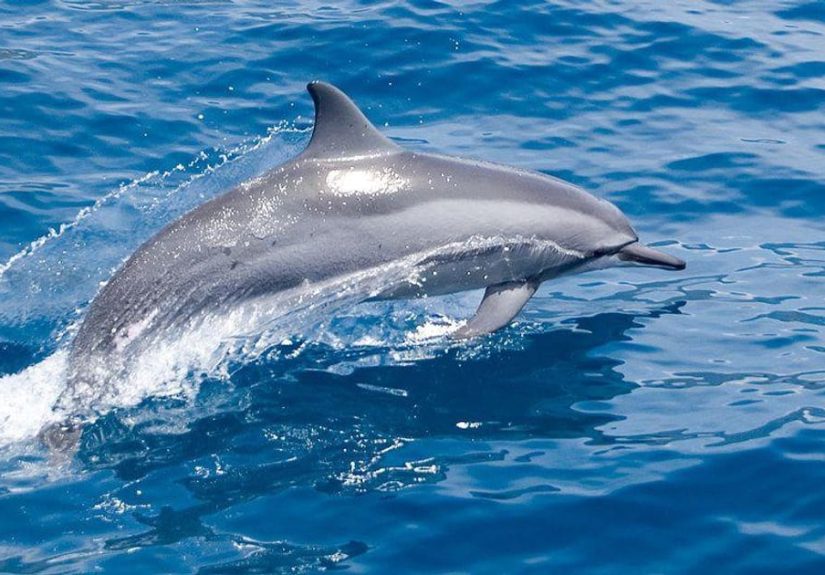
Bottlenose dolphins use “signature whistles” that function like individualized identifiersoften described as name-like callssupporting complex social lives.
Elephants, meanwhile, have a brain with an astonishing neuron count, with a massive share located in the cerebellum (a region heavily involved in coordination).
Together, they show two different routes to extraordinary capability: one driven by social communication, the other by sensorimotor and bodily controlplus social complexity.
Big brains don’t all organize themselves the same way, and that may be the most unbelievable part.
So… What Do These Brains Have in Common?
- Efficiency beats size. Bees and flies remind us that compact circuits can still compute impressive behaviors.
- Specialization is a superpower. Archerfish vision, bat-like sensory strategies (in general), and ant navigation show how tuned systems excel.
- Social living pushes cognition. Dolphins, corvids, and rats thrive on relationships, cooperation, and competition.
- Different architectures can work. Octopuses and cephalopods challenge the “one brain in one head” assumption.
The takeaway isn’t “everything is basically human.” It’s the opposite: nature keeps inventing intelligence in multiple forms,
and our job is to stop being surprised just because it doesn’t come with eyebrows and a résumé.
Experience Add-On (): How to Feel the “Unbelievable” in Real Life
Reading about animal brains is fun. But experiencing the weirdnesswatching a behavior unfold in real timehits differently.
You don’t need a lab coat for that. You need patience, a little curiosity, and the willingness to be humbled by something with fewer life responsibilities than you.
Start with the animals most likely to cross your path. If you live near a park or a parking lot (so… anywhere), watch birds.
Crows and ravens don’t just “find food.” They investigate, test, stash, wait, and return. Try this: notice how they handle a new object.
A cautious approach, a few hops back, a side-angle look, then a deliberate pokethose tiny steps are decision-making in motion.
Even if you don’t witness “tool use,” you’ll see risk assessment and learning happen in minutes.
If you have access to an aquarium, linger at the cephalopod tanks. The first ten seconds might look like “octopus sits there.”
Then you realize it’s watching you back. Follow the arms. Watch how an octopus explores surfaces, how it changes grip strategies,
how it tests openings with a precision that feels like hands-with-attitude. With cuttlefish, pay attention to the skinpatterns ripple like living pixels.
That isn’t only decoration; it’s communication, camouflage, and mood lighting all rolled into one.
For insects, you can experience mind-blowing behavior in your own backyard without turning your home into a science fair volcano.
Watch bees on flowers and notice repeat visits, route patterns, and how they respond when you change the environment slightly (move a pot, add a new bloom).
Observe ants for five minutes and you’ll see the “software” of collective behavior: trail formation, detours around obstacles, and rapid problem-solving.
It’s not one ant “being a genius.” It’s many ants following rules that produce smart outcomeslike a tiny city that runs on pheromones instead of emails.
Want the “wow” factor of fish cognition? Visit a public aquarium and watch cleaner fish stations, schooling patterns, or predator-prey scanning behavior.
You’ll start noticing attention: what an animal tracks, what it ignores, and what it revisits. That’s the core of cognitionselecting information, then acting on it.
And if you ever get the chance to see dolphin research talks, conservation presentations, or responsible wildlife tours, listen for the real magic:
the way researchers describe individual differences. Personalities. Preferences. Friends. Rivalries. That’s when the “animal brain” stops being an abstract fact
and becomes a living, working mind.
The best experience is the simplest one: pick one species and observe it repeatedly over time. Your brain will start building predictions
and you’ll notice when the animal violates them. That “wait, what?” moment is exactly what makes these brains borderline unbelievable.
They don’t just react. They adapt. And once you see adaptation up close, you can’t unsee it.
Conclusion
Animal intelligence isn’t a single ladder with humans on top; it’s a forest of solutions. Octopuses distribute processing through their arms.
Bees compress abstract ideas into tiny circuits. Ants compute homeward routes without a map. Corvids plan, pigeons categorize art, fish learn faces,
and elephants pack staggering neuron counts into brains built for giant bodies and complex lives.
If this article leaves you with one durable fact, let it be this: when an animal brain looks “unbelievable,” it’s usually because we’re still learning
what intelligence can look like.