Table of Contents >> Show >> Hide
- Quick Guide: How to Pick the Right White Flowers
- Table of Contents
- 1) Shasta Daisy (Leucanthemum × superbum)
- 2) ‘Annabelle’ Smooth Hydrangea (Hydrangea arborescens ‘Annabelle’)
- 3) Gardenia (Gardenia jasminoides)
- 4) White Peony (Paeonia lactiflora, including white cultivars)
- 5) White Tulips (Tulipa spp. and cultivars)
- 6) White Daffodils (Narcissus, like ‘Thalia’)
- 7) Hellebore (Helleborus orientalis, “Lenten Rose”)
- 8) Candytuft (Iberis sempervirens)
- 9) Sweet Alyssum (Lobularia maritima)
- 10) Moonflower Vine (Ipomoea alba)
- 11) Mock Orange (Philadelphus × virginalis and cultivars)
- 12) Jasmine (Jasminum spp. and Star/Confederate Jasmine)
- 13) Japanese Anemone (‘Honorine Jobert’ and similar)
- How to Design with White Flowers (So It Looks Intentional, Not Accidental)
- Common Mistakes to Avoid (Aka: How Not to Annoy Your Plants)
- Real-World Experiences: What Gardeners Notice After Adding White Flowers (About )
- Conclusion
White flowers are the little black dress of the garden world: they go with everything, they make your “messy but charming” beds look intentional, and they show up brilliantly at dusk when other colors clock out early. Whether you’re building a dreamy moon garden, brightening a shady corner, or just trying to make your yard feel a bit more “magazine cover” and a bit less “forgotten sandbox,” white blooms do a lot of heavy lifting.
But not all white flowers behave the same. Some thrive in full sun and laugh at heat. Some prefer dappled shade and will throw a dramatic fit if the soil dries out. Some bloom in spring, some in fall, and a few show off at night like they’ve got a spotlight and a contract. The trick is choosing a mixdifferent heights, bloom times, and plant typesso you get a steady parade of white from early spring through frost.
Quick Guide: How to Pick the Right White Flowers
- Chase season-long color: Combine bulbs (spring), perennials (summer), shrubs (late spring/summer), and late bloomers (fall).
- Use white to “lift” shade: Pale blooms and glossy foliage pop in low light, especially under trees or along north-facing walls.
- Mix whites like paint swatches: Some are crisp snow-white, others are creamy or ivory. Pair warm whites with chartreuse foliage; pair cool whites with blues and silvers.
- Think in layers: Ground covers in front, mid-height bloomers in the middle, taller plants and shrubs in back. Your future self will thank you.
Table of Contents
- Shasta Daisy
- ‘Annabelle’ Smooth Hydrangea
- Gardenia
- White Peony
- White Tulips
- White Daffodils (like ‘Thalia’)
- Hellebore (Lenten Rose)
- Candytuft
- Sweet Alyssum
- Moonflower Vine
- Mock Orange
- Jasmine (including Star/Confederate Jasmine)
- Japanese Anemone (‘Honorine Jobert’)
1) Shasta Daisy (Leucanthemum × superbum)
If your garden needs a reliable “happy face” that plays well with others, Shasta daisy is a classic. The white petals and sunny yellow centers read as cheerful from across the yard, and they’re fantastic in bouquetsbecause sometimes your kitchen deserves a little garden glory, too.
Growing notes
- Light: Full sun is best; a touch of light shade can help in very hot summers.
- Soil: Well-drained soil matters more than fancy soil.
- Care tip: Deadhead for repeat blooms, and divide clumps every few years to keep plants vigorous.
Design tip
Plant in drifts (groups of 3, 5, or 7) for that “I hired a landscape designer” lookwithout actually hiring one.
2) ‘Annabelle’ Smooth Hydrangea (Hydrangea arborescens ‘Annabelle’)
When you want big, cloud-like white blooms that instantly make a garden feel lush, ‘Annabelle’ is a crowd-pleaser. The flowers age beautifully, toostarting bright and softening into an antique white-green that still looks classy.
Growing notes
- Light: Part shade is ideal; more sun is fine if moisture is consistent.
- Soil: Even moisture and decent drainage are the sweet spot.
- Care tip: Because it blooms on new growth, late-winter/early-spring pruning can encourage strong stems and a tidy shape.
Design tip
Use it as a soft “anchor” shrub at the corner of a bed, then edge the front with smaller white bloomers like candytuft or sweet alyssum.
3) Gardenia (Gardenia jasminoides)
Gardenias don’t just bloomthey perform. Glossy evergreen leaves, creamy white flowers, and a fragrance that makes you pause mid-walk like, “Wait… what smells amazing?” Plant them near a door, patio, or path where you’ll actually enjoy the scent.
Growing notes
- Light: Light to partial shade often works best, especially with morning sun and afternoon shade.
- Soil: Acidic, organic-rich, and well-drained. Gardenias can be picky about pH and drainage.
- Care tip: Avoid disturbing roots, mulch to keep soil evenly moist, and protect from harsh afternoon heat where needed.
Design tip
Pair gardenia with dark-leaved companions (think deep green shrubs or burgundy foliage) so the white blooms look even more luminous.
4) White Peony (Paeonia lactiflora, including white cultivars)
Peonies are the “special occasion” flowers that show up every year like clockwork and steal the whole scene. White varieties feel elegant, romantic, and slightly overachieving (in a good way). They’re also legendary cut flowersone plant can supply your home with spring bouquets for years.
Growing notes
- Light: Full sun to part shade.
- Soil: Fertile, well-drained soil; avoid soggy spots.
- Care tip: Give plants timepeonies are long-lived, but they like to settle in and get comfortable before they go big.
Design tip
Let peonies be the star in late spring, then weave in summer bloomers nearby (like Shasta daisy) so the bed keeps shining after peony season ends.
5) White Tulips (Tulipa spp. and cultivars)
White tulips are spring’s clean, crisp reset button. They look modern in minimalist gardens, romantic in cottage beds, and downright glamorous when planted en masse. Also: they make your yard look like you’ve got your life together, even if your garage says otherwise.
Growing notes
- When to plant: In fall, before the ground freezes.
- Light: Full sun.
- Soil: Fertile, well-drained soil; tulips hate wet feet.
- Care tip: Consider species tulips if you want better odds of return blooms in future years.
Design tip
Mix a pure white tulip with a creamy white variety for subtle depthlike adding dimension to an all-white outfit.
6) White Daffodils (Narcissus, like ‘Thalia’)
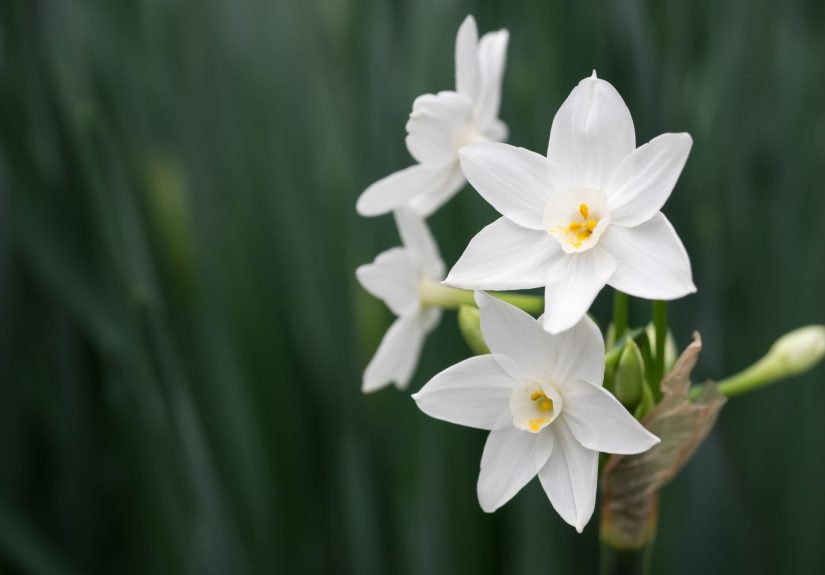
White daffodils are the early spring heroes: bright, resilient, and generally ignored by deer and rabbits (which is basically a gardening miracle). ‘Thalia’ is especially beloved for its multiple blooms per stem and that fresh, glowing-white look.
Growing notes
- When to plant: Fall, like most spring bulbs.
- Light: Full sun to part shade.
- Soil: Well-drained soil helps prevent bulb rot.
- Care tip: Let foliage die back naturally after blooming so bulbs can store energy for next year.
Design tip
Plant daffodils in clusters near walkways or under deciduous treessunny in spring before leaves fill in, then quietly hidden later.
7) Hellebore (Helleborus orientalis, “Lenten Rose”)
Hellebores bloom when the rest of the garden is still deciding whether it’s awake. Late winter into early spring, they offer nodding, rose-like flowersoften in shades that include gorgeous whites and creamy tones. They’re also fantastic for shady gardens where “blooming” can feel like a rare event.
Growing notes
- Light: Part shade to full shade is ideal.
- Soil: Rich, humusy, and well-drained.
- Care tip: Cut back tired foliage before new growth surges to keep plants looking fresh and reduce disease issues.
Design tip
Pair hellebores with early bulbs (like white daffodils) for a “spring starts here” corner that doesn’t require full sun.
8) Candytuft (Iberis sempervirens)
Candytuft is the definition of “small plant, big payoff.” In spring, it becomes a low mound absolutely covered in bright white blooms. It’s perfect for edging paths, softening rock borders, and keeping the front of a bed from looking bare.
Growing notes
- Light: Full sun is best for maximum flowers.
- Soil: Well-drained soil is non-negotiable.
- Care tip: Shear back a bit after bloom to encourage neat growth and sometimes a light rebloom.
Design tip
Use candytuft as a living “white trim” along the edge of a mixed borderclean, bright, and easy on the eyes.
9) Sweet Alyssum (Lobularia maritima)
Sweet alyssum is a tiny powerhouse: clusters of small, fragrant flowers that spill from containers, fill gaps in beds, and make borders look finished. White alyssum also plays a sneaky role as a unifierhelping mismatched colors look like they belong together.
Growing notes
- Light: Full sun in cooler climates; partial shade can help in hotter areas.
- Soil: Average, well-drained soil with moderate moisture.
- Care tip: If it looks tired in heat, give it a haircut (light trim) and it often rebounds when temperatures ease.
Design tip
Use it as a “living mulch” around taller plantssoft texture, fewer weeds, and a gentle honey-like fragrance near paths.
10) Moonflower Vine (Ipomoea alba)
Moonflower is for anyone who has ever thought, “My garden is great… but what if it also had a nighttime show?” These large white trumpet blooms open in the evening, often releasing sweet fragrance just as you’re settling into patio time. Bonus: moth pollinators may show up like tiny night-shift workers doing their rounds.
Growing notes
- Light: Full sun for best flowering.
- Support: Needs a trellis, fence, or arborthis vine wants to climb.
- Care tip: In areas with shorter growing seasons, starting seeds indoors can help the vine hit its stride before late summer.
Design tip
Plant near a deck, patio, or window you open at night. It’s basically aromatherapy with petals.
11) Mock Orange (Philadelphus × virginalis and cultivars)
Mock orange is the “fragrance shrub” that makes people stop and ask what you planted. The white blooms arrive in late spring to early summer, often with a sweet, citrusy scent that feels like a fresh breeze got a promotion.
Growing notes
- Light: Full sun to part shade.
- Soil: Average, well-drained soil; avoid waterlogged sites.
- Care tip: Flowers form on last year’s growth, so prune right after floweringotherwise you’re cutting off next year’s show.
Design tip
Place it where you’ll walk past in late spring: near a gate, along a path, or by a seating area. Fragrance should be enjoyed, not hidden behind the shed.
12) Jasmine (Jasminum spp. and Star/Confederate Jasmine)
When you want fragrance + flowers + a plant that can climb, jasmine is hard to beat. Many jasmine types produce small white blooms with an unmistakable scent, making them perfect near outdoor living spaces. (Your patio deserves a signature scent.)
Growing notes
- Light: Full sun to partial shade; warmer, sheltered sites help.
- Soil: Regular garden soil with moderate fertility and moisture works for many types.
- Care tip: Train vines early on a support and pinch/shape as needed to keep growth tidy and encourage branching.
Design tip
Use jasmine to soften a fence, wrap an arbor, or add scent to a courtyard. A few blooms can perfume an entire corner of the yard.
13) Japanese Anemone (‘Honorine Jobert’ and similar)
Late-season flowers are garden gold. Japanese anemone steps in when summer is winding down, offering elegant white blooms on tall stems that dance above the foliage. The effect is light, airy, and quietly dramaticlike the garden equivalent of a perfect closing song.
Growing notes
- Light: Full sun to part shade, with some protection from harsh heat and drying winds.
- Soil: Humus-rich, evenly moist, well-drained soil is ideal.
- Care tip: Don’t let soil dry out; mulch helps maintain consistent moisture, especially during hot spells.
Design tip
Plant behind lower perennials so the tall stems rise like white confetti in early fall. It’s a beautiful way to extend your garden’s “wow” season.
How to Design with White Flowers (So It Looks Intentional, Not Accidental)
Create a “glow path.” Line a walkway with white bloomerscandytuft in spring, sweet alyssum in summer, and Japanese anemone in fallso your garden literally guides the eye.
Build a moon garden. Cluster white flowers near a patio or porch, and add light foliage (silver or variegated leaves) so the whole area looks brighter at dusk. Moonflower, jasmine, and gardenia add fragrance that feels tailor-made for evenings.
Use white as a “pause.” If you love color (and who doesn’t), pockets of white help the eye rest. Think of white blooms as punctuation markscommas, not exclamation points.
Common Mistakes to Avoid (Aka: How Not to Annoy Your Plants)
- Ignoring drainage: Bulbs and many perennials sulk in soggy soil. If water puddles, choose different plants or amend the bed.
- Planting fragrance far away: If it smells amazing, plant it where you’ll noticenear doors, windows, patios, and paths.
- Forgetting bloom time: A garden that peaks for two weeks is a little like buying concert tickets and leaving after the opening act. Mix early, mid, and late bloomers.
- Overcrowding: Crowded plants invite disease and reduce flowering. Give each plant room to mature.
Real-World Experiences: What Gardeners Notice After Adding White Flowers (About )
Gardeners who start weaving white flowers into their planting plans often describe the same surprise: the garden feels “brighter,” even if nothing about the sun changed. That’s because white blooms act like natural reflectors. In a shady corner, a clump of hellebores with creamy blooms can make the whole space feel more welcoming. Along a path, candytuft in spring and sweet alyssum in summer read like a soft, glowing borderespecially in early morning or late evening when light is slanted and gentle.
Another common “aha” moment is how white flowers connect everything. Many gardens are a patchwork of favorite plants: a rose you inherited, a hydrangea you couldn’t resist, some bulbs planted on a whim, and a container that changes every season. White blooms become the diplomatic negotiator that convinces all those choices to get along. A white Shasta daisy can bridge hot colors (reds, oranges) and cool colors (blues, purples) so the bed looks cohesive. White tulips in spring do the same thing for mixed bulb plantings, making even a chaotic palette feel curated.
Fragrance is where white flowers often become a lifelong habit. People plant gardenias and jasmine expecting a nice scent, then realize they’ve been missing an entire layer of “garden enjoyment” this whole time. The experience tends to be most memorable at night: stepping outside after dinner and catching a sweet perfume in the air turns a normal evening into something that feels like a vacation. Moonflower vines, in particular, can change how a family uses their outdoor spacesuddenly the patio isn’t just a daytime spot, it’s a nighttime destination. Gardeners also notice more nighttime activity, too: moths hovering and pollinating, and that subtle sense that the garden is alive in a different way after dark.
Timing is another practical lesson. White flowers make it easier to see the season’s transitions. White daffodils signal the start of spring with a clean, fresh look that feels like winter’s curtain lifting. Peonies arrive as the “grand event” of late spring. Hydrangeas carry the baton through summer with big, steady blooms. Japanese anemones then appear in early fall like a graceful encore performance. Once gardeners experience that smooth handoff, they often start planning more intentionallyadding one or two plants that bloom in the “gaps” so something white is always showing somewhere.
There are also a few learn-it-once lessons. White blooms show dirt and weathering more than darker flowers, so gardeners get more mindful about placement. For example, planting white flowers right next to a dusty driveway may lead to disappointment. In windy spots, tall-stemmed blooms like anemones may need a little shelter or support to keep them upright and elegant instead of looking like they lost an argument with the forecast. And with moisture-loving plants like hydrangeas, gardeners quickly learn that “part shade” can be a giftless stress on the plant, less watering for the gardener, and better-looking foliage through the season.
Overall, gardeners often say white flowers change the feel of their yard more than they expected. The space looks calmer, the beds look more polished, the evenings become more inviting, and the garden feels thoughtfully designedeven when it’s still a work in progress. Which, honestly, is the most realistic kind of garden.
Conclusion
If you want a garden that looks brighter, feels more cohesive, and stays interesting across seasons, white flowers are an easy win. Mix spring bulbs like white tulips and daffodils with dependable summer stars like Shasta daisies and hydrangeas. Add fragrance with gardenia and jasmine. Then finish strong with fall bloomers like Japanese anemone. The result isn’t just prettyit’s practical: a garden that performs in sun, shade, and even moonlight.