Table of Contents >> Show >> Hide
- What siding really needs to do (beyond looking pretty)
- 13 popular house siding options (with real-world pros, cons, and best uses)
- 1) Vinyl siding
- 2) Insulated vinyl siding
- 3) Fiber cement siding
- 4) Engineered wood siding
- 5) Natural wood lap siding (cedar, pine, redwood)
- 6) Wood shingles and shakes
- 7) Brick veneer
- 8) Natural stone veneer
- 9) Manufactured stone veneer
- 10) Traditional stucco (cement-based)
- 11) EIFS (Exterior Insulation and Finish System / “synthetic stucco”)
- 12) Aluminum siding
- 13) Steel siding
- How to choose the right siding (a simple framework that actually works)
- Step 1: Start with your climate hazards
- Step 2: Be honest about your maintenance personality
- Step 3: Match the material to your home’s architecture
- Step 4: Compare true lifetime cost, not just install price
- Step 5: Don’t ignore the wall system behind the siding
- Step 6: Interview your installer like you’re hiring a babysitter for your house
- Common siding mistakes to avoid
- Real-world experiences: what homeowners tend to learn after the install
- Lesson 1: “Low maintenance” usually means “low drama,” not “no work ever”
- Lesson 2: The “installer skill” factor is real (and it shows up around windows)
- Lesson 3: Reservoir claddings look amazing… and punish sloppy moisture design
- Lesson 4: Color and texture choices age differently than people expect
- Lesson 5: “I want wood” is often a design request, not a material requirement
- Lesson 6: Your siding choice changes how you feel about storms
- Lesson 7: The best siding decision is the one that matches your lifestyle
- Conclusion
- SEO Tags
Picking house siding sounds simple until you realize you’re basically choosing your home’s “skin” for the next few decades.
It has to look good, survive your weather, ignore bugs that think your house is a buffet, and ideally not demand weekly
attention like a needy houseplant.
The good news: there are plenty of great siding materials. The better news: once you know what to compare (durability,
maintenance, moisture behavior, fire risk, impact resistance, and cost), the decision becomes a lot less “random Pinterest spiral”
and a lot more “smart homeowner energy.”
What siding really needs to do (beyond looking pretty)
Siding is more than curb appeal. It’s part of a wall system that manages sun, wind, rain, and temperature swings.
Your siding choice should match your climate hazards, your maintenance tolerance, and your home’s stylenot just whatever
was trending on your neighbor’s remodel.
13 popular house siding options (with real-world pros, cons, and best uses)
1) Vinyl siding
Vinyl is popular for a reason: it’s budget-friendly, widely available, and relatively low maintenance. It comes in tons of
colors and profiles, and you don’t have to repaint it like wood. If you want a practical exterior “set it and mostly forget it”
option, vinyl is often the first stop.
Watch-outs: vinyl can crack in extreme cold, warp if installed too tight or exposed to significant heat, and it can look wavy
on uneven walls. If you’re in a high-wind area, quality installation (and correct fastening) matters more than the marketing brochure.
2) Insulated vinyl siding
Think of this as vinyl’s slightly overachieving cousin. It adds rigid foam backing, which can improve rigidity (less “wavy wall” look)
and add some insulation value. It can be a sweet spot if you like vinyl’s low upkeep but want a more substantial feel.
Watch-outs: higher cost than standard vinyl and fewer contractor crews truly experienced with the details. Also, insulation gains are
real but not magicair sealing and proper wall design still matter.
3) Fiber cement siding
Fiber cement (often associated with products like Hardie board) is loved for its durability and its ability to mimic wood profiles,
shingles, or panels without wood’s constant drama. It’s commonly chosen for fire resistance and pest resistance, and it holds paint well.
Watch-outs: it’s heavier than vinyl and usually costs more to install. Cut edges and joints must be detailed correctly, and you’ll still
repaint eventually (just typically less often than wood).
4) Engineered wood siding
Engineered wood aims to deliver the warmth of wood with better resistance to moisture and pests. Many systems use treated wood strands or fibers
plus resins/waxes for stability, and they’re often easier to install than fiber cement while still feeling substantial.
Watch-outs: like any wood-based product, details matterespecially at cut edges, near grade, and around flashing points. Choose reputable
products, follow installation instructions precisely, and plan for periodic repainting or re-coating.
5) Natural wood lap siding (cedar, pine, redwood)
Real wood is the “fresh-baked cookies” of siding: warm, classic, and hard to fake. Cedar is popular for rot resistance compared with many other woods,
and wood can be repaired board-by-board rather than replacing an entire wall.
Watch-outs: maintenance is not optional. Paint or stain schedules, sun exposure, and moisture control will decide whether your wood ages like a charming
vintage jacket or like a damp cardboard box.
6) Wood shingles and shakes
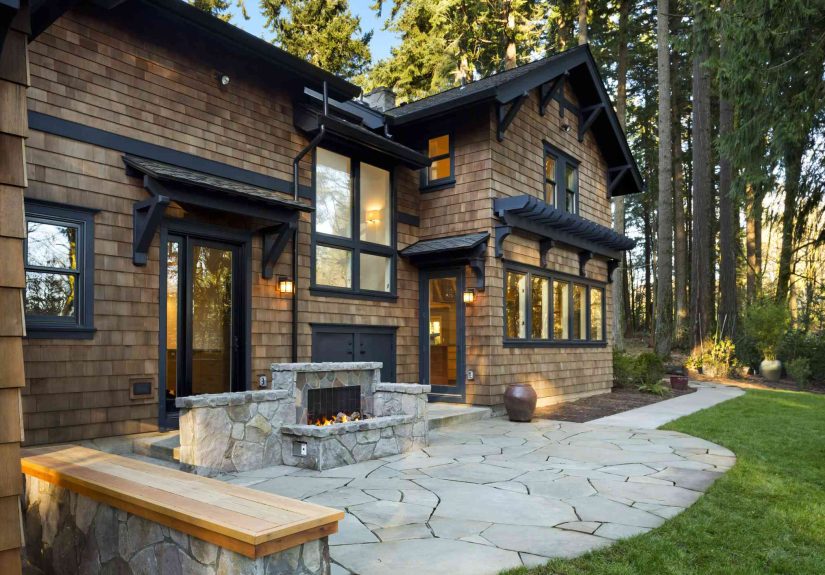
Shingles and shakes bring texture and character (coastal, cottage, Craftsmanchoose your vibe). They can look incredible, especially as accents on gables
or upper stories.
Watch-outs: they demand maintenance and smart moisture design. In wet climates or heavily shaded areas, algae/mildew and uneven weathering can become
recurring guests. Fire risk may also be a factor depending on local codes and wildfire exposure.
7) Brick veneer
Brick veneer delivers the look and durability people associate with brick, but as a cladding rather than a structural wall in many homes. It’s low maintenance,
highly resistant to pests, and performs well against impact. It also tends to age gracefullybrick rarely goes “out of style.”
Watch-outs: it’s heavier and more expensive to install than many sidings, and proper moisture detailing is critical. Brick can absorb water, so drainage planes,
weeps, and flashing details are not “nice-to-haves”they’re the whole point.
8) Natural stone veneer
Natural stone is the luxury sedan of claddings: strong, timeless, and instantly upgrades curb appeal. As veneer, it can provide that high-end look without
building an entire stone wall.
Watch-outs: weight, cost, and installation skill. You want a contractor who actually knows veneer systems, moisture management, and the right substrate/mortar
approach for your climate.
9) Manufactured stone veneer
Manufactured (or “cultured”) stone veneer is designed to mimic natural stone at a lower cost and weight. It can look excellent from the street and comes in many
styles. It’s often used as an accent around entries, chimneys, or lower façade areas.
Watch-outs: moisture performance depends heavily on correct detailing. It’s considered a “reservoir cladding” (it can hold water), so drainage, flashing, and a
good water-resistive barrier matter a lotespecially in mixed-humid or rainy climates.
10) Traditional stucco (cement-based)
Classic stucco is a time-tested exterior finish that can look smooth and modern or textured and Mediterranean. Properly installed systems can be durable and
handle heat and sun well.
Watch-outs: cracking happenssome hairline cracks are normal, but details around joints, transitions, and water management separate “fine” stucco from “why is my wall
bubbling?” stucco. If you’re in a wet climate, extra attention to drainage and drying potential is smart.
11) EIFS (Exterior Insulation and Finish System / “synthetic stucco”)
EIFS is often chosen for its continuous exterior insulation potential and design flexibility (it can create very clean lines and architectural shapes). Modern drainage EIFS
systems are designed to manage moisture better than early barrier-style EIFS.
Watch-outs: EIFS has a reputation because older systems had moisture issues when water got behind the finish. The lesson isn’t “EIFS bad,” it’s “details and drainage matter.”
Choose experienced installers and prioritize drainage-type EIFS in most residential scenarios.
12) Aluminum siding
Aluminum is lightweight, doesn’t rust, and can be a good option in some coastal areas where steel corrosion is a concern. It’s also recyclable and can be installed in various
profiles.
Watch-outs: dents. Hail, baseballs, and enthusiastic lawn equipment can leave souvenirs. Paint finishes can fade over time, and older aluminum siding may show wear sooner than
newer systems.
13) Steel siding
Steel siding is the “work boots” option: durable, tough, and often chosen for impact resistance and low maintenance. Many steel systems come with high-performance coatings and
can mimic wood looks surprisingly well from a normal-human distance (aka not standing three inches from your wall with a magnifying glass).
Watch-outs: in salty coastal air, corrosion risk increases if coatings are damaged or details are poorly executed. If you live near the ocean, discuss finish systems and warranties
carefullyor consider corrosion-friendlier alternatives.
How to choose the right siding (a simple framework that actually works)
Step 1: Start with your climate hazards
- High moisture / heavy rain: Prioritize excellent flashing, a reliable water-resistive barrier (WRB), and (often) a rainscreen gap for better drainage and drying.
- Freeze-thaw cycles: Choose materials and details that don’t trap water; small cracks plus freezing water can become big problems.
- Hail and impact risk: Consider fiber cement, engineered wood (impact-rated systems), or steel for toughness.
- Wildfire or high fire risk: Favor more fire-resistant claddings and follow local code guidance for the entire exterior zone (vents, soffits, decks, and landscaping also matter).
- High winds: Installation details matter as much as materialfastening patterns, starter strips, and edge detailing should meet local requirements.
Step 2: Be honest about your maintenance personality
If “repainting every few years” sounds like a fun hobby, wood may be your love language. If it sounds like a personal attack, pick a lower-maintenance option like vinyl, fiber cement,
brick veneer, or metalthen spend your weekends doing literally anything else.
Step 3: Match the material to your home’s architecture
Siding should look like it belongs. Wide horizontal lap siding fits many traditional American homes. Board-and-batten looks great on modern farmhouse styles. Shingles complement coastal and cottage looks.
Brick and stone read “classic” and “permanent.” The goal: intentional, not accidental.
Step 4: Compare true lifetime cost, not just install price
The cheapest upfront siding can become expensive if it needs frequent repair, repainting, or replacement. Conversely, a more expensive cladding might make sense if you plan to stay long-term and want lower
maintenance and better durability. If resale is a factor, it’s worth considering how common remodeling reports compare siding replacements and retained value.
Step 5: Don’t ignore the wall system behind the siding
Great siding can’t save a poorly detailed wall. Ask about:
- WRB (water-resistive barrier): The drainage plane behind the cladding that helps manage wind-driven rain.
- Flashing: Windows, doors, roof-to-wall intersections, decks, and penetrations need meticulous flashing.
- Rainscreen gap: Especially helpful for reservoir claddings (brick, stucco, stone veneer) to improve drainage and drying.
- Ventilation & drying potential: Your wall should be able to dry out, not trap moisture.
Step 6: Interview your installer like you’re hiring a babysitter for your house
Good materials installed badly fail fast. Ask your contractor:
- How will you detail WRB and flashing at windows/doors?
- Will you use a rainscreen (and why/why not) for this cladding in our climate?
- How do you handle butt joints, cut edges, and penetrations?
- What manufacturer specs and local code requirements are you following?
- What warranty applies to both materials and labor?
Common siding mistakes to avoid
- Choosing based on looks alone: A gorgeous cladding that can’t handle your rain/heat/wind is just an expensive mood.
- Skipping moisture details: Many siding failures are really flashing/WRB failures in disguise.
- Installing too close to grade: Splashback and soil moisture can punish wood and engineered products.
- Ignoring maintenance realities: If you won’t stain wood regularly, don’t choose wood expecting it to “somehow be fine.”
- Not planning for repairs: Ask how easy it is to replace a damaged section 10 years from now.
Real-world experiences: what homeowners tend to learn after the install
Here’s the part most buying guides skip: how siding choices feel in real life once the novelty wears off and you’re just living theregetting groceries, hosting friends,
and occasionally staring at your exterior while taking out the trash like it’s a museum exhibit.
Lesson 1: “Low maintenance” usually means “low drama,” not “no work ever”
Homeowners who pick vinyl or metal often love that they’re not scraping paint every few years. But many still end up doing an annual washespecially on shaded walls where
pollen, dust, or mildew can build up. The happy surprise is that for these materials, cleaning is usually straightforward. The unhappy surprise is that gutters and landscaping
still matter; overflowing gutters can stain almost anything, and sprinklers can create a permanent splash zone that even tough siding doesn’t enjoy.
Lesson 2: The “installer skill” factor is real (and it shows up around windows)
People rarely complain that their siding “failed.” They complain that their window trim looks weird, caulk lines crack, water stains appear, or a corner detail looks unfinished.
In other words, they’re seeing the consequences of flashing and detailing choices. Homeowners who had the smoothest outcomes tend to be the ones who asked early: “How are you
handling WRB, flashing tape, kick-out flashing, and drainage?” If a contractor gets vague here, it’s not a cute mysteryit’s a risk.
Lesson 3: Reservoir claddings look amazing… and punish sloppy moisture design
Brick, stucco, and stone veneer are often chosen because they feel solid and timeless. Homeowners love the “this house is going to outlive me” vibe. But those same materials can
hold and absorb water, so the wall needs a smart drainage path behind them. When that’s done right, owners tend to report few issues beyond normal maintenance (like checking sealants).
When it’s done wrong, the problems can be expensive and confusing, because the cladding itself looks fine while hidden moisture causes trouble elsewhere.
Lesson 4: Color and texture choices age differently than people expect
Light colors are forgiving; dark colors can be dramatic but show dust, pollen, and sun exposure more. Smooth finishes often look modern but highlight waves or imperfections in the wall
planeespecially with some vinyl installs. Textured materials (shakes, shingles, many stone styles) hide minor flaws and stay visually interesting over time. Homeowners who stay happiest
tend to pick a “classic base” and then add personality with accents (a stone entry, shingle gables, bold door color) rather than betting the whole façade on a trendy look.
Lesson 5: “I want wood” is often a design request, not a material requirement
Many people start with “real wood only,” then later realize they want the look of wood with less maintenance. That’s where fiber cement and engineered wood often win: they can
deliver convincing profiles and shadow lines while reducing the upkeep burden. Homeowners who truly love maintaining a home (and love the patina of real wood) still choose natural wood,
but they do it with eyes open and a plan for staining/painting schedules.
Lesson 6: Your siding choice changes how you feel about storms
In hail-prone or windy areas, homeowners often describe a subtle peace of mind when they choose tougher claddings and the install is rated for local conditions. It’s not that damage becomes
impossibleit’s that the probability drops, and repairs are less frequent. The funny part is how quickly siding becomes a “mental health purchase”: fewer surprise repairs, fewer “what was that noise?”
moments, and less post-storm exterior pacing like a detective.
Lesson 7: The best siding decision is the one that matches your lifestyle
The “best” siding isn’t universal. A rental property might prioritize cost and simple repairs. A forever home might prioritize durability, fire resistance, and long-term curb appeal. A historic house might
prioritize authenticity and profiles. Homeowners who end up most satisfied usually made the choice that fits how they livebudget, time, climate, and designrather than chasing a single “#1 material.”
Conclusion
Choosing siding is a balance of beauty, durability, and how much future-you wants to be involved in maintenance. Start with your climate hazards, be realistic about upkeep, and pick a material that fits your
architecture. Then obsess (in a healthy way) over moisture management and installation detailsbecause the best siding on earth can’t outwork bad flashing.
If you narrow it down to two or three options, ask for large samples, look at real installations in your region, and get quotes that clearly specify the wall system detailsnot just the material name. Your house
deserves better than “we’ll figure it out on site.”