Table of Contents >> Show >> Hide
- First, What Does “Smallest” Even Mean?
- 1) Brazilian Flea Toad (Brachycephalus pulex)
- 2) New Guinea Amau Frog (Paedophryne amauensis)
- 3) Indonesian Superdwarf Fish (Paedocypris progenetica)
- 4) Stout Infantfish (Schindleria brevipinguis)
- 5) Minute Fairy Wasp (Dicopomorpha echmepterygis)
- 6) “Tinkerbella” Fairyfly (Tinkerbella nana)
- 7) World’s Smallest Land Snail (Angustopila dominikae)
- 8) Bee Hummingbird (Mellisuga helenae)
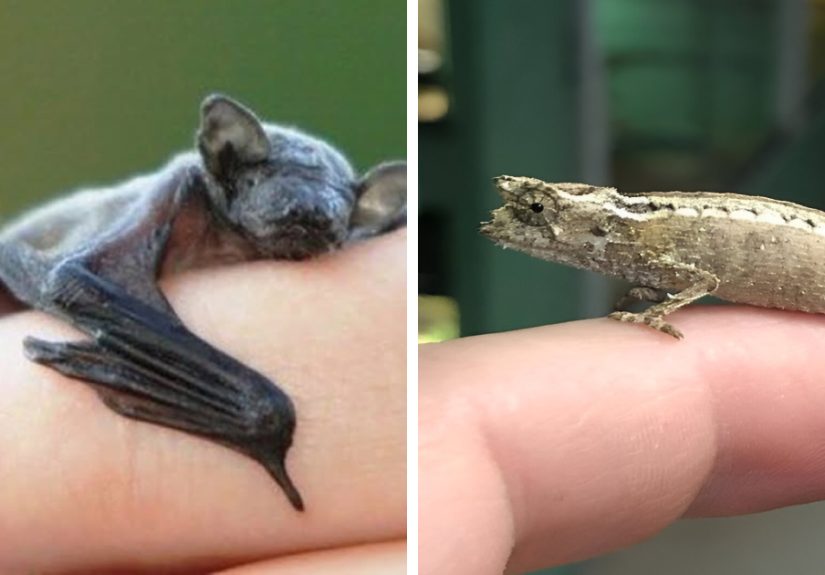
- 9) Bumblebee Bat / Kitti’s Hog-Nosed Bat (Craseonycteris thonglongyai)
- 10) Etruscan Shrew (Suncus etruscus)
- 11) Barbados Threadsnake (Tetracheilostoma carlae)
- 12) Nano-Chameleon (Brookesia nana)
- 13) Jaragua Dwarf Gecko (Sphaerodactylus ariasae)
- So… Who Actually Wins “Smallest Animal In The World”?
- Real-World Tiny-Creature Experiences (No, You Don’t Need Ant-Man Tech)
- 1) The “Leaf-Litter Safari” Reality Check
- 2) Macro Photography Makes You Respect Every Millimeter
- 3) “Smallest Bird” Birdwatching Is Fast, Bright, and Humbling
- 4) Cave and Forest Microclimates Feel Like the Whole Story
- 5) Reef Spotting: The Pygmy Seahorse Treasure Hunt
- 6) Museum Moments: Tiny Specimens, Huge Perspective
- 7) The After-Effect: You Start Noticing “Small” Everywhere
- Final Thoughts
If you’ve ever looked at a mouse and thought, “Cute. But make it smaller,” nature has you covered.
The problem is that “smallest animal in the world” is less like one tidy trophy and more like a chaotic award show
with multiple categories, questionable measuring tape technique, and a lot of scientists squinting at leaf litter.
In this ranked-but-not-really list, we’re meeting 13 tiny animals that routinely show up in “world’s smallest” conversations
because they’re the shortest, the lightest, the most miniature in their group, or simply because they look like they escaped
from a microscope slide. Along the way, you’ll learn what “smallest” actually means, why miniaturization is such a big deal
(yes, that pun is unavoidable), and how these creatures survive life in a world where basically everything is a predator.
First, What Does “Smallest” Even Mean?
“Smallest” depends on the scoreboard. Some animals win by length (nose to tail, or snout-to-vent in frogs and lizards),
others by mass (the scale doesn’t care about your personal brand), and a few by adult size at maturity
(because babies don’t countotherwise we’d crown every newborn ever and call it a day).
Miniaturization also comes with tradeoffs: fewer eggs, smaller prey, delicate habitats, and bodies that run like tiny, high-performance engines.
When you’re the size of a dime (or smaller than a dime’s emotional support crumb), temperature, moisture, and shelter aren’t “nice to have.”
They’re survival.
1) Brazilian Flea Toad (Brachycephalus pulex)
This is the headline-grabber in the current “smallest vertebrate” conversation. Adult males average just over 7 millimeters
longbasically a living punctuation mark. The nickname “flea toad” is fitting: it’s tiny, quick, and easy to lose in a forest floor
that looks like a buffet of brown crumbs.
Quick stats
- Category claim: Smallest known vertebrate (by average male length)
- Where: Brazil (Atlantic Forest region)
- Why it’s impressive: A vertebrate so small it makes other record-holders look like they’re overcompensating
2) New Guinea Amau Frog (Paedophryne amauensis)
For years, this frog was the “smallest vertebrate” celebrity. Adult males average about 7.7 mm in snout-to-vent length.
It lives in leaf litter, which is basically the perfect hiding place when you’re smaller than the average fingernail clipping
(and far more polite about it).
Quick stats
- Category claim: Among the smallest frogs; former smallest vertebrate record-holder
- Where: Papua New Guinea leaf litter
- Survival trick: Camouflage + insect-like calls = “good luck finding me”
3) Indonesian Superdwarf Fish (Paedocypris progenetica)
This tiny freshwater fish is often cited among the smallest fish and smallest vertebrates, with mature adults reported under
7 mm in length in some measurements. It lives in peat swamp habitatsdark, acidic waters that are surprisingly
good at hiding very small life forms (and very bad at being preserved when ecosystems get drained or developed).
Quick stats
- Category claim: One of the smallest fish; frequently cited among tiniest vertebrates
- Where: Southeast Asian peat swamps
- Wild detail: Miniaturization comes with simplified anatomy and extreme specialization
4) Stout Infantfish (Schindleria brevipinguis)
This one sounds like a nursery rhyme, but it’s a real marine fish that matures at astonishingly small sizes.
Males mature around 6.5–7 mm, and the largest known specimens are still only a few millimeters longer.
It’s “paedomorphic,” meaning it retains larval-like features as an adultnature’s way of saying, “We’re keeping it minimalist.”
Quick stats
- Category claim: Among the smallest marine vertebrates; mature adults measured in single-digit millimeters
- Where: Coral reef-associated waters
- Why it matters: Shows how far vertebrate miniaturization can go in the ocean
5) Minute Fairy Wasp (Dicopomorpha echmepterygis)
Now we’re entering “did my printer accidentally make this?” territory. Male Dicopomorpha can measure in the
hundreds of micrometers (yes, micrometers). They’re so small that describing them as “tiny insects”
feels like calling a grain of sand “a boulder’s shy cousin.”
Quick stats
- Category claim: Often cited among the smallest known insects
- Where: Documented in habitats where hosts (other insects) live
- Adaptation: Extreme miniaturization + simplified body plan
6) “Tinkerbella” Fairyfly (Tinkerbella nana)
Yes, it really has that name, and yes, it’s appropriately tiny. This fairyfly is measured in micrometers too,
clocking in around a quarter of a millimeter. The Mymaridae family is basically the heavyweight champion of
lightweight insects, producing some of the smallest flyers you’ll ever not-see.
Quick stats
- Category claim: One of the tiniest named insects discussed in science writing
- Where: Associated with other insect hosts
- Reality check: “Finding one” is mostly a microscope hobby
7) World’s Smallest Land Snail (Angustopila dominikae)
This snail’s shell height is about 0.86 millimeters. That’s not “small snail.” That’s
“snail-shaped concept.” Reports often note that multiple individuals could fit into the eye of a needle.
If you ever wanted proof that nature loves a flex, here it isspiraled and smug.
Quick stats
- Category claim: Among the smallest known land snails
- Where: China (limestone-associated microhabitats, based on discovery reports)
- Big idea: Microhabitats can hide entire worlds of biodiversity
8) Bee Hummingbird (Mellisuga helenae)
The bee hummingbird is the smallest bird on Earth, measuring about 2.25 inches long and weighing
less than 2 grams. In other words: it’s a flying jewel that could lose a staring contest with a penny.
It’s found only in Cuba, and it’s famous for being mistaken for an actual beeawkward for everyone involved.
Quick stats
- Category claim: Smallest living bird
- Where: Cuba
- Mini marvel: Nests and eggs are scaled down to match the tiny body
9) Bumblebee Bat / Kitti’s Hog-Nosed Bat (Craseonycteris thonglongyai)
This bat is famous for being among the smallest mammals, with adults often cited around 1.7–2.0 grams
and a body length of only a few centimeters. It’s a serious contender for “smallest mammal” depending on whether you’re
judging by weight or lengthbecause yes, mammals are also out here competing in multiple divisions like it’s the Olympics.
Quick stats
- Category claim: One of the smallest mammals (very strong contender by mass and length)
- Where: Thailand/Myanmar region (cave roosts)
- Ecology: Insect-eater with very specific roosting needs
10) Etruscan Shrew (Suncus etruscus)
If “smallest mammal” is judged by mass, shrews crash the party like they own the place.
The Etruscan shrew is widely cited as the smallest living mammal by weight, coming in at
under 2.5 grams in many references. It survives with a rapid metabolism that basically says,
“I’m hungry” every few minutes.
Quick stats
- Category claim: Often cited as the smallest mammal by mass
- Where: Parts of Europe, North Africa, and Asia
- Survival vibe: Tiny predator, constant snack schedule
11) Barbados Threadsnake (Tetracheilostoma carlae)
This is the snake that makes people say, “That’s… a shoelace.” Adults are only about
3–4 inches long. It’s a burrowing, secretive species that can be mistaken for an earthworm,
which sounds funny until you realize it also makes the snake easy to overlook in conservation.
Tiny species can be “lost” simply because they’re hard to spot.
Quick stats
- Category claim: Smallest known snake species
- Where: Barbados
- Conservation note: Habitat loss hits hardest when your entire world is a small patch of forest
12) Nano-Chameleon (Brookesia nana)
Madagascar is basically the global headquarters for “tiny reptile energy,” and this chameleon is a headline example.
Reports describe it as about the size of a sunflower seed, with a total length in the low 20-millimeter
range for males. It may be one of the smallest reptiles ever described, and it lives in a habitat so specific that
the conservation stakes are instantly high.
Quick stats
- Category claim: Among the smallest reptiles described
- Where: Madagascar
- Why it’s wild: A chameleon that can perch on a fingertip without even trying
13) Jaragua Dwarf Gecko (Sphaerodactylus ariasae)
This gecko has been reported around 16 millimeters from snout to ventone of the smallest lizards
ever measured. It lives on the forest floor, which is an intense place to be when your main defense is “please don’t step.”
The tiniest reptiles often depend on microclimatesshade, humidity, and cover that exist at ground level.
Quick stats
- Category claim: Among the smallest lizards
- Where: Caribbean (documented in the Dominican Republic region)
- Fun fact energy: “Curled up on a coin” photos exist for a reason
So… Who Actually Wins “Smallest Animal In The World”?
If you mean smallest vertebrate by length, tiny frogs currently dominate that conversation.
If you mean smallest bird, it’s the bee hummingbird. If you mean smallest mammal by mass,
the Etruscan shrew often gets the nodwhile the bumblebee bat remains a top contender depending on how you measure.
And if you mean smallest insect (or even “smallest animal you can still call an animal without arguing at dinner”),
micro-wasps are in their own dimension.
The real takeaway: the smallest animals on Earth aren’t just trivia answers. They’re proof that evolution can compress
complex biology into ridiculously tiny packagesoften in very fragile habitats. In the miniature world, small changes in forest cover,
water chemistry, or temperature can have outsized effects.
Real-World Tiny-Creature Experiences (No, You Don’t Need Ant-Man Tech)
I can’t personally go tromping through a rainforest or scuba-diving a reef, but I can tell you what people consistently
describe when they try to experience tiny wildlifewhether they’re researchers, photographers, divers, or curious nature nerds
who suddenly realize their eyes have never worked as hard as they do around “micro animals.”
1) The “Leaf-Litter Safari” Reality Check
If you’ve ever searched for a dropped earring in carpet, you already understand the emotional arc of looking for microfrogs.
People describe slowly sifting leaf litter by hand, listening for faint insect-like calls, and then doing the scientific version
of “Wait… was that a speck that moved?” The wild part is that the tiniest frogs aren’t hiding in dramatic placesjust ordinary ground cover.
It’s a reminder that whole ecosystems are layered, and the “ground” is not a flat surface; it’s a living apartment complex.
2) Macro Photography Makes You Respect Every Millimeter
Photographers who chase tiny insects talk about how macro work changes your definition of “patience.” Focus is razor-thin.
Wind becomes a villain. Even your breathing can wobble the shot. But that’s also the magic: the moment you see a micro-wasp’s
delicate structure or a snail shell smaller than a sprinkle, you stop thinking of them as trivia and start thinking of them as
engineering. People often say the first good macro image feels like discovering a secret layer of the planet that was always there,
just ignored because it didn’t shout for attention.
3) “Smallest Bird” Birdwatching Is Fast, Bright, and Humbling
Birders who travel hoping to see the bee hummingbird describe it as a blink-and-you-miss-it experience. Tiny birds don’t perch
and pose like they’re waiting for your camera. They dart, hover, vanish, and reappear somewhere else like they have teleportation
privileges. The experience is often less about one perfect long look and more about a series of quick glimpses that add up to:
“Yes, that was real, and yes, it was absurdly small.”
4) Cave and Forest Microclimates Feel Like the Whole Story
With animals like the bumblebee bat or threadsnakes, people often talk about habitat as the main character.
Caves aren’t just “dark places.” They’re stable temperature zones, humidity reservoirs, and roost sites that don’t have easy substitutes.
Forest patches aren’t “just trees.” They’re moisture, cover, leaf litter, and the exact conditions that tiny bodies require to avoid drying out.
Once you internalize that, conservation stops sounding abstract. Protecting a small area can be the difference between “still here” and “gone.”
5) Reef Spotting: The Pygmy Seahorse Treasure Hunt
Divers who look for pygmy seahorses often describe it like a scavenger hunt designed by a mischievous artist.
You stare at a coral fan that looks like nothing is on it… until suddenly your brain locks onto a shape that matches the coral a
little too perfectly. That “click” momentseeing camouflage work in real timetends to be unforgettable.
It also makes people gentler in the water: you move slower, keep your distance, and realize how easily a fin kick or careless touch
could damage the exact host structure these tiny animals depend on.
6) Museum Moments: Tiny Specimens, Huge Perspective
One of the most accessible experiences is actually indoors: natural history exhibits and museum collections.
People often describe looking at a preserved “tiny record-holder” next to a coin or scale bar and feeling their brain short-circuit.
The scale is hard to believe until you see it. That’s also where you learn an underrated truth: discovering very small animals often
takes specialized methodsfine sieves, microscopes, careful sampling, and a willingness to spend hours investigating what looks like dust.
7) The After-Effect: You Start Noticing “Small” Everywhere
The most common “experience” people report after a tiny-creature deep dive isn’t a single sightingit’s a mindset shift.
You start noticing ants as predators and leaf litter as habitat, not mess. You realize that puddles and cracks in rocks
can be entire worlds. And you learn that the “smallest animals in the world” aren’t a novelty categorythey’re evidence
that life doesn’t need to be large to be complicated, beautiful, or important.
Final Thoughts
The smallest animal in the world isn’t one creatureit’s a rotating cast of miniature champions in different categories.
Frogs compete for smallest vertebrate, hummingbirds own the “smallest bird” crown, bats and shrews duel for “smallest mammal,”
and micro-insects quietly dominate the “you need a microscope for this” division.
And honestly? The best part isn’t the title. It’s what the title reveals: that nature can scale life down to the edge of what’s
physically possible, then still find room for camouflage, hunting, mating, and survival. Small creatures. Huge flex.