Table of Contents >> Show >> Hide
- Why “anywhere yoga” actually works
- Quick safety notes (worth reading, promise)
- What you need
- The 12 yoga poses you can do anywhere
- 1) Mountain Pose (Tadasana)
- 2) Standing Forward Fold (Uttanasana)
- 3) Chair Pose (Utkatasana)
- 4) Low Lunge (Anjaneyasana)
- 5) Warrior II (Virabhadrasana II)
- 6) Tree Pose (Vrksasana)
- 7) Downward-Facing Dog (Adho Mukha Svanasana)
- 8) Plank Pose (Phalakasana)
- 9) Cat-Cow (Marjaryasana–Bitilasana)
- 10) Child’s Pose (Balasana)
- 11) Seated Spinal Twist (Seated Twist Variation)
- 12) Legs-Up-the-Wall (Viparita Karani)
- Mini-flows you can use in real life
- FAQ: quick answers people actually want
- Real-world experiences: how “anywhere yoga” actually plays out (and why it’s worth it)
- Conclusion
Yoga is the rare workout that doesn’t demand fancy gear, a “perfect” body, or a 47-step sign-up process.
It asks for one thing: show up. Even if you’re in pajamas. Even if your “studio” is a cramped hotel room,
a quiet corner of the office, or that weirdly peaceful stretch of hallway outside your classroom.
This guide gives you 12 yoga poses you can do almost anywherewith simple cues, beginner-friendly
modifications, and mini-flows you can steal for real life. No incense required. (Unless you’re into that. Then,
incense away.)
Why “anywhere yoga” actually works
A short yoga practice can build strength, balance, and flexibility while helping you downshift from “go-go-go”
to “okay, I can breathe again.” Yoga blends movement with breath and attentionso you’re not just stretching;
you’re training your body and your nervous system to cooperate.
The best part: consistency beats intensity. Two minutes of smart movement between tasks can do more for your
posture and stress level than one heroic workout you never repeat.
Quick safety notes (worth reading, promise)
-
Move within a comfortable range. Yoga should feel like effort and stretchnot sharp pain,
pinching, numbness, or “uh-oh.” -
Use support like it’s your job. A wall, a sturdy chair, a countertop, or a folded towel can
make a pose safer and more effective. -
Skip extreme shapes when you’re learning. Deep inversions and forceful breathing aren’t
necessary for a great practice. -
If you have injuries or medical conditions, consider getting guidance from a qualified
instructor or clinician before pushing range-of-motion.
What you need
Ideally: comfortable clothes and a little space. Realistically: whatever you’re wearing and the willingness to
move like a well-intentioned human. If you’re on a slippery surface, choose standing or chair-supported versions.
The 12 yoga poses you can do anywhere
Try holding most poses for 3–5 slow breaths to start. If it feels good, build to
30–60 seconds. The goal is not to “win” the posethe goal is to leave the pose feeling better
than you entered it.
1) Mountain Pose (Tadasana)
Why it’s underrated: Mountain looks like “just standing,” but it’s really posture practice and
full-body awareness. Think of it as the blueprint for everything else.
How: Stand tall with feet hip-width (or together if that’s comfortable). Spread your toes, root
down through the whole foot, and gently lift through the crown of your head. Relax your shoulders away from your
ears. Let your arms hang naturally or bring palms together at your chest.
Anywhere upgrade: Practice in line at the store: soften your knees, breathe slowly, and stack
ears over shoulders over hips. You’ll look calm and mysterious. (Or at least less like a pretzel.)
2) Standing Forward Fold (Uttanasana)
Why it works: This is a quick reset for the back of your bodyhamstrings, calves, and low back
especially if you’ve been sitting.
How: From Mountain, hinge at your hips and fold forward. Bend your knees as much as you need.
Let your head hang heavy. Hands can rest on your shins, thighs, or the floor.
Make it office-friendly: Fold with hands on a desk or countertop so you don’t feel like you’re
auditioning for “Most Flexible Person in Accounting.”
Be cautious if: you get dizzy easilycome up slowly, and keep a bend in the knees.
3) Chair Pose (Utkatasana)
Why it works: Strength for legs and core without equipment. It’s basically “invisible squats”
with better posture.
How: From Mountain, bend your knees and sit your hips back like you’re aiming for an imaginary
chair. Keep chest lifted. Arms can reach overhead or stay at heart center.
Anywhere modification: Do it with your back lightly touching a wall for support, or hover above
a real chair if balance is shaky.
Common oops: knees collapsing inward. Think “knees track toward middle toes.”
4) Low Lunge (Anjaneyasana)
Why it works: A lifesaver for tight hips after sitting, travel, or long screen time.
How: Step one foot back into a long stance. Bend the front knee over the ankle and keep the back
leg straight with heel lifted. Hands can rest on hips, front thigh, or a sturdy chair.
Make it feel amazing: Tuck your tailbone slightly and lift through your chestthis targets the
front of the hip instead of dumping into the low back.
Be cautious if: you have knee painuse padding or keep the stance shorter.
5) Warrior II (Virabhadrasana II)
Why it works: Builds leg strength, balance, and focus. Also makes you feel like you could
politely but firmly handle your inbox.
How: Step feet wide. Turn one foot out and bend that knee. Keep the back leg straight.
Stretch arms out long, gaze over front fingertips.
Anywhere tip: If space is tight, shorten the stancesame shape, smaller footprint.
6) Tree Pose (Vrksasana)
Why it works: Balance training that’s actually practicalankles, hips, and core all wake up.
How: Stand in Mountain. Shift weight into one foot. Place the other foot on the inner ankle or
calf (avoid pressing directly into the knee). Hands at heart center or overhead.
Make it doable anywhere: Use a wall with two fingers for support. Balance is a skill, not a
personality trait.
Pro focus trick: Pick one spot to stare at (a “drishti”) and breathe steadily.
7) Downward-Facing Dog (Adho Mukha Svanasana)
Why it works: A full-body shapeshoulders, back, hamstrings, calvesplus a nice “reset” for your
spine.
How (classic): Hands on the floor, hips lift up and back, knees can stay bent. Press the floor
away and lengthen your spine.
No-floor version: Put hands on a desk or wall and walk your feet back until your body forms an
L-shape. This keeps the benefits without needing a mat.
Be cautious if: you have wrist issuesuse the wall/desk version or fists on a soft surface.
8) Plank Pose (Phalakasana)
Why it works: Simple, effective core and shoulder strength that carries over to everything.
How: Hands under shoulders, legs straight back, body in one line. Press the floor away and keep
your belly gently engaged.
Anywhere modification: Do “countertop plank” with hands on a sturdy desk or kitchen counter.
You’ll still feel itjust with less wrist pressure.
Common oops: hips sagging. Think “heels back, crown forward.”
9) Cat-Cow (Marjaryasana–Bitilasana)
Why it works: Gentle spine mobility and breath coordinationperfect for stiff backs.
How (on hands and knees): Inhale: arch your back and lift your chest (Cow). Exhale: round your
spine and gently tuck your chin (Cat). Move slowly with breath.
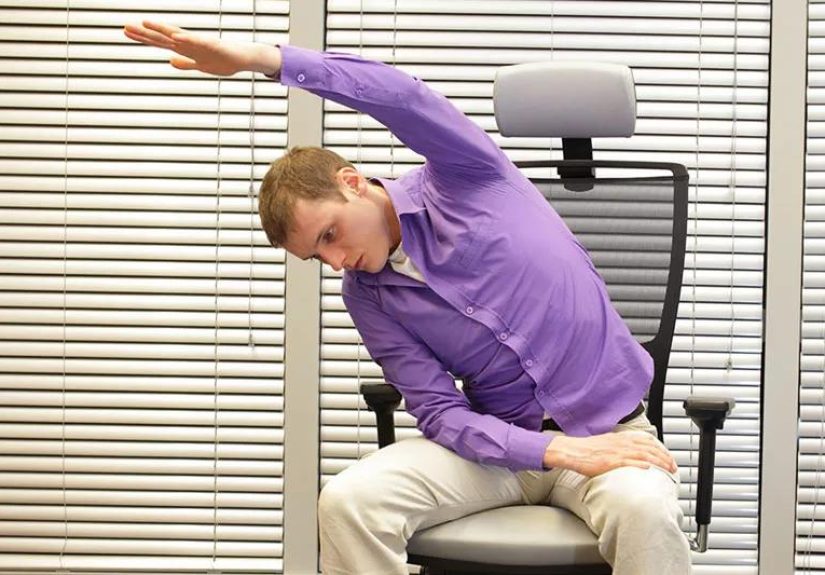
Chair version: Sit tall, hands on knees. Inhale lift chest, exhale round back. Great for desk
breaks without crawling on the office carpet.
10) Child’s Pose (Balasana)
Why it works: A classic “rest and reset” posture that can calm the body and stretch the back.
How: Kneel, big toes together, knees apart or together. Sit hips back toward heels and fold
forward with arms extended or alongside your body.
Anywhere modification: Use a chair: sit, fold forward over thighs, and rest your head on crossed
arms. Same soothing vibe, zero knee pressure.
11) Seated Spinal Twist (Seated Twist Variation)
Why it works: A gentle twist can feel fantastic after long sittingthink “wringing out tension”
without forcing anything.
How: Sit tall. Place one hand behind you and the other on the opposite knee. Inhale lengthen
your spine; exhale twist from the ribs. Keep shoulders relaxed.
Anywhere tip: Keep both feet grounded and twist slowly. If you’re in a chair, sit forward away
from the backrest so your spine can move freely.
Be cautious if: you have significant spine issueskeep it gentle and avoid yanking yourself
deeper.
12) Legs-Up-the-Wall (Viparita Karani)
Why it works: A restorative pose that feels like you hit the “refresh” buttonespecially after
lots of standing or travel.
How: Sit beside a wall, swing your legs up, and lie back. Adjust distance so it’s comfortable.
Arms rest by your sides. Breathe slowly for 2–10 minutes.
No wall? Put calves on a chair or couch so your legs are supported. Not identical, still very
relaxing.
Be cautious if: being inverted (even mildly) bothers your head/eyes or worsens symptomschoose
the chair-supported version and keep your head elevated.
Mini-flows you can use in real life
The 3-minute “I’ve been sitting forever” reset
- Mountain Pose (3 breaths)
- Standing Forward Fold (5 breaths, knees bent)
- Low Lunge (3 breaths each side)
- Seated Twist in a chair (3 breaths each side)
The 5-minute “no floor, no problem” office flow
- Mountain Pose (posture check, 3 breaths)
- Chair Pose (20–30 seconds)
- Desk Down Dog (5 breaths)
- Countertop Plank (15–25 seconds)
- Chair Cat-Cow (5 slow rounds)
- Seated Twist (3 breaths each side)
The “hotel room wind-down” (8 minutes)
- Forward Fold (1 minute total, coming up slowly)
- Cat-Cow (1 minute)
- Child’s Pose (1–2 minutes)
- Legs-Up-the-Wall (3–4 minutes)
FAQ: quick answers people actually want
Do I need a yoga mat?
Nope. A mat helps with grip and comfort, but you can practice barefoot on carpet, grass, or a towel. If the floor
is slippery, use wall or chair variations for Down Dog, Plank, and folds.
How long should I hold each pose?
For beginners, start with 3–5 breaths. For strength poses (Chair, Plank), try
15–30 seconds. For restorative poses (Child’s Pose, Legs-Up-the-Wall), go
2–10 minutes if it feels good.
What if I’m not flexible?
Perfect. Yoga is not a flexibility contest; it’s practice. Bend your knees, use support, and think of your first
job as “breathe without holding your breath.” Flexibility tends to improve as a side effect of consistency.
Can I do yoga every day?
Many people can, especially with gentle practices. Rotate intensity: one day more strength (Plank, Chair),
another day more mobility/rest (Cat-Cow, Child’s Pose, Legs-Up-the-Wall). If anything hurts, back off and modify.
Real-world experiences: how “anywhere yoga” actually plays out (and why it’s worth it)
“Yoga anywhere” sounds like a social media slogan until you try it in places that are… not exactly spa-like.
Here’s what tends to happen in the real world: you don’t have perfect conditions, you don’t feel perfectly ready,
and your brain tries to talk you out of it. Then you do one pose anywayand you notice your shoulders drop about
half an inch like they’ve been carrying groceries since 2009.
One of the most useful “anywhere” moments is the micro-reset: you have two minutes between
tasks, you’re feeling tense, and you choose something simpleMountain Pose with slow breathing, a short Chair
Pose hold, or a gentle Forward Fold with bent knees. It’s not dramatic, but it changes your posture fast. A lot
of tension is just your body bracing out of habit. When you stand tall and breathe slowly on purpose, you teach
your nervous system that it’s safe to stop bracing.
Travel is another honest test. In a hotel room, you might not want to put your hands on the floor (fair).
That’s where wall and chair versions become the MVPs. Desk Down Dog feels surprisingly good after flights because
it lengthens your spine and opens your shoulders without demanding deep hamstring flexibility. Add a Low Lunge
(hands on the bed) and suddenly your hips feel less like they’ve been folded into a carry-on.
The office version is its own art form. You learn which poses look “normal enough” to do without attracting a
crowd. Seated Cat-Cow and a Seated Twist are the stealthiest. They also reveal something important: yoga isn’t
only about big shapesit’s about how you move. When you coordinate movement with breath, your
body stops rushing. You get smoother, less jerky. That alone can reduce the “why does my neck feel like a brick?”
problem.
Balance poses like Tree can be humbling in public. Some days you feel stable; other days your ankle is doing
interpretive dance. The win is not “standing perfectly still.” The win is catching yourself, using the wall,
refocusing on one point, and trying again without getting annoyed. That patience carries over into everything:
learning, sports, even dealing with stress.
Finally, the quiet superpower pose: Legs-Up-the-Wall. When you do it after a long day, your whole body gets the
message that the work is done. If your mind is noisy, set a tiny goal: stay for two minutes and breathe slowly.
Most people end up staying longer because it’s one of the few times you’re allowed to rest without multitasking.
And that’s the real secret of “anywhere yoga”: it builds a practice you can keepnot a performance you can post.
Conclusion
If you remember nothing else, remember this: you don’t need a perfect setup to benefit from yoga. You need a
small menu of poses you can return tostanding, seated, wall-supported, and restorativeand the willingness to
practice them imperfectly. Pick three poses from this list and do them today. Tomorrow, repeat. That’s how
“anywhere yoga” becomes “actually in my life” yoga.