Table of Contents >> Show >> Hide
- 1) Betty Boop
- 2) Popeye the Sailor Man
- 3) Ursula (Disney’s The Little Mermaid)
- 4) Tinker Bell (Disney’s Peter Pan)
- 5) Snow White (Disney’s Snow White and the Seven Dwarfs)
- 6) Cinderella (Disney’s Cinderella)
- 7) Princess Aurora (Disney’s Sleeping Beauty)
- 8) Ariel (Disney’s The Little Mermaid)
- 9) Fred Flintstone (Hanna-Barbera’s The Flintstones)
- 10) Jessica Rabbit (Who Framed Roger Rabbit)
- 11) Foghorn Leghorn (Looney Tunes)
- Why Animators Keep Borrowing From Real People
- of Experiences Related to These “Real-People” Cartoons
- Conclusion
Cartoons may look like pure imaginationrubber limbs, gravity-defying hair, and eyes big enough to reflect your entire childhood.
But a surprising number of iconic animated characters didn’t start as doodles pulled from thin air. They started as people:
dancers filmed on studio lots, Hollywood stars studied frame by frame, performers whose silhouettes were basically already “animated” in real life,
and everyday town legends who just happened to have the world’s most cartoon-ready chin.
Animation studios have long used real humans as visual “anchors.” Sometimes it’s a formal process (live-action reference models, motion studies,
costume tests). Other times it’s the animator’s sneaky little shortcut: “What if we gave this villain Divine’s eyeliner and the confidence of someone
who’d steal your milkshake and wink on the way out?”
Below are 11 cartoon characters whose appearances (not just voices, not just vibes) were shaped by real-life peoplefamous and not-so-famous
and the very specific human details that helped artists turn drawings into legends.
1) Betty Boop
The real-life muse
Betty Boop’s flapper face and “boop-oop-a-doop” era attitude didn’t come from nowhere. The character is closely associated with singer and performer
Helen Kane, whose look and baby-voiced style were famously argued over in court. The story gets even messier (and more historically important)
when “Baby Esther” (Esther Jones) enters the picturebecause the case and the era reveal how performance styles traveled, got borrowed, and sometimes got
credited to the wrong person.
How it shows up on screen
Betty’s visual identitybig eyes, short curls, flirty flapper stylingfeels like a distilled 1930s stage persona. She’s not a “photoreal” copy of one person,
but a cartoon remix of real-world performers: a glamorous shorthand for the Jazz Age that animators could exaggerate without losing recognizability.
2) Popeye the Sailor Man
The real-life muse
Popeye’s squint, pipe, and famously stubborn jaw have long been linked to a Chester, Illinois local named Frank “Rocky” Fiegel.
He wasn’t a sailor, but accounts describe a tough, brawling presencepaired with a surprisingly warm soft spot for kids. The kind of character a young
observer could remember forever… and later turn into a cartoon who punches first and moralizes later.
How it shows up on screen
The look is the giveaway: that jutting chin, the one-eyed squint, the perpetual “I’ve seen things” face. Popeye is a great example of how animation can take a
real person’s most distinctive features and dial them up until they become instantly readable from across the roomor from a tiny black-and-white TV in 1952.
3) Ursula (Disney’s The Little Mermaid)
The real-life muse
Ursula’s design is one of the most celebrated examples of a character borrowing from a real performer: Divinethe iconic drag artist and actor
known for bold makeup, fearless presence, and a silhouette that doesn’t ask permission to exist. This influence is more than trivia; it’s part of why Ursula feels
theatrical, dangerous, and deliciously in control.
How it shows up on screen
Look at the eyes, the makeup energy, the jewelry, the “I own the room and your contract” posture. Ursula’s appearance isn’t just “big villain”; it’s
performance-driven designdrawn like someone who could hit a pose, hold it, and still have enough breath to sing you into a bad decision.
4) Tinker Bell (Disney’s Peter Pan)
The real-life muse
Tinker Bell didn’t just appear fully formed in a cloud of pixie dust. Disney used a live-action reference performer:
actress and dancer Margaret Kerry. Her job was essentially to “act” as Tinkexpressive movement, attitude, and pantomimeso animators could translate
human timing into hand-drawn motion.
How it shows up on screen
Tink’s body language is the tell: the impatient foot stomp, the dramatic turn, the exaggerated “excuse me?!” gestures. She’s a character who speaks volumes without dialogue,
and Kerry’s real-world physicality helped make the animation feel like a tiny person with a giant personalitynot a floating sticker with wings.
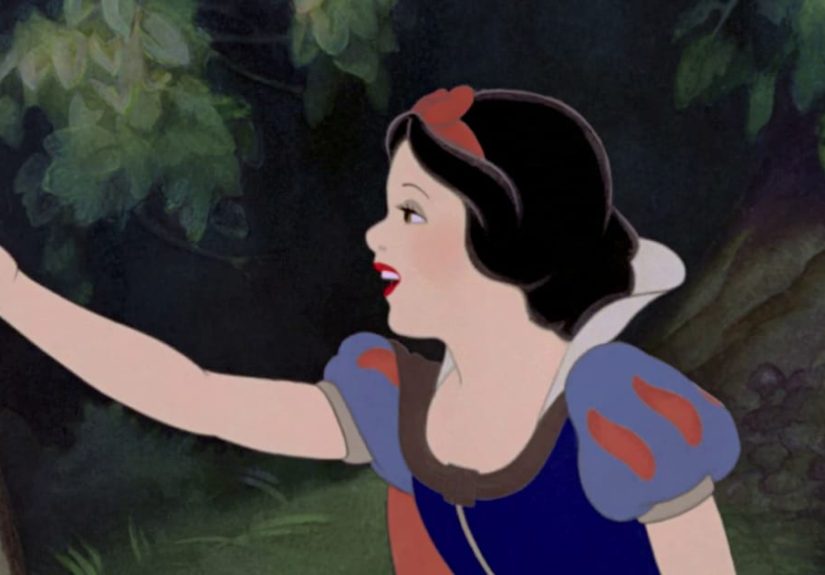
5) Snow White (Disney’s Snow White and the Seven Dwarfs)
The real-life muse
Disney’s first feature-length princess benefited from live-action reference work, including dance model Marge Champion, who performed movements that animators studied.
Early animation often needed a human “truth” to keep characters from looking like paper dolls sliding across the floor.
How it shows up on screen
Snow White’s gestures and dance-like grace feel grounded in real human motiondelicate steps, natural pauses, believable weight shifts. Even when the face is stylized, the body reads as
a person in a scene, not a drawing being dragged by invisible strings.
6) Cinderella (Disney’s Cinderella)
The real-life muse
For Cinderella, Disney used a live-action model: Helene Stanley. Her performances served as a visual guide so animators could capture realistic posture,
hand movements, and elegant timingespecially important in a story where transformation and refinement are basically the plot wearing a ball gown.
How it shows up on screen
Cinderella’s appearance is classic Disney stylization, but her physical believabilityhow she carries a tray, turns her head, reacts with her shouldersfeels human.
That’s what reference models do: they give you the invisible details that your brain expects, even when the eyes are the size of teacups.
7) Princess Aurora (Disney’s Sleeping Beauty)
The real-life muse
Helene Stanley returned as a live-action reference model for Aurora as well. And it makes sense: Aurora’s design aims for elegance and poise,
the kind that can look stiff if it isn’t rooted in a real human performance.
How it shows up on screen
Aurora’s posture and movement have a refined, dancer-like qualitygraceful, deliberate, and balanced. This is animation walking a tightrope:
make her regal without making her look like she’s constantly trying not to spill an imaginary drink on her imaginary dress.
8) Ariel (Disney’s The Little Mermaid)
The real-life muse
Ariel’s animation benefited from live-action reference work by Sherri Stoner, a performer who helped animators capture mannerisms and expressive timing.
This isn’t “Ariel is secretly a clone”; it’s more like: “Here’s how a curious, impulsive teen might move when she’s excited, nervous, or about to make a very dramatic life choice.”
How it shows up on screen
Ariel’s face and body language feel unusually expressiveeven compared to other Disney characters. Small gestures (like subtle lip and hand habits) read as personal quirks,
which is exactly what real performers naturally provide. The result: Ariel looks like she has thoughts, not just plot points.
9) Fred Flintstone (Hanna-Barbera’s The Flintstones)
The real-life muse
Fred Flintstone’s appearance and “big working-class dad energy” are famously associated with The Honeymooners and its star Jackie Gleason.
The resemblance is so widely discussed that it basically became part of pop-culture lore. Fred isn’t a photocopy of Gleason, but the physical blueprintstocky build,
expressive face, larger-than-life presencefeels unmistakably influenced.
How it shows up on screen
Fred’s design sells a specific archetype: a booming personality wrapped in a barrel-chested body. The animation amplifies the idea, but the foundation looks human
like someone you could imagine slamming a door, yelling “Wilma!” and then immediately regretting it because he’s still got to live in that house.
10) Jessica Rabbit (Who Framed Roger Rabbit)
The real-life muse
Jessica Rabbit is the love child of classic Hollywood glamourintentionally designed as an “old-school screen siren” turned up to cartoon volume.
Accounts from the film’s animation leadership have described inspiration drawn from actresses like Rita Hayworth (notably the Gilda era),
plus signature elements associated with Veronica Lake and the noir-style “look” of Lauren Bacall.
How it shows up on screen
It’s the hair, the silhouette, the smoky elegance. Jessica’s body proportions are intentionally unreal, but the styling cues are extremely real:
she’s designed to look like a walking reference to Hollywood’s golden-age fantasy of femininityconstructed, polished, and powerful enough to control the entire frame.
11) Foghorn Leghorn (Looney Tunes)
The real-life muse
Foghorn Leghorn’s look and persona are tied to radio-era inspirationmost notably Senator Claghorn, a character performed by Kenny Delmar.
While Foghorn isn’t a literal portrait of Delmar, the character’s “blustery Southern loudmouth” identity is rooted in a specific real-world performance tradition.
Animation history digs into how multiple influences shaped him, but the Delmar/Claghorn connection is a major, frequently cited piece of the origin story.
How it shows up on screen
Foghorn’s whole design reads like a human comedian translated into a rooster: big chest, emphatic gestures, constant forward momentum, and a face that looks like it’s mid-speech even in silence.
It’s character design built to support a performancebecause Foghorn isn’t just drawn; he’s perpetually delivering.
Why Animators Keep Borrowing From Real People
Using real people as visual reference isn’t “cheating”it’s craft. Human eyes are ridiculously good at detecting when something feels off:
a wrist bends wrong, a smile doesn’t travel through the cheeks, a walk has no weight. Live-action reference models solve that by giving animators
truthful anatomy and timing, which they can then exaggerate into style.
Celebrity-inspired designs do something different: they provide instant shorthand. A hint of a famous silhouette or styling choice can communicate “glamour,” “danger,” “confidence,” or “comedy”
before a character even speaks. It’s visual storytelling in a single eyebrow archsometimes uneven, sometimes perfect, always intentional.
of Experiences Related to These “Real-People” Cartoons
If you’ve ever watched an old cartoon and felt like a character looked oddly familiarlike you’d seen them in a movie poster, a vintage photo, or your uncle’s wedding album
you’ve had the exact experience these designs are built to create. One of the funniest parts of discovering real-life inspirations is realizing how your brain noticed
the “human” underneath the drawing long before you had the vocabulary for it. As a kid, you might not think, “Ah yes, a live-action reference model informed this gesture.”
You just think, “That fairy is mad,” and somehow she convinces you without saying a word.
A lot of fans describe a kind of two-stage nostalgia when they learn the backstory. Stage one is the childhood memory: the character as pure magic.
Stage two is the adult realization: the magic was built by people with cameras, pencils, rehearsal time, and the patience to redraw a hand 40 times until it finally looked alive.
Visiting animation exhibits or museum talks can deepen that feeling. Seeing reference footage (or even reading about it) makes you notice details you used to overlook:
the way Cinderella shifts her weight, the way Ariel reacts with her whole torso, the way Tinker Bell “acts” like someone who practiced her reactions in a mirror.
There’s also a very modern fan experience: the “pause-and-screenshot” era. People now rewatch classics and freeze-frame expressions, then compare them to real photos of the models
or the performers who inspired the look. It’s half detective work, half appreciation post. You’ll see someone point out a tiny movementa shoulder roll, a head tilt, a confident stance
and suddenly an animated character feels even more real because you can imagine the person in a studio doing that exact motion. Even cosplay communities get in on it,
borrowing not just the costume but the posture and attitude. (Because anyone can buy a green dress. Not everyone can pull off the “Tink is judging you” hip angle.)
And then there’s the emotional side: learning the history can change what the character means. Ursula’s design roots connect her to performance traditions that many viewers
recognize instantly once they’re told. Betty Boop’s story opens up conversations about credit, influence, and who gets remembered. Popeye’s inspiration reminds you that cartoons
sometimes come from everyday placestowns, personalities, local legendswhere someone’s face becomes a story. The best part is that none of this ruins the illusion.
It usually does the opposite: it makes the artistry feel richer. The character isn’t “less magical” because a real person helped shape the look.
It’s more magicalbecause humans made something that still feels alive decades later.
Conclusion
Cartoons don’t just reflect imaginationthey reflect people. Sometimes it’s a dancer giving a princess believable movement, sometimes it’s a drag icon’s bold visual language
echoing inside a sea witch, and sometimes it’s a small-town tough guy whose chin was destined to become animation history. The next time you rewatch a classic,
keep an eye out for the human fingerprints: the posture, the silhouette, the facial quirks. Those details are where the drawings start breathing.